By Michael Ruger, CFP®
Partner and Chief Investment Officer at Greenbush Financial Group
On September 17, 2025, the Federal Reserve voted to lower its benchmark interest rate by 0.25%—the first rate cut in quite some time. The move brought the federal funds target range down to 4.00%–4.25% and sent a signal to markets that the Fed is beginning to ease monetary policy after a long pause.
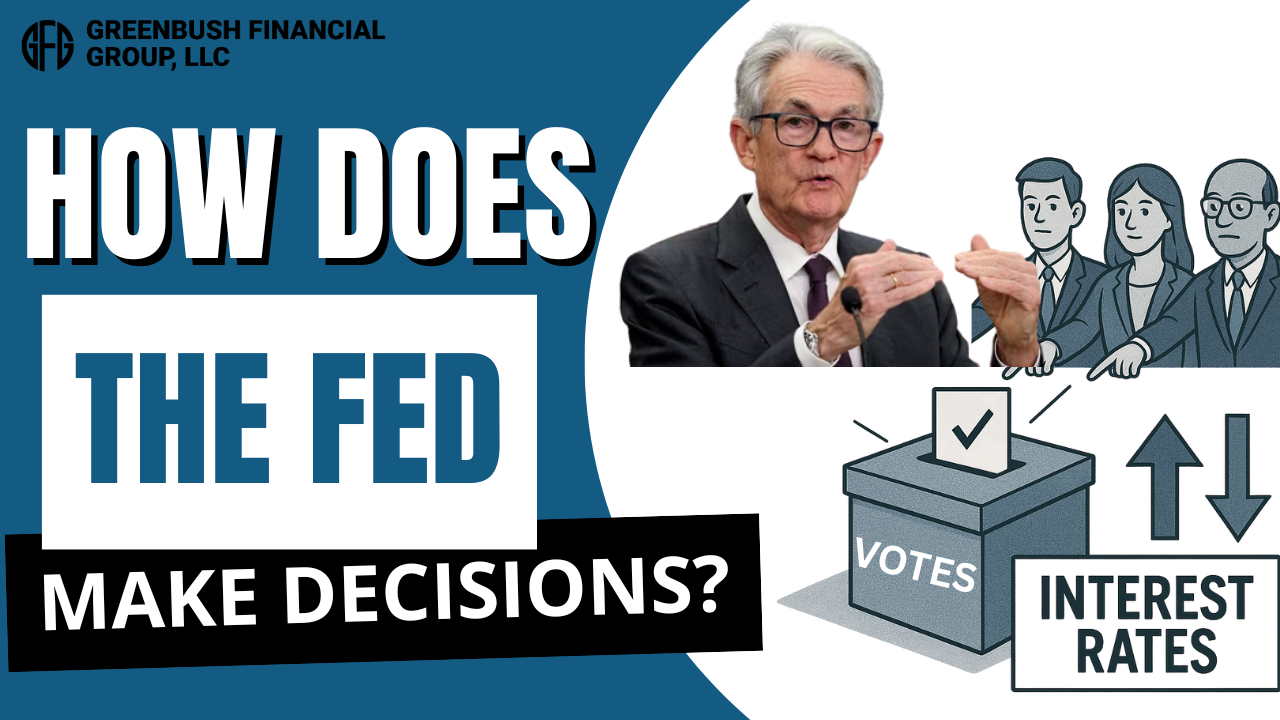
This decision raises an important question: how exactly does the Fed decide whether to cut rates, raise them, or leave them the same?
In this post, we’ll break down:
How voting works within the Federal Reserve
The roles of Jerome Powell, the Board of Governors, and the regional Fed presidents
Why independence from politics is so critical to the Fed’s mission
Why rate cuts matter so much to the economy
Current changes happening inside the Fed leadership
Who Actually Votes on Interest Rates?
When the Fed meets to set interest rates, the decision is made by the Federal Open Market Committee (FOMC). The FOMC includes:
The seven members of the Federal Reserve Board of Governors in Washington, D.C.
The President of the New York Federal Reserve Bank, who always has a vote.
Four of the remaining 11 Reserve Bank presidents, who rotate into voting seats each year.
All 19 leaders—the seven governors plus the 12 Reserve Bank presidents—attend FOMC meetings and share their views on the economy. But only 12 get to cast a vote at each meeting.
This structure balances national perspectives from the Board of Governors with regional insights from across the country. For example, the president of the Dallas Fed might emphasize conditions in the oil industry, while the president of the Chicago Fed may highlight trends in agriculture and manufacturing.
The Role of Jerome Powell
Jerome Powell, as Chair of the Federal Reserve, gets most of the headlines. He leads meetings, frames the discussion, and communicates decisions to the public. But in terms of raw power, his vote carries the same weight as every other voting member. He doesn’t have veto authority and can’t unilaterally set policy.
What makes the Chair influential is his ability to guide consensus. Powell works with Fed staff to prepare proposals, sets the tone in deliberations, and—perhaps most importantly—speaks for the Fed in press conferences after decisions are made. His leadership matters, but ultimately he must secure a majority of votes to enact policy.
How the Voting Works at Each Meeting
At each of the Fed’s eight scheduled meetings per year, the process unfolds in a fairly structured way. The first day is devoted to reviewing economic data and forecasts. All members, both voting and non-voting, weigh in with their perspectives.
On the second day, a policy proposal is put on the table—whether to cut, hike, or hold interest rates steady. The voting members then cast their votes, and the majority carries the decision.
In the September 2025 meeting, most members supported a 0.25% rate cut. But not everyone agreed. Newly appointed Governor Stephen Miran dissented, preferring a larger half-point cut. The rest of the committee sided with the smaller step, showing how debates within the Fed can shape outcomes.
Why Rate Cuts Matter
Lowering interest rates is one of the most powerful tools the Fed has to influence the economy. A cut makes borrowing cheaper—whether it’s a family taking out a mortgage, a business financing new equipment, or a consumer using a credit card. This tends to spur spending and investment, which can help keep the economy growing and support job creation.
On the flip side, keeping rates too high for too long can slow growth and risk tipping the economy into recession. That’s why the September cut was seen as so significant: it marked a shift in strategy, signaling the Fed is now more concerned about supporting growth than restraining inflation.
The Fed’s Political Independence—Will It Last?
One of the most important principles of the Federal Reserve is that it is meant to operate independently of politics. Congress gave the Fed a dual mandate: to promote stable prices and maximum employment. To achieve that, Fed leaders serve long terms and can’t be removed simply because the president or Congress doesn’t like their decisions.
This independence is crucial. Without it, presidents might pressure the Fed to cut rates before elections to juice the economy, or raise rates to influence market sentiment—moves that could create long-term economic instability.
Recently, however, that independence of the Fed has been called into question. The Trump administration has openly criticized the Fed for not cutting rates sooner. A new Fed governor, Stephen Miran, joined the Board after also serving in the White House, raising questions about conflicts of interest. Also, the Trump administration is attempting to remove Governor Lisa Cook from the Board, blocked by federal courts so far, highlighting the political pressures the Fed faces today. Governor Cook’s removal would mean the President could select another member to take her place and that person, similar to Governor Miran, could greatly favor larger interest rate cuts per the President’s request.
Looking ahead, Jerome Powell’s term as Chair ends in May 2026. Whoever the president nominates to replace him—and whether the Senate confirms that nominee—will shape the direction of monetary policy for years to come. While Powell’s term as a Governor extends into 2028, his leadership role will change once a new Chair is selected.
Takeaway
The Fed’s decision to cut rates this September highlights not just the power of monetary policy, but also the complex process behind it. Rate decisions aren’t made by one person in Washington—they’re the result of debate, data analysis, and ultimately, a vote among 12 members of the FOMC.
Jerome Powell may be the face of the Fed, but he’s only one voice at the table. And while the Fed is designed to stand apart from partisan politics, the recent events within the current Fed members demonstrate just how difficult it can be to maintain that independence.
For investors, business owners, and households, understanding how these decisions are made is critical—because what happens in those FOMC meetings shapes the borrowing costs, job market, and investment opportunities that affect us all.

About Michael……...
Hi, I’m Michael Ruger. I’m the managing partner of Greenbush Financial Group and the creator of the nationally recognized Money Smart Board blog . I created the blog because there are a lot of events in life that require important financial decisions. The goal is to help our readers avoid big financial missteps, discover financial solutions that they were not aware of, and to optimize their financial future.
Frequently Asked Questions (FAQs)
Who decides when the Federal Reserve raises or lowers interest rates?
Interest rate decisions are made by the Federal Open Market Committee (FOMC), which includes the seven members of the Board of Governors, the president of the New York Fed, and four rotating regional Fed presidents. While all 19 leaders participate in discussions, only 12 vote on policy at each meeting.
What role does Jerome Powell play in the Fed’s decision-making process?
As Chair of the Federal Reserve, Jerome Powell leads meetings, shapes discussion topics, and communicates decisions publicly. However, his vote carries the same weight as every other voting member, and policy changes require a majority of the committee’s support.
How does the Federal Reserve vote on interest rate changes?
At each of the eight scheduled meetings per year, members review economic data and forecasts before voting on whether to raise, cut, or hold rates steady. The majority vote determines the outcome, and dissenting opinions are noted in official meeting records.
Why does the Fed lower interest rates?
The Fed cuts rates to make borrowing cheaper, which can stimulate consumer spending, business investment, and overall economic growth. Lower rates are often used when inflation is under control but the economy shows signs of slowing.
Why is the Federal Reserve’s independence from politics so important?
Independence allows the Fed to make decisions based on economic data rather than political pressure. Without it, policymakers could be influenced to manipulate interest rates for short-term political gains, potentially creating long-term economic instability.
What changes in Fed leadership could impact future monetary policy?
Jerome Powell’s term as Chair ends in May 2026, and whoever is appointed next will significantly influence the direction of monetary policy. Ongoing political tensions and leadership shifts could affect how aggressively the Fed adjusts rates in the coming years.