
Medicare IRMAA (Income-Related Monthly Adjustment Amount) is a surcharge added to Medicare Part B and Part D premiums when your income exceeds certain thresholds. These surcharges are based on your Modified Adjusted Gross Income (MAGI) from two years prior. At Greenbush Financial Group, our analysis shows that proactive tax and withdrawal planning can help retirees avoid or minimize IRMAA and significantly reduce long-term healthcare costs.
What Is Medicare IRMAA and How Does It Work?
IRMAA is an additional premium Medicare beneficiaries pay if their income exceeds specific limits.
Key Facts
Applies to Medicare Part B and Part D
Based on income from two years prior
Uses Modified Adjusted Gross Income (MAGI)
Adjusted annually for inflation
Example
Your 2026 Medicare premiums are based on your 2024 income.
This lag creates planning opportunities, especially in early retirement years.
2026 IRMAA Income Limits and Surcharge Brackets
IRMAA is triggered when your income crosses certain thresholds.
2026 Estimated IRMAA Thresholds
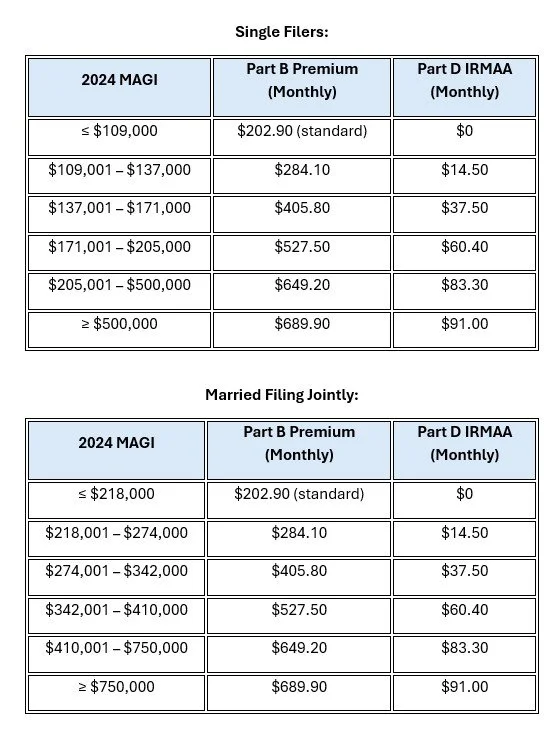
At Greenbush Financial Group, we emphasize that even $1 over a threshold can trigger a significantly higher premium.
What Counts as Income for IRMAA (MAGI)?
IRMAA is based on Modified Adjusted Gross Income, which includes more than just wages.
Included Income Sources
IRA and 401(k) withdrawals
Capital gains from investments
Dividends and interest
Rental income
Social Security (partially taxable portion)
Roth conversions
Important Note
Tax-free municipal bond interest is also included in MAGI for IRMAA purposes.
How Much Are IRMAA Surcharges?
IRMAA increases both Part B and Part D premiums.
Example Impact
Standard Part B premium (baseline)
IRMAA can increase premiums by hundreds of dollars per month per person
Part D surcharges are smaller but still meaningful
Key Insight
Over a 10–20 year retirement, IRMAA can add up to tens of thousands of dollars in additional healthcare costs if not managed properly.
Planning Strategies to Reduce or Avoid IRMAA
Strategic income planning is the most effective way to manage IRMAA.
1. Manage Your Taxable Income Each Year
Stay below key IRMAA thresholds when possible
Avoid large one-time income spikes
2. Use Roth Conversions Strategically
Convert funds in lower-income years before Medicare
Reduce future taxable income and RMDs
3. Time Large Withdrawals Carefully
Spread income over multiple years
Avoid triggering IRMAA in a single year
4. Leverage Roth Accounts
Roth withdrawals do not increase MAGI
Provides tax-free income flexibility
5. Consider Capital Gains Timing
Harvest gains in lower-income years
Offset gains with losses when possible
At Greenbush Financial Group, we often build multi-year tax projections to help clients stay below IRMAA thresholds.
IRMAA Planning Before and After Retirement
Before Retirement (Ages 55–63)
Ideal window for Roth conversions
Lower income years create planning opportunities
Reduce future IRMAA exposure
Early Retirement (Before Medicare)
Control income levels carefully
Balance withdrawals across accounts
After Age 65
Monitor RMDs and income levels
Use Roth withdrawals to manage thresholds
Plan ahead for future income spikes
What Happens If Your Income Drops?
You may be able to appeal IRMAA if your income has decreased due to certain life events.
Qualifying Life-Changing Events
Retirement
Marriage or divorce
Death of a spouse
Loss of income-producing property
You can file an appeal with Social Security to request a lower premium.
Common IRMAA Mistakes to Avoid
Ignoring IRMAA when doing Roth conversions
Taking large IRA withdrawals in a single year
Not planning for RMDs
Overlooking capital gains impact
Assuming Medicare premiums are fixed
At Greenbush Financial Group, we often see that IRMAA surprises retirees who focus only on taxes without considering healthcare costs.
Final Thoughts
IRMAA is one of the most overlooked retirement expenses, yet it can significantly increase your Medicare costs. The key is not just minimizing taxes in a single year but managing income over time to avoid crossing key thresholds.
At Greenbush Financial Group, our analysis shows that proactive planning around withdrawals, Roth conversions, and income timing can help reduce IRMAA and improve overall retirement outcomes.

Rob Mangold
About Rob……...
Hi, I’m Rob Mangold. I’m the Chief Operating Officer at Greenbush Financial Group and a contributor to the Money Smart Board blog. We created the blog to provide strategies that will help our readers personally, professionally, and financially. Our blog is meant to be a resource. If there are questions that you need answered, please feel free to join in on the discussion or contact me directly.
Frequently Asked Questions
-
What does IRMAA stand for?Income-Related Monthly Adjustment Amount, a surcharge on Medicare premiums based on income.
-
What income is used to calculate IRMAA?Modified Adjusted Gross Income (MAGI) from two years prior.
-
Can Roth withdrawals trigger IRMAA?No, qualified Roth withdrawals do not increase MAGI.
-
Can IRMAA be appealed?Yes, if you have a qualifying life-changing event such as retirement or loss of income.
-
How can I avoid IRMAA surcharges?By managing taxable income, using Roth strategies, and avoiding large income spikes.