Market Alert - UK Votes To Exit EU
We have been working through the night to monitor the UK exit vote in Europe and wanted to get this information out as soon as possible.Today is a historic day. Last night the UK voted whether or not to leave the European Union. The polls closed at 10 p.m. last night, the votes were counted, and at 2 a.m. this morning it was announced that the UK had voted 51.9% in favor of leaving the EU. To put this situation in context, this would be similar to New York deciding to leave the United States to form its own country.
This was not the expected outcome and is largely an unprecedented event. Going into the vote yesterday most polls expected the UK “stay” vote to prevail given the economic headwinds that the UK would face if the “leave” vote were to win. David Cameron, the prime minister of the UK, was largely in favor of the UK staying in the EU. Today at 3:30 a.m., Cameron announced that he would step down as the prime minister since new leadership, that is in favor of the exit, should be in place to negotiate Britain’s exit from the EU.
The European Union (EU) is made up of 28 countries. It was originally formed back in 1957 with the goal of preventing wars and strengthening the economic bond between the European countries in its membership. The UK joined the EU in 1973. Members of the EU benefit from:
Freedom of movement between countries
Freedom of trade for goods, services, and capital
EU human rights protection
Euro currency (the UK does not participate in the euro currency)
The Argument To Stay In The EU
Supporters of the UK to stay in the EU believe that the Union is better for the British economy and that concerns about migration and other issues stemming from EU membership are not important enough to outweigh the economic consequences of leaving. Many economists agree with this claim. Europe is Britain’s most important export market and its greatest source of foreign direct investment. An exit of the EU could jeopardize its financial status in the world and the high paying jobs that come with that status.
Those who voted to stay were not necessarily defending the EU but were basically arguing that the UK is stronger with the EU than without.
Argument To Leave The EU
Those in favor of the UK leaving the EU believe that leaving the European Union is necessary for the UK to restore the country’s identity. Immigration has been one of the largest issue on the agenda with refugees entering the UK under the EU’s permission and “taking jobs” in the place of UK citizens. Voters in the middle to lower income classes are viewed as more likely to support leaving the Union due to a feeling of being “abandoned by their country” in lieu of the EU policies.
In a way Britain feels like they used to matter to the world as an independent country but over the years have lost their identity now that they are lumped into the EU. This group of individuals wants to be able to have full control over the country’s economic policy, culture, political system, and judicial system.
What Happens Next?
Now that the UK has voted to leave the EU, it has become clear that there needs to be new leadership in government that supports the UK exit since most of the current leaders, including the prime minister, were in favor of the UK staying in the EU. We would expect this to happen in a fairly short period of time.
Once the new leadership is in place, the negotiation will begin between the UK and the EU for the exit. There is not a precedence for this process which leaves a lot of unknowns. Immediately, nothing changes. Most likely while the negotiations are taking place over the course of next few months, or more likely years since the UK is still technically an EU member, UK citizens will still be able to move about the Eurozone countries freely, trade will continue, etc.
However, there will most likely be an immediate negative impact on the UK economy given the expectation of the exit. The British pound (currency) will most likely drop significantly. The profitability of the multinational companies and banks that are headquartered in the UK will come into question since they will eventually lose the benefits of free trade and capital movements with other EU countries.
Overall we are entering a period of increased uncertainty. Unfortunately, in our view, there is a larger issue at hand. Yes, the UK exiting the EU is a significant event but the larger issue is for the first time they are laying the ground work that will allow a country to exit the EU. There are other countries in the EU that may take up similar votes to leave the European Union since a precedence is now being set for the UK to exit. If the entire EU were to further destabilize it would most likely cause further disruption across the global economy.

Michael Ruger
About Michael……...
Hi, I’m Michael Ruger. I’m the managing partner of Greenbush Financial Group and the creator of the nationally recognized Money Smart Board blog . I created the blog because there are a lot of events in life that require important financial decisions. The goal is to help our readers avoid big financial missteps, discover financial solutions that they were not aware of, and to optimize their financial future.

Retiring in a down market increases sequence of returns risk, which can reduce how long your savings last. The most effective strategies include maintaining a cash reserve, using a bucket income approach, reducing withdrawals, and delaying Social Security. Tax planning and portfolio rebalancing can also improve long-term outcomes. Greenbush Financial Group emphasizes flexibility and disciplined decision-making to help retirees protect income during market volatility.
Rental property depreciation allows investors to reduce taxable income by spreading the cost of a property over 27.5 years. This article explains how depreciation works, how it offsets rental income, and how improvements are treated. It also covers what happens when a property is fully depreciated and how depreciation recapture impacts taxes when selling. Understanding these rules can help investors maximize tax efficiency and avoid costly surprises.
Gold prices are influenced by several key factors, including interest rates, inflation, and the strength of the U.S. dollar. While gold is often viewed as a safe haven, it can be highly volatile and may not perform as well as stocks over the long term. This article explains what causes gold to rise and fall, how it compares to other commodities, and how it can be used for diversification. Understanding these drivers can help investors make more informed decisions about including gold in their portfolio.
The recent stock market pullback has been driven by rising oil prices, inflation concerns, and geopolitical tension involving Iran. As oil surged and uncertainty increased, markets reacted with increased volatility.
However, history shows that declines tied to geopolitical events are often temporary. This raises a key question for investors: is this a warning sign, or a setup for a potential market rally?
Health Savings Accounts can be more than just a tool for current medical expenses. This article explains when it makes sense to invest your HSA, when to keep funds in cash, and how to use an HSA as a long-term retirement strategy. Learn about tax advantages, contribution limits for 2026, and how to transfer funds to investment-friendly HSA providers. Discover how to maximize tax-free growth for future healthcare costs.
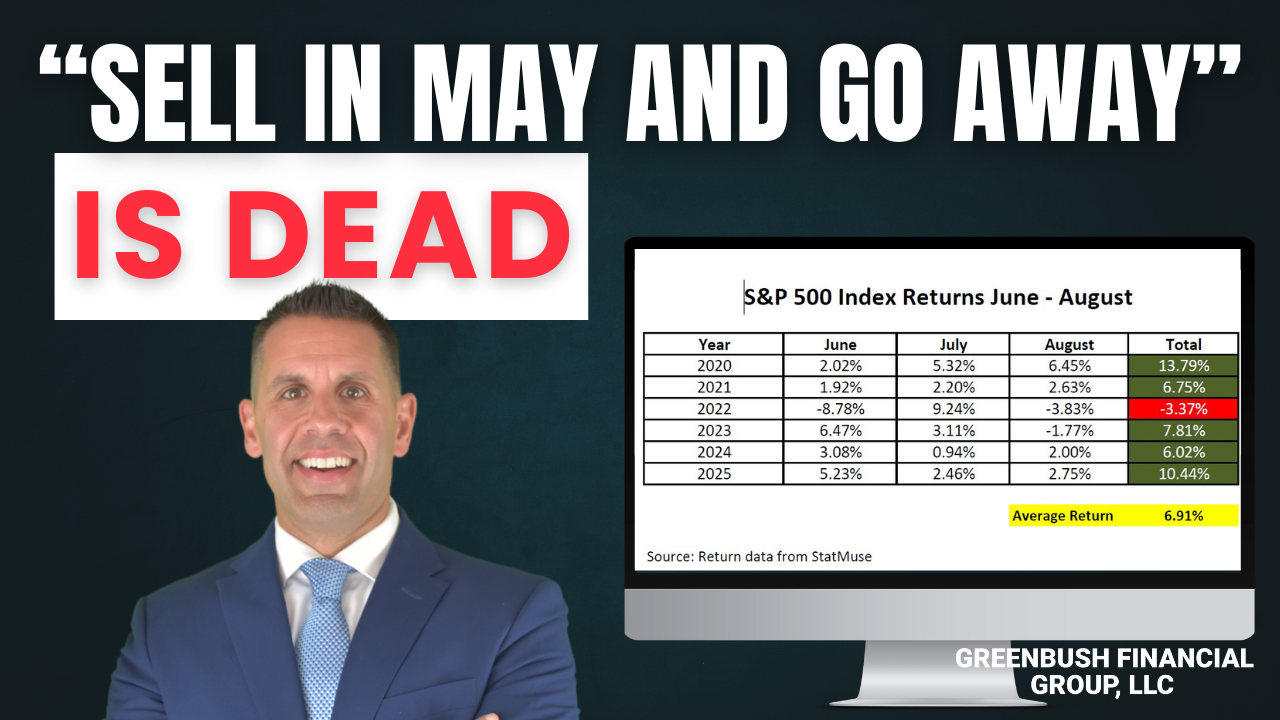
“Sell in May and Go Away” sounds clever, but the data tells a different story. Since 2020, investors who followed this rule would have missed out on strong summer gains. We break down why discipline and staying invested consistently beat market timing.
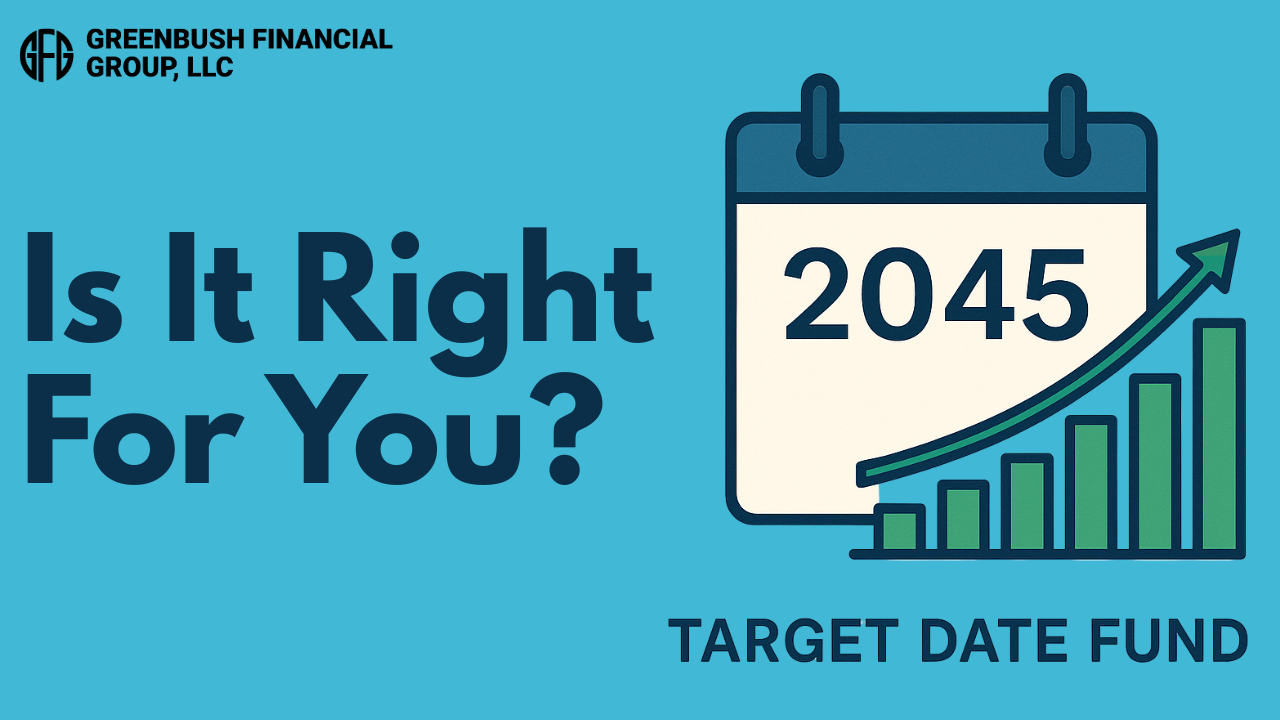
Target date funds adjust automatically as you approach retirement, offering a simple “set it and forget it” investment strategy. They can be a smart option for early savers, but investors with complex financial situations may need more customized solutions.
Bond ladders can provide investors with predictable income, interest rate protection, and more control compared to bond ETFs or mutual funds. Greenbush Financial Group breaks down how they work, the different ladder strategies, and why some investors prefer this approach.
Should your investment strategy change when you retire? Most people don’t realize how much the answer impacts taxes, income, and long-term security. Retirement isn’t the end of your financial planning—it’s the start of a new phase. Your goals shift from growth to income, and your investment strategy should evolve with them.
Each year, the IRS allows a tax deduction for investment losses that can be used to offset earned income. However, it’s a use-it-or-lose-it tax deduction, meaning if you fail to realize losses in your investment accounts by December 31st, you could forfeit a valuable tax deduction.
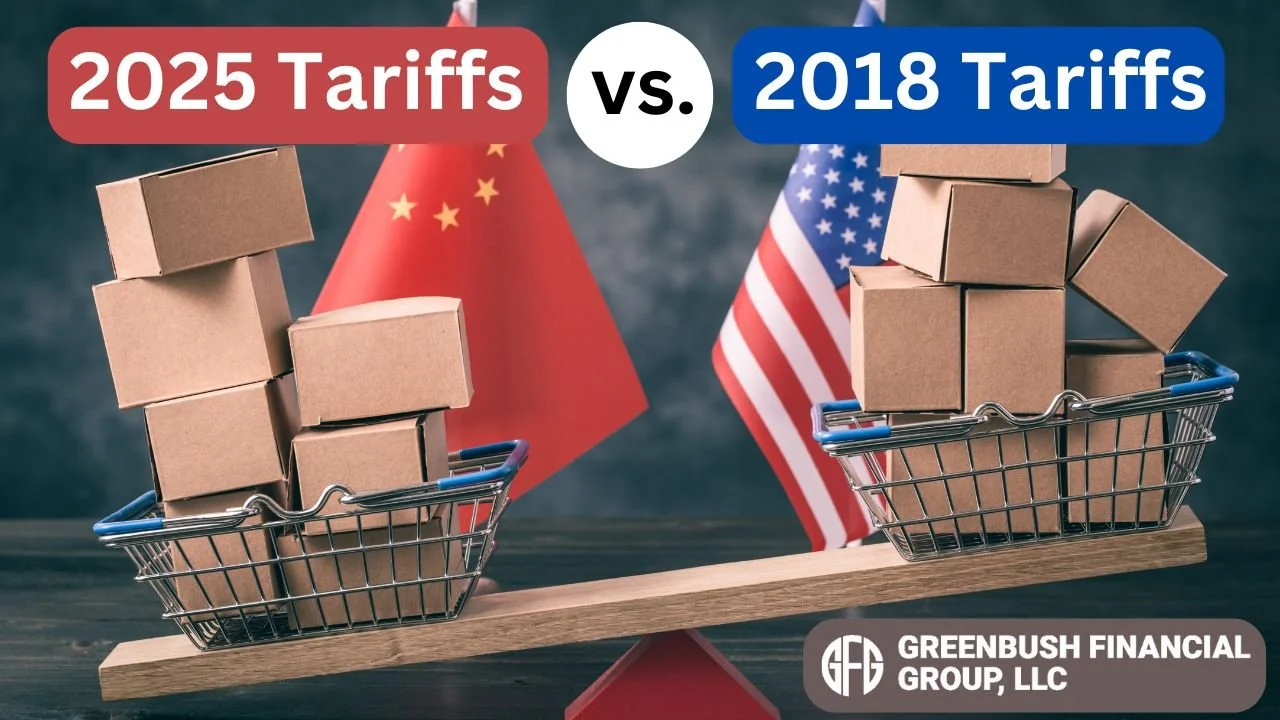
President Trump just announced tariffs against Canada, Mexico, and China that will go into effect this week, which has sent the stock market sharply lower. I have received multiple emails from clients over the past 24 hours, all asking the same question:
“With the Trump tariffs that were just announced, should we be going to cash?”
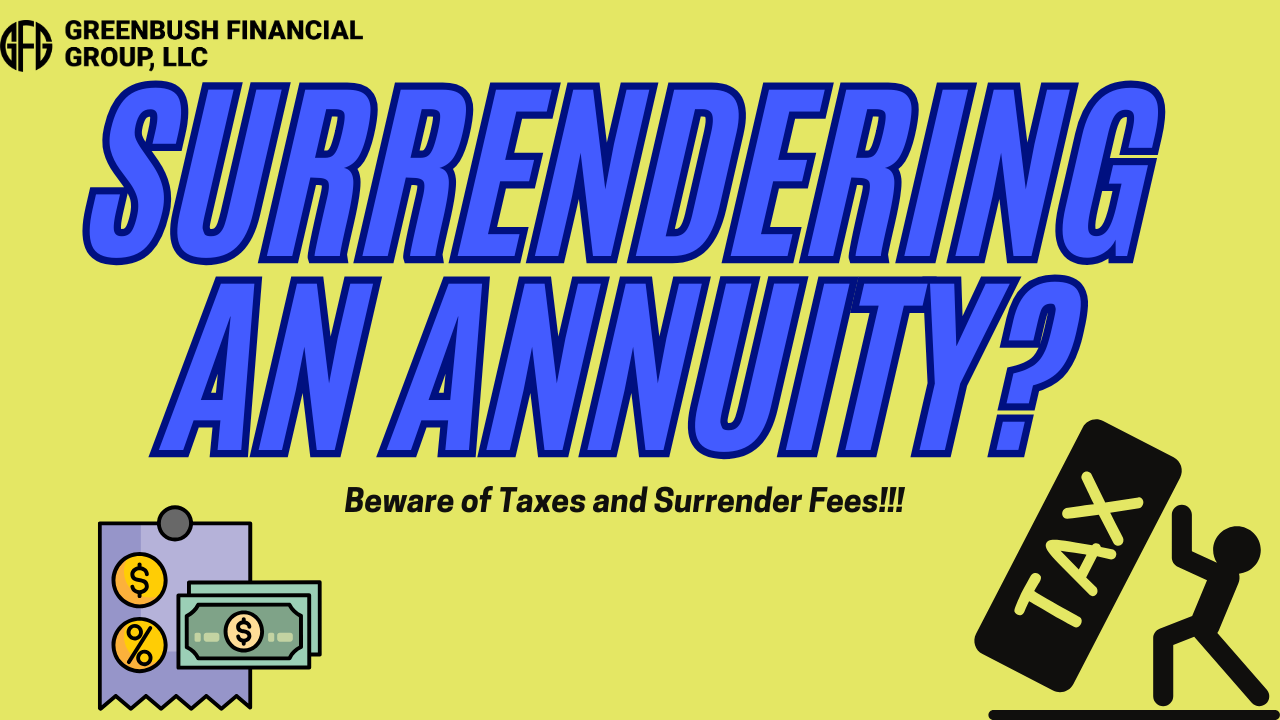
There are many reasons why individuals decide to surrender their annuities. Unfortunately, one of the most common reasons that we see is when individuals realize that they were sold the annuity by a broker and that annuity investment was either not in their best interest or they discover that there are other investment solutions that will better meet the investment objectives. This situation can often lead to individuals making the tough decision to cut their losses and surrender the annuity. But before surrendering their annuity, it’s important for investors to understand the questions to ask the annuity company about the surrender fees and potential tax liability before making e the final decision to end their annuity contract.
The Fed cut the Federal Funds Rate by 0.50% on September 18, 2024 which is not only the first rate cut since the Fed started raising rates in March 2022 but it was also a larger rate cut than the census expected. The consensus going into the Fed meeting was the Fed would cut rates by 0.25% and they doubled it. This is what the bigger Fed rate cut historically means for the economy
The Fed made a significant policy error last week by deciding not to cut the Fed Funds rate and the stock market is now responding to that error via the selloff we have seen over the past week. Unfortunately, this policy error is nothing new. Throughout history, the Fed typically waits too long to begin reducing interest rates after inflation has already abated and they seem to be on that path again.
Investors have to be ready for many surprises in 2024. While the US economy was able to escape a recession in 2023, if anything, it has increased the chances of either a recession or a market pullback in the first half of 2024.
Toward the end of 2022 and for the first half of this year, many economics and market analysts were warning investors of a recession starting within the first 6 months of 2023. Despite those widespread warnings, the S&P 500 Index is up 16% YTD as of July 3, 2023, notching one of the strongest 6-month starts to a year in history. So why have so many people been wrong about their prediction and off by so much?
This week, Silicon Valley Bank (SVB), the 16th largest bank in the United States, became insolvent in a matter of 48 hours. The bank now sits in the hands of the FDIC which has sent ripples across the financial markets.
While the markets are still very focused on the battle with inflation, a new problem is going to emerge in 2023 that is going to take it’s place. The markets have experienced a relief rally in November and December but we expect the rally to fade quickly going into 2023.
U.S. Government Savings Bonds called I Bonds are currently paying an interest rate of 9.62%. There are certain restrictions associated with these bonds that you should be aware of……..
The recent stock market rally could end up being a bear market trap for investors. If it is, this would be the 4th bear market trap of 2022.
Bonds are often revered as a safe investment compared to stocks but make no mistake, bonds like other investments are not risk-free, and there are certain market environments where they can lose value. As I write this article in May 2022, the Aggregate Bond Index is currently down 8% year to date.
While a lot of investors are asking if inflation has peaked, there is a more importnat question they should be asking which will have a bigger impact on our path forward…….
Russia’s invasion of Ukraine continues to add uncertainty to global markets. It’s left investors asking the following questions:
When you have a large cash reserve, should you take that opportunity to pay down debt or should you invest it? The answer is “it depends”.
It depends on: ….
The markets have experienced an intense selloff in the first three weeks of 2022. As of January 21st, the S&P 500 Index is down over 7% for the month. There are only a few times in the past 10 years that the index has dropped by more the 5% in a single month. That begs the questions, “After those big monthly declines, historically, what happens next?”
There are trends that are developing in the U.S. economy that we have not seen for decades. As inflation continues to rise at a rapid pace, we have to look back to the 1970’s as a reference point to determine how inflation could impact stocks, bonds, gold, and cash going into 2022. The most common questions that we have received from clients over the past few weeks are:
The inflation fears are rising in the market and we are releasing this video to help you to better understand how inflation works and the impact that is has on stock, bonds, and cash.