Long-Term Care Costs in Retirement: How to Prepare
Long-term care can cost $75,000 to more than $125,000 per year. Learn how to prepare for these expenses while protecting your spouse, retirement income and estate.

Long-term care can easily cost $75,000 to more than $125,000 per year, depending on the type of care and where you live. For retirees, the bigger question is whether those expenses could jeopardize a spouse's retirement security or significantly reduce the estate. Greenbush Financial Group recommends evaluating long-term care as part of the overall retirement income, tax, and estate plan rather than as a stand-alone insurance decision.
How Much Will Long-Term Care Actually Cost My Family?
Long-term care is one of the hardest retirement expenses to plan for because you do not know whether you will need it, when you will need it, or how long you will need care.
But ignoring the possibility can create a significant hole in a retirement plan.
The 2025 CareScout Cost of Care Survey reported national median costs of approximately:
Assisted living: $6,200 per month
Nursing home, semi-private room: $9,581 per month
Nursing home, private room: $10,798 per month
Non-medical in-home caregiver: $35 per hour
A private nursing-home room therefore costs roughly $130,000 per year at today's national median.
For a married couple, however, the most important question usually is not, "Can we afford $130,000?"
It is:
What happens to my spouse if we have to spend that amount for several years?
What Does Assisted Living Really Cost?
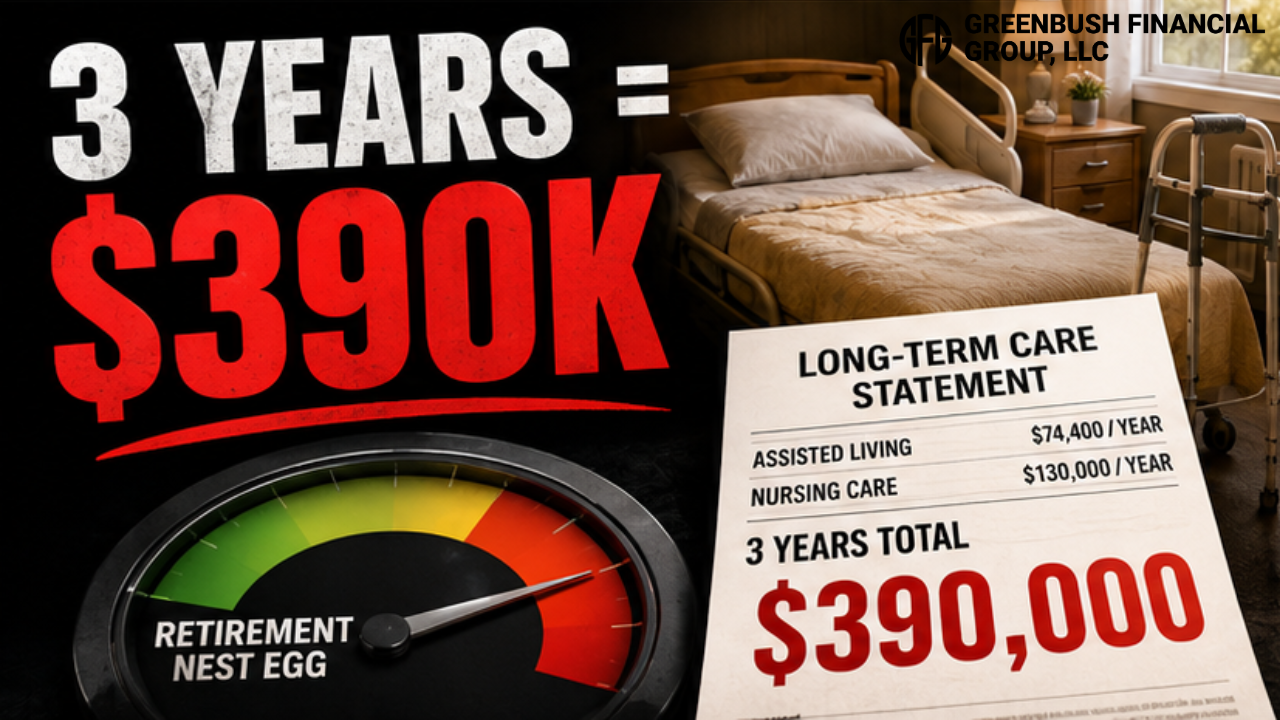
At a national median of $6,200 per month, assisted living costs approximately $74,400 per year.
Three years at that cost would total more than $223,000, even before considering future increases.
Nursing-home care can be substantially more expensive. At roughly $10,800 per month for a private room, three years of care could approach $390,000.
And Medicare should not be viewed as the solution. Medicare can cover qualifying short-term skilled nursing care, but it generally does not cover ongoing custodial long-term care.
Key Insight: If you are 60 today, today's cost may not be the number that matters. If care is not needed for another 15 or 20 years, the future cost could be considerably higher.
Should I Self-Insure for Long-Term Care?
For households with significant retirement assets, self-insuring can make sense.
But "we have enough money to pay for it" is not a complete analysis.
Consider a married couple with $1.5 million invested. If one spouse requires four years of nursing-home care at approximately $130,000 per year, the cost could approach $520,000 at today's prices.
The question is not simply whether they have $520,000.
They do.
The question is whether the other spouse would still have enough money to maintain their lifestyle for the rest of retirement after those care costs are paid.
Self-insuring tends to be more practical when you have:
Significant liquid assets
Reliable Social Security or pension income
Spending comfortably below available resources
A strong margin for unexpected expenses
Enough assets that a prolonged care event would not jeopardize the other spouse
This should be tested through a retirement projection rather than determined by an arbitrary portfolio value.
When Does Long-Term-Care Insurance Make Sense?
Long-term-care insurance is essentially a risk-transfer decision.
You are paying an insurance company to absorb some of a financial risk that could otherwise fall entirely on your portfolio.
Insurance may deserve a closer look when:
You could afford some long-term-care expenses but not a prolonged event
Protecting your spouse's retirement is a major concern
Leaving assets to children or other beneficiaries is important
The premiums fit comfortably within your retirement budget
You want to reduce the amount your portfolio would need to provide during a care event
You also do not necessarily need enough insurance to cover 100% of the cost.
Example
Suppose nursing care costs $10,000 per month, but your retirement income and portfolio could comfortably provide $4,000 per month toward care.
You may be more interested in insuring the remaining $6,000 than trying to insure the entire $10,000 expense.
That is why the insurance decision should start with the retirement plan.
How Would a Nursing-Home Stay Affect My Spouse?
This is often the biggest financial risk for married retirees.
When one spouse enters a nursing home, the other spouse does not stop having expenses.
They may still have:
Housing costs
Property taxes
Utilities
Medicare premiums
Food
Transportation
Home maintenance
Normal discretionary spending
The household is effectively supporting two different living arrangements.
There can also be tax consequences.
If most retirement savings are held in traditional IRAs, taking an additional $100,000 out of the portfolio to pay for care may create $100,000 of additional taxable income.
That could affect the household's tax bracket and potentially Medicare IRMAA premiums in a future year.
Planning Opportunity: Long-term-care planning should be coordinated with retirement income and Roth conversion strategies. Having money spread across traditional IRAs, Roth accounts, taxable investments, and cash can provide more flexibility if a large care expense suddenly appears.
How Much of My Estate Could Disappear?
Potentially, a meaningful amount.
Assume someone enters retirement with:
$1.2 million in investments
A $400,000 home
$1.6 million total estate
If that person eventually incurs $500,000 of long-term-care expenses, those expenses alone represent more than 30% of the original estate, before considering taxes, normal retirement spending, or investment results.
For some families, that is acceptable. Their primary objective is ensuring they have enough money for their own lifetime.
For others, leaving assets to children, grandchildren, or charities is an important goal. In those situations, insurance may play a larger role.
The important point is that estate preservation comes after retirement security. For married couples, protecting the financial position of the spouse who remains at home is generally the first concern.
A Better Way to Prepare for Long-Term Care
Instead of trying to predict whether you will need care, stress-test your retirement plan.
At Greenbush Financial Group, we believe households should consider at least three scenarios:
No major long-term-care event
Two to three years of assisted living or home care
Several years of nursing-home care for one spouse
Then look at what happens to:
The investment portfolio
The healthy spouse's retirement income
Taxes
Required minimum distributions
Estate value
Insurance needs
If the retirement plan remains strong even after a significant care event, self-insuring may be reasonable.
If the care scenario creates a major financial problem for the surviving spouse, transferring some of that risk through insurance may deserve consideration.
Common Long-Term-Care Planning Mistakes
Some of the most common mistakes we see are:
Assuming Medicare will pay for long-term custodial care
Looking at today's care costs without considering future increases
Assuming a large portfolio automatically means you can self-insure
Focusing on the person receiving care instead of the financial security of both spouses
Buying insurance without first determining how much risk actually needs to be insured
Ignoring the tax impact of large IRA withdrawals
Waiting until health problems arise to investigate insurance options
Final Thoughts
Long-term-care planning does not require predicting exactly what will happen.
The goal is to determine how much of the risk your family can comfortably absorb and how much risk you may want to transfer.
For some retirees, self-insuring makes sense. For others, insurance can protect a spouse and preserve part of the estate. Many households may benefit from a combination of the two.
At Greenbush Financial Group, we believe the decision should be coordinated with your retirement income, investments, taxes, Roth conversion strategy, and estate plan.
The most useful question is not simply, "Can I afford long-term care?"
It is:
"If one of us needs long-term care for several years, is the other spouse still financially secure?"

Rob Mangold
About Rob……...
Hi, I’m Rob Mangold. I’m the Chief Operating Officer at Greenbush Financial Group and a contributor to the Money Smart Board blog. We created the blog to provide strategies that will help our readers personally, professionally, and financially. Our blog is meant to be a resource. If there are questions that you need answered, please feel free to join in on the discussion or contact me directly.
Frequently Asked Questions
-
How much does assisted living cost?The 2025 national median cost of assisted living was approximately $6,200 per month, or $74,400 per year. Actual costs vary significantly by location and level of care.
-
How much does a nursing home cost?The 2025 national median cost for a private nursing-home room was approximately $10,798 per month, or about $130,000 per year.
-
Does Medicare pay for long-term care?Medicare generally does not pay for ongoing custodial long-term care. It can cover qualifying short-term skilled nursing care under specific circumstances.
-
How much money do I need to self-insure?There is no universal portfolio amount. The answer depends on your spending, guaranteed income, taxes, marital status, expected care costs, and how much money your spouse would need for the remainder of retirement.
-
Is long-term-care insurance worth it?It can be when a prolonged care event would materially affect your spouse's financial security or your estate. The appropriate amount of coverage should be determined in the context of your overall retirement plan.
-
Can long-term care wipe out an estate?A prolonged care event can consume hundreds of thousands of dollars. The impact depends on the length and type of care, available insurance, taxes, investment assets, and other sources of retirement income.