Should You Retire at 62, 65, or 67? The Tradeoffs Most People Overlook
Should you retire at 62, 65, or 67? The answer involves much more than Social Security. Learn how healthcare costs, taxes, Roth conversions, and portfolio withdrawals can influence the best retirement age for your situation.

Deciding whether to retire at 62, 65, or 67 involves much more than simply choosing when to claim Social Security. Your retirement age can impact healthcare costs, taxes, portfolio withdrawals, Roth conversion opportunities, and long-term financial security. In this article, Greenbush Financial Group breaks down the real tradeoffs retirees should consider, including situations where retiring earlier may make sense and when waiting could provide better long-term outcomes.
Should You Retire at 62, 65, or 67? The Tradeoffs Most People Overlook
For many Americans, retirement planning often centers around one question:
“When should I retire?”
The most common ages people consider are 62, 65, and 67 because each one connects to major financial milestones:
Age 62: Earliest Social Security eligibility
Age 65: Medicare eligibility
Age 67: Full Retirement Age (FRA) for many retirees
But the reality is that retirement timing is rarely just about Social Security.
The age you stop working can affect:
Your healthcare costs
Your tax strategy
Your withdrawal rate
Your investment risk
Your long-term retirement security
Your emotional well-being
And despite what many headlines suggest, there is no universally “perfect” retirement age.
At Greenbush Financial Group, we often find that the best retirement age depends less on rules and more on how all the moving pieces fit together for a household.
The Real Difference in Social Security at 62 vs. 65 vs. 67
One of the biggest factors in retirement timing is Social Security income.
Here’s a simplified example using someone whose Full Retirement Age benefit at 67 is $3,000 per month.
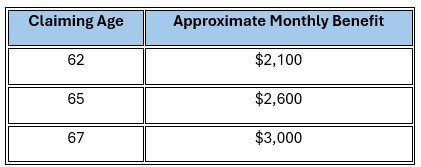
That difference can become substantial over a 25- to 30-year retirement.
For a married couple, coordinated claiming decisions may impact lifetime income by hundreds of thousands of dollars.
However, larger Social Security checks do not automatically mean delaying retirement is always better.
The bigger question is:
What are you giving up by waiting?
The Tradeoff Most People Miss
Many retirement articles focus only on maximizing Social Security benefits.
But retiring later can also mean:
Fewer healthy retirement years
Higher stress or burnout
Less flexibility with family
Missing Roth conversion opportunities
Paying more taxes later
Delaying goals you care about
Meanwhile, retiring earlier may increase:
Portfolio withdrawal pressure
Healthcare costs before Medicare
Sequence of returns risk
Longevity concerns
The goal is not simply maximizing one variable.
The goal is building a retirement plan that balances income, taxes, lifestyle, healthcare, and risk.
How Retiring Early Impacts Medicare and Healthcare Costs
One of the largest financial gaps in early retirement is health insurance before Medicare begins at 65.
If you retire at 62, you may need to bridge three years of healthcare costs before Medicare eligibility.
Depending on your income and coverage needs, that could mean:
ACA marketplace plans
COBRA coverage
Private insurance
Spousal employer coverage
For many couples, healthcare premiums and out-of-pocket costs can easily exceed:
$15,000 to $30,000+ annually before age 65
That expense is often underestimated.
Example: Retiring at 62 Before Medicare
A couple retires at 62 with:
$1.2 million invested
No pension
$70,000 annual spending goal
Because Social Security has not started yet, they may need to withdraw:
$70,000+ annually from investments
Plus healthcare costs
Plus taxes
If markets decline early in retirement, those larger withdrawals can create pressure on the portfolio much sooner than expected.
The Sequence of Returns Risk Most Retirees Ignore
One of the biggest risks in early retirement is something called sequence of returns risk.
This means poor market returns early in retirement can damage a portfolio more severely when withdrawals are happening simultaneously.
For example:
A major market decline at age 63 may hurt far more than the same decline at age 78.
Early losses combined with withdrawals can permanently reduce future recovery potential.
This becomes especially important for retirees stopping work before Social Security and Medicare begin.
Example
Two retirees both average 6% annual returns over retirement.
But:
Retiree A experiences strong returns early
Retiree B experiences a bear market immediately after retiring
Even with identical average returns, Retiree B may run out of money significantly sooner because withdrawals occurred during market declines.
This is why retirement timing and market conditions should be evaluated together.
Break-Even Analysis: How Long Do You Need to Live for Waiting to Pay Off?
One of the most common questions retirees ask is:
“How long do I need to live for delaying Social Security to make sense?”
A simplified break-even analysis often shows:
Delaying from 62 to 67 may break even somewhere in the late 70s or early 80s
But this analysis is incomplete unless you also consider:
Taxes
Investment withdrawals
Survivor benefits
Healthcare costs
Portfolio growth
Longevity expectations
Spousal coordination
For married couples especially, the higher earner delaying benefits may significantly improve survivor income later.
That can become critically important if one spouse lives well into their 80s or 90s.
Situations Where Retiring at 62 May Actually Make Sense
Retiring at 62 is not automatically a mistake.
In some situations, it may be entirely reasonable.
Retiring Earlier May Work Well If:
1. You Have Strong Savings Relative to Spending
For example:
$1.5 million portfolio
Low debt
Moderate spending needs
Flexible lifestyle
In this case, early retirement may create manageable withdrawal rates.
2. Your Health or Energy Is Declining
Many retirees prioritize healthy active years over maximizing income later.
This is especially true if:
Work stress is affecting health
A physically demanding career becomes difficult
Family longevity expectations are shorter
3. You Want Roth Conversion Opportunities
Retiring before Social Security and RMDs begin can create lower-income years.
Those years may allow:
Strategic Roth conversions
Lower future RMDs
Reduced future tax exposure
Potentially lower IRMAA surcharges later
This planning opportunity is often overlooked.
Situations Where Waiting Until 67 May Be Smarter
In other cases, delaying retirement may improve long-term security substantially.
Waiting May Make More Sense If:
1. You Are Heavily Reliant on Social Security
If Social Security represents a large portion of future retirement income, delaying may significantly improve financial flexibility later.
Example
Someone expecting:
$3,200/month at 67
Only $2,200/month at 62
That additional guaranteed income may reduce long-term portfolio pressure considerably.
2. You Have Limited Retirement Savings
Working longer may provide:
More years to save
Fewer years withdrawing
Higher Social Security benefits
Additional healthcare coverage through work
3. You Are Concerned About Longevity Risk
For retirees with strong family longevity histories, larger guaranteed income later may provide more confidence throughout retirement.
The Tax Consequences Most People Never Consider
Retirement timing is not just an income decision.
It is also a tax planning decision.
Roth Conversion Windows
Many retirees temporarily fall into lower tax brackets between:
Retirement
Social Security
Required Minimum Distributions (RMDs)
That window may create opportunities to convert portions of traditional IRAs into Roth accounts strategically.
Waiting too long to evaluate this can lead to:
Larger future RMDs
Higher Medicare premiums
Increased survivor tax burdens
IRMAA Brackets and Medicare Premiums
Higher retirement income can increase Medicare premiums through IRMAA surcharges.
Large:
Roth conversions
Capital gains
IRA withdrawals
Can trigger higher Medicare costs later.
Strategic income coordination becomes especially important after age 63 because Medicare premiums use a two-year lookback.
Capital Gains Timing
Retirement may temporarily create years with lower taxable income.
That could allow:
Tax-efficient capital gains harvesting
Reduced future embedded gains
More efficient portfolio repositioning
This planning window often closes once:
RMDs begin
Social Security starts
Pension income increases
Common Mistakes Couples Make When Coordinating Retirement Timing
Couples often retire at different times or have different income levels.
That creates additional planning complexity.
Common Mistakes Include:
Both Spouses Claiming Social Security Too Early
This may permanently reduce survivor income later.
Ignoring Healthcare Coordination
One spouse retiring early while the other still has employer coverage may create valuable healthcare planning opportunities.
Not Coordinating Tax Brackets
Retirement timing affects:
Roth conversions
IRA withdrawals
Medicare premiums
Social Security taxation
Assuming Both Spouses Should Retire Simultaneously
Sometimes staggered retirement dates improve:
Cash flow
Healthcare access
Tax flexibility
Emotional adjustment
The Emotional Side of Retirement Timing
Retirement decisions are not purely mathematical.
Many people struggle with competing fears:
Fear of Working Too Long
Some retirees worry about:
Losing healthy years
Delaying travel
Missing time with family
Burnout
Fear of Running Out of Money
Others fear:
Market volatility
Healthcare costs
Inflation
Longevity risk
Both concerns are valid.
The best retirement decision often balances financial sustainability with quality of life.
A Simple Framework for Deciding
Retiring Earlier May Work If These 3 Things Are True
Your withdrawal rate appears sustainable
You have a healthcare bridge to Medicare
You value time and flexibility more than maximizing guaranteed income
Waiting Longer May Make Sense If These 3 Things Are True
Social Security will be a major income source
You need additional savings or healthcare coverage
You are concerned about long-term longevity risk
Real-World Example: Couple Retiring at 62
A married couple has:
$1.2 million portfolio
$85,000 annual spending target
Modest pension income
Social Security delayed until 67
Potential Advantages
More years for travel and family
Roth conversion opportunities
Reduced work stress
Potential Challenges
Larger portfolio withdrawals initially
Three years before Medicare eligibility
Greater exposure to early market downturns
In this scenario, success may depend heavily on:
Spending flexibility
Tax management
Investment allocation
Market conditions early in retirement
Real-World Example: Heavy Social Security Reliance
Another retiree has:
$350,000 portfolio
Social Security expected to cover most future expenses
For this retiree, delaying benefits and potentially working longer may significantly improve long-term stability because guaranteed income becomes more valuable than preserving leisure years earlier.
Important Note About “The Perfect Retirement Age”
There is no universally optimal age to retire.
The “best” decision depends on:
Your health
Your goals
Your savings
Your tax situation
Your family dynamics
Your spending needs
Your emotional priorities
At Greenbush Financial Group, retirement planning often involves evaluating tradeoffs rather than searching for a perfect answer.
Sometimes retiring earlier creates the better life decision.
Sometimes waiting provides more security and flexibility.
Most importantly, retirees should understand the long-term implications before making irreversible decisions.
Final Thoughts
The decision to retire at 62, 65, or 67 affects far more than your monthly Social Security check.
It can influence:
Taxes
Medicare costs
Investment risk
Withdrawal rates
Long-term portfolio sustainability
Survivor income
Lifestyle flexibility
The key is understanding the tradeoffs honestly rather than assuming there is one universally correct answer.
A well-designed retirement plan should coordinate:
Social Security
Tax strategy
Healthcare planning
Investment withdrawals
Roth conversion opportunities
Long-term income sustainability
At Greenbush Financial Group, we help retirees evaluate these decisions within the context of their full financial picture so retirement timing aligns with both financial security and personal goals.

Rob Mangold
About Rob……...
Hi, I’m Rob Mangold. I’m the Chief Operating Officer at Greenbush Financial Group and a contributor to the Money Smart Board blog. We created the blog to provide strategies that will help our readers personally, professionally, and financially. Our blog is meant to be a resource. If there are questions that you need answered, please feel free to join in on the discussion or contact me directly.
FAQ Section
-
Is it better to retire at 62 or 67?Neither is universally better. Retiring at 62 provides more flexibility and earlier retirement years, while waiting until 67 increases guaranteed Social Security income and may reduce long-term portfolio pressure.
-
How much less Social Security do you get at 62?Benefits may be reduced by roughly 30% compared to claiming at Full Retirement Age, depending on your birth year.
-
What is the biggest risk of retiring early?One of the biggest risks is sequence of returns risk, where poor market performance early in retirement combined with withdrawals can permanently weaken a portfolio.
-
Why is age 65 important for retirement?Age 65 is when most Americans become eligible for Medicare, which can significantly reduce healthcare costs compared to private insurance before 65.
-
Should married couples retire at the same time?Not necessarily. Staggering retirement dates can improve healthcare access, tax flexibility, and Social Security coordination.
-
Does delaying Social Security always pay off?No. Delaying benefits may improve lifetime income for some retirees, especially higher earners or couples concerned about longevity, but it is not automatically the best decision for everyone.
-
What are Roth conversion windows in retirement?These are lower-income years between retirement and RMD age that may allow retirees to convert IRA assets into Roth accounts at lower tax rates.
-
Can retiring too early increase taxes later?Yes. Larger future RMDs, higher Social Security taxation, and increased Medicare premiums can occur if tax planning opportunities are missed early in retirement.