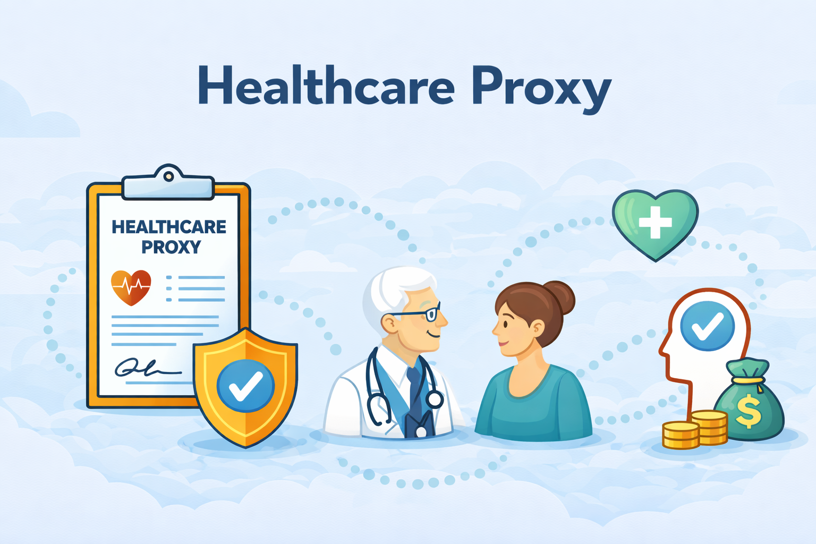
Healthcare Proxy
A Vital Document That Protects Your Voice When You Can’t Speak for Yourself
A Healthcare Proxy is one of the three most vital estate planning documents—alongside a Will and Power of Attorney—yet it is often the most overlooked. What makes a healthcare proxy unique is that it has nothing to do with how your assets pass. Instead, it focuses entirely on medical decisions that may need to be made on your behalf if you become incapacitated and unable to communicate.
A healthcare proxy puts your wishes in black and white. It clearly documents how you want medical decisions handled if certain health scenarios arise. While these topics can be uncomfortable to think about, not having your wishes documented often places an enormous emotional burden on loved ones—and can create lasting family conflict.
What a Healthcare Proxy Covers
A healthcare proxy typically addresses critical questions such as:
Would you want to be resuscitated?
Would you consent to the use of a feeding tube?
How long would you want to remain on life support?
Under what conditions would you want life-sustaining treatment withdrawn?
Who should speak with doctors on your behalf?
What quality-of-life standards matter most to you?
These decisions are deeply personal. Writing them down ensures that your values—not assumptions—guide your medical care.
Why Having Your Wishes Documented Matters
Many people delay completing a healthcare proxy because the subject matter is uncomfortable. Unfortunately, this delay can create painful consequences.
Imagine a scenario where:
You are placed in a coma for several months
Doctors advise your family that recovery is unlikely
One child believes you would not want to remain on life support
Another child insists everything possible be done
Without a healthcare proxy, these decisions fall to family members who may have very different interpretations of what you would want. These disagreements can permanently damage relationships between siblings—often for the rest of their lives. That outcome is almost never what parents intend.
A healthcare proxy removes this burden from your family by making your wishes clear and legally recognized.
Who Makes Decisions Without a Healthcare Proxy?
If you become incapacitated without a healthcare proxy in place:
Medical providers may look to state law to determine who can make decisions
Family members may disagree or be legally challenged
Courts may become involved
Decisions may be delayed during critical moments
By naming a healthcare agent ahead of time, you maintain control over who speaks on your behalf and how decisions are made.
Especially Important for Individuals Without Spouses or Children
A healthcare proxy is especially important for individuals who do not have a spouse or children.
In these situations, it is critical to:
Clearly designate who will make healthcare decisions
Confirm that the person you choose is willing and comfortable in that role
Ensure your wishes are fully documented
Without this clarity, decisions may fall to distant relatives, courts, or individuals who may not truly understand your values.
How a Healthcare Proxy Is Created
A healthcare proxy can be completed in several ways:
As part of a comprehensive estate plan with an estate attorney (alongside a will, power of attorney, and trusts)
As a standalone document through an estate attorney
Through reputable online legal platforms
The most important point is not how it’s created—but that it is created.
You do not want to be filling out a healthcare proxy while already in the hospital—or worse, not have one at all when it is needed most.
Our Role in the Process
At our firm, we help clients think through the difficult—but necessary—questions that a healthcare proxy addresses. While we do not draft legal documents, we help clients:
Understand the importance of the healthcare proxy
Clarify their wishes in advance
Identify the appropriate healthcare agent
Coordinate with estate attorneys so documents reflect the client’s intentions
Ensure healthcare planning is aligned with the broader financial and estate plan



Our Healthcare Proxy Articles
Frequently Asked Questions About Healthcare Proxies
-
What is a healthcare proxy?A healthcare proxy is a legal document that allows you to appoint someone to make medical decisions on your behalf if you become incapacitated.
-
Is a healthcare proxy the same as a living will?They are related but not identical. A healthcare proxy names a decision-maker, while a living will typically outlines specific medical instructions. Many states combine these concepts into one document.
-
Do I need a healthcare proxy if I’m young and healthy?Yes. Accidents and sudden illnesses can happen at any age. A healthcare proxy protects you regardless of your current health.
-
Who should I name as my healthcare agent?You should choose someone you trust, who understands your values, and who is emotionally capable of making difficult medical decisions on your behalf.
-
What happens if I don’t have a healthcare proxy?Medical decisions may default to state law, family members may disagree, or courts may need to intervene—often during stressful and time-sensitive situations.
-
Can I change my healthcare proxy later?Yes. You can update or revoke your healthcare proxy at any time, as long as you are mentally competent.
-
Is a healthcare proxy expensive to create?No. It is typically one of the least expensive estate documents to complete, and many online options exist.
-
How often should I review my healthcare proxy?You should review it every few years or after major life events such as marriage, divorce, serious illness, or changes in relationships.
Contact Us . . . .

All of our services start with a complimentary consult. No high pressure sales tactics. We are financial planners, not salesmen.
About Our Firm: Greenbush Financial Group is an independent registered investment advisory firm based in Albany, New York, that provides four main services to clients: fee-based financial planning services, investment management, employer-sponsored retirement plans, and retirement planning services. The firm serves clients locally in the Albany region and virtually across the United States.