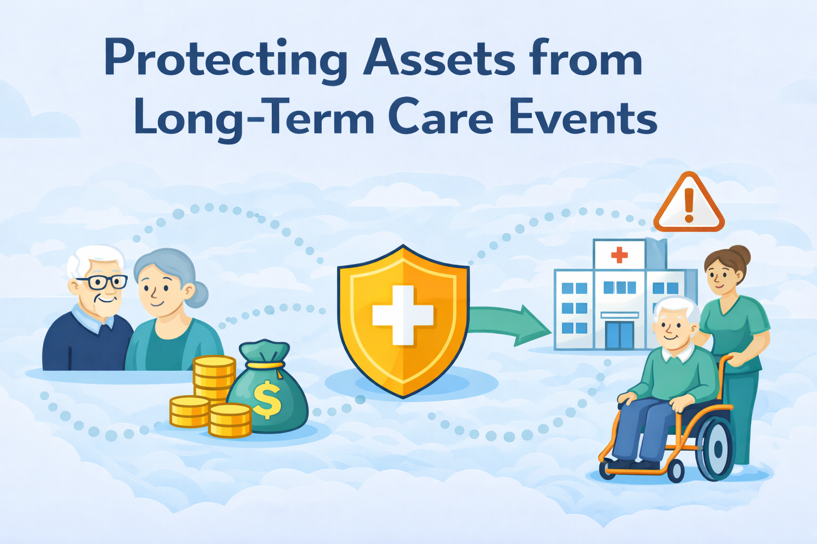
Protecting Assets from a Long-Term Care Event
Planning Ahead to Preserve Financial Security and Family Legacy
Living longer is, without question, a good thing. However, increased longevity also means that as individuals reach their 80s and 90s, they often become more frail and face a higher likelihood of needing long-term care. When a long-term care event occurs, the financial impact can be significant—and in many cases, devastating to a lifetime of savings.
The cost of care is substantial:
Nursing home care: often ranges from $130,000 to $200,000 per year
24-hour private in-home care: can exceed $250,000 to $300,000 per year
Because of these costs, many individuals and families look for ways—well in advance—to plan for potential long-term care needs and protect assets from a forced spend-down process.
Why Planning in Advance Matters
Long-term care planning cannot be done after the fact. Once a care event has occurred, options become extremely limited.
In New York State, qualifying for Medicaid to cover long-term care expenses is subject to a five-year look-back period. This means that asset transfers made within five years of applying for Medicaid can result in penalties and delays in eligibility.
Without a plan in place:
Families are often forced into crisis-mode decision making
Assets may need to be rapidly spent down
There may be little to no opportunity to protect wealth
In some New York counties, Medicaid may place a lien on the primary residence
Proactive planning helps avoid these outcomes and can preserve assets for spouses, children, and other heirs.
Three Primary Strategies for Protecting Assets
There are three main planning strategies commonly used to protect assets from a long-term care spend-down. Each has different advantages, trade-offs, and timing considerations.
1. Medicaid Trusts
A Medicaid trust (often an irrevocable trust) is designed to hold assets outside of an individual’s personal ownership for Medicaid eligibility purposes.
Key characteristics:
Assets placed in the trust are no longer personally owned
When properly structured and funded outside the look-back period, assets may be protected
Can help preserve assets for heirs
Requires careful planning and coordination with an estate attorney
This strategy is often used for protecting homes and investment assets but requires relinquishing direct ownership.
2. Gifting Assets
Another approach involves gifting assets to children or other beneficiaries.
Considerations include:
Gifts start the Medicaid look-back clock
Loss of control over the gifted assets
Potential gift tax and capital gains implications
Exposure to the recipient’s creditors, divorce, or financial issues
While gifting can be effective in some cases, it carries risks that must be carefully evaluated.
3. Gifting with a Life Estate
A life estate allows an individual to transfer ownership of a property (often a primary residence) while retaining the right to live in the home for the rest of their life.
Benefits and considerations:
Can reduce exposure to Medicaid spend-down
Allows continued use of the property
May preserve favorable tax treatment for heirs
Requires careful legal structuring
Still subject to look-back rules
Life estates can be a powerful tool, particularly for homeowners, when implemented properly and early.
Protecting Assets vs. Privately Paying for Care
Not every individual needs—or wants—to protect assets from a long-term care event.
For some clients, the discussion includes whether:
They have sufficient assets to self-insure
They value maximum flexibility in care decisions
They prefer private-pay options over Medicaid facilities
Asset protection aligns with their overall goals
There is no universal answer. The right approach depends on net worth, income, family structure, health history, and personal preferences.
The Decline of Traditional Long-Term Care Insurance
Long-term care insurance has become a less viable solution for many families.
Key challenges include:
Dramatic premium increases over the past decade
Difficult underwriting standards
Limited availability of new policies
In New York State, nearly all carriers have exited the market—with only one carrier currently writing new policies
Lack of competition has driven costs even higher
As a result, many retirees have shifted toward:
Self-insuring
Asset protection strategies
Medicaid-focused planning
Why Crisis Planning Rarely Works
When a long-term care event happens unexpectedly:
Family members are often forced into a damage-control role
Legal and financial options are limited
Most assets may need to be spent before Medicaid eligibility
Stress and emotional strain increase significantly
Unfortunately, once care is needed, there is often very little that can be done to protect assets.
Our Approach to Long-Term Care Planning
At our firm, we help clients:
Understand the true cost of long-term care
Evaluate whether asset protection or private pay makes sense
Identify appropriate Medicaid planning strategies
Coordinate with estate attorneys to implement trusts or life estates
Integrate long-term care planning into retirement, tax, and estate plans
Help clients and their family members avoid last-minute, crisis-driven decisions
A well-designed plan helps protect assets, preserve dignity, and reduce the burden on family members.




Our Long Term Care Planning Articles





“great video! Thank you for sharing.”
This endorsement provided for Greenbush Financial Group, LLC on YouTube was a non-solicited and non-paid comment by a non-client.
Frequently Asked Questions: Protecting Assets from a Long-Term Care Event
-
How can I protect my assets from nursing home costs?Assets can potentially be protected through advanced planning strategies such as Medicaid trusts, gifting, or life estate arrangements. These strategies must be implemented years before care is needed to be effective.
-
What is the five-year Medicaid look-back rule?In New York State, Medicaid reviews asset transfers made within five years of applying for long-term care benefits. Transfers during this period can result in penalties and delayed eligibility.
-
Can Medicaid take my house if I go into a nursing home?In some New York counties, Medicaid may place a lien on the primary residence to recover long-term care costs. Proper planning may help protect the home for heirs.
-
What is a Medicaid trust and how does it work?A Medicaid trust is typically an irrevocable trust that removes assets from personal ownership. When structured correctly and funded outside the look-back period, it may help protect assets from a long-term care spend-down.
-
Is long-term care insurance still a good option?For many individuals, long-term care insurance has become less practical due to high premiums, strict underwriting, and limited carrier availability—especially in New York State.
-
Is it better to protect assets or privately pay for care?It depends on the individual’s financial resources, goals, and desire for flexibility. Some families choose to self-insure, while others use asset-protection strategies to preserve wealth for heirs.
-
Can I protect assets after a long-term care event has already occurred?In most cases, options are very limited once care is needed. Advance planning is critical—crisis planning often results in forced asset spend-down.
-
When should I start planning for long-term care?Ideally, planning should begin well before retirement or any health decline. Early planning provides more flexibility, more options, and better protection.
Contact Us . . . .

All of our services start with a complimentary consult. No high pressure sales tactics. We are financial planners, not salesmen.
About Our Firm: Greenbush Financial Group is an independent registered investment advisory firm based in Albany, New York, that provides four main services to clients: fee-based financial planning services, investment management, employer-sponsored retirement plans, and retirement planning services. The firm serves clients locally in the Albany region and virtually across the United States.