The Real Cost of Buying a Home: Expenses First-Time Buyers Often Miss
The true cost of buying a home extends far beyond the mortgage payment. First-time home buyers should plan for closing costs, maintenance, property taxes, homeowners insurance, utilities, HOA fees, and emergency repairs. Understanding these expenses can help avoid cash flow surprises and improve long-term affordability. Greenbush Financial Group explains how thoughtful budgeting and financial preparation can make homeownership more sustainable and less stressful.

Many first-time home buyers focus almost entirely on the down payment and monthly mortgage. But the real cost of homeownership often includes additional expenses that can strain cash flow if they are not planned for ahead of time. Closing costs, maintenance, property taxes, insurance, utilities, and unexpected repairs can all affect affordability. At Greenbush Financial Group, we often find that buyers feel more confident when they understand the full financial picture before purchasing a home.
Buying a Home Costs More Than Most First-Time Buyers Expect
For many people, buying a first home feels like reaching a major financial milestone.
But one of the biggest surprises for first-time buyers is realizing that the monthly mortgage payment is only part of the total cost.
Many buyers spend years saving for:
The down payment
Moving expenses
Furniture
Mortgage qualification
Yet still feel financially stretched after moving in because they underestimated the ongoing costs of homeownership.
The goal is not avoiding homeownership.
The goal is understanding the full financial commitment before signing the paperwork.
Because the hidden costs are often what create stress later.
The Mortgage Payment Is Only the Starting Point
When buyers estimate affordability, they often focus only on:
Principal
Interest
But homeownership usually includes several additional recurring expenses.
Monthly Housing Costs May Include:
Property taxes
Homeowners insurance
HOA fees
Maintenance costs
Utilities
Lawn care
Pest control
Repairs
Internet and security systems
In many cases, the true monthly cost of owning a home can be significantly higher than the mortgage itself.
Hidden Cost #1: Closing Costs
Many first-time buyers are surprised to learn that the down payment is not the only upfront expense.
Closing costs can often range from:
2%–5% of the purchase price
These costs may include:
Loan origination fees
Appraisal fees
Title insurance
Attorney fees
Escrow funding
Recording fees
Inspection costs
Prepaid taxes and insurance
Example
A buyer purchasing a $400,000 home may face:
$8,000–$20,000 in closing costs
In addition to the down payment.
That can create a major cash-flow surprise if buyers are not prepared.
Hidden Cost #2: Maintenance and Repairs
One of the biggest lifestyle adjustments for renters is realizing that homeowners become responsible for everything.
When something breaks, there is no landlord to call.
Common Expenses Include:
Roof repairs
HVAC replacement
Water heaters
Plumbing issues
Appliance replacement
Landscaping
Gutter cleaning
Electrical repairs
A Common Rule of Thumb
Many homeowners should expect to budget roughly:
1%–2% of the home’s value annually for maintenance
That does not mean every year will be expensive.
But large repairs tend to arrive eventually.
Hidden Cost #3: Property Taxes Often Increase
Many buyers underestimate how property taxes may change over time.
Taxes can increase because of:
Rising home values
Local tax reassessments
School district changes
Municipal budget increases
In some areas, property taxes may rise significantly faster than buyers expect.
Important Note
Some online mortgage calculators underestimate future tax increases because they rely on previous owner assessments.
That can create affordability surprises later.
Hidden Cost #4: Homeowners Insurance
Insurance costs have become a growing issue in many parts of the country.
Premiums may rise because of:
Weather risks
Inflation
Construction costs
Claims history
Regional insurance market changes
Many first-time buyers focus heavily on mortgage rates while underestimating how much insurance may affect monthly costs.
Hidden Cost #5: Utilities Can Change Dramatically
Renters sometimes underestimate how utility costs change with larger spaces.
A new home may involve:
Higher electric bills
Water costs
Trash service
Gas bills
Internet upgrades
Older homes may also be less energy efficient than expected.
Hidden Cost #6: Furniture and Home Purchases
Many first-time homeowners spend heavily immediately after moving in.
Common purchases include:
Furniture
Appliances
Window treatments
Tools
Lawn equipment
Decor
Home office setup
Individually, these purchases may seem manageable.
Together, they can significantly strain savings during the first year.
Hidden Cost #7: HOA Fees and Special Assessments
Homeowners Association fees are often overlooked during budgeting.
Monthly HOA dues may cover:
Landscaping
Community maintenance
Amenities
Exterior upkeep
But HOAs can also issue special assessments for unexpected repairs or large projects.
That can create sudden expenses homeowners did not anticipate.
Hidden Cost #8: Emergency Cash Reserves
Many buyers use most of their savings for the down payment and closing costs.
That can leave very little flexibility afterward.
This becomes risky because homeownership often involves unexpected expenses shortly after moving in.
Examples include:
Appliance failure
Water leaks
HVAC repairs
Moving-related costs
Insurance deductibles
Maintaining emergency savings after the purchase is extremely important.
The Emotional Side of Buying a First Home
First-time buyers often feel pressure to:
Stretch their budget
Buy quickly
Win bidding wars
Maximize house size
Compete with peers
That emotional pressure can lead buyers to underestimate ongoing affordability concerns.
Important Question
The better question is often not:
“What is the maximum home I can qualify for?”
Instead ask:
“What home can I comfortably maintain while still saving for future goals?”
A Real-World Example
Sarah and Michael purchase their first home for:
$450,000
They budget carefully for:
Their down payment
Mortgage payment
But after moving in, they encounter:
$11,000 in closing costs
Higher-than-expected property taxes
A leaking water heater
Increased utility bills
Furniture purchases
HOA dues they underestimated
Within the first year, they spend far more than expected beyond the mortgage payment itself.
The issue was not buying the home.
The issue was underestimating total ownership costs.
How First-Time Buyers Can Prepare Financially
1. Stress-Test the Monthly Budget
Estimate housing costs using:
Mortgage
Taxes
Insurance
Maintenance
Utilities
HOA fees
Not just principal and interest.
2. Keep Cash Reserves After Closing
Avoid draining every dollar of savings for the purchase itself.
Many homeowners feel far more comfortable with emergency reserves intact.
3. Plan for Maintenance Early
Repairs are not “if” expenses.
They are “when” expenses.
Building maintenance savings into the budget can reduce future stress.
4. Avoid Furnishing the Entire House Immediately
Many buyers overspend during the first year trying to complete every room immediately.
Gradual upgrades often create less financial pressure.
5. Understand Long-Term Affordability
Ask whether the home still feels affordable if:
Property taxes rise
Insurance increases
One spouse changes jobs
Interest rates remain elevated
Maintenance costs increase
Homeownership should create stability, not constant financial pressure.
Common First-Time Buyer Mistakes
1. Spending All Savings on the Down Payment
This leaves little flexibility for repairs and emergencies.
2. Underestimating Maintenance Costs
Homeownership almost always includes ongoing repairs.
3. Focusing Only on the Mortgage Payment
Taxes, insurance, utilities, and maintenance matter too.
4. Buying Based on Loan Approval Instead of Comfort
Qualification amounts do not always reflect sustainable budgeting.
5. Ignoring Future Lifestyle Changes
Buyers should consider future:
Children
Job changes
Commutes
Healthcare costs
Income changes
Final Thoughts
Buying your first home can be exciting and financially meaningful.
But homeownership costs are often broader than many buyers initially expect.
At Greenbush Financial Group, we often find that financially successful homeowners are not necessarily the ones who buy the largest house. They are often the ones who prepare thoughtfully for both the expected and unexpected costs of ownership.
The goal is not avoiding homeownership.
It is understanding the full financial picture before making one of the largest purchases of your life.
Confidence usually comes from preparation, not stretching every dollar to the limit.

Rob Mangold
About Rob……...
Hi, I’m Rob Mangold. I’m the Chief Operating Officer at Greenbush Financial Group and a contributor to the Money Smart Board blog. We created the blog to provide strategies that will help our readers personally, professionally, and financially. Our blog is meant to be a resource. If there are questions that you need answered, please feel free to join in on the discussion or contact me directly.
-
What hidden costs do first-time home buyers often miss?
Common overlooked expenses include closing costs, maintenance, repairs, property taxes, insurance, HOA fees, and utility increases. -
How much should buyers budget for maintenance?
Many homeowners budget roughly 1%-2% of the home's value annually for maintenance and repairs. -
Are closing costs separate from the down payment?
Yes. Closing costs are additional expenses typically ranging from 2%-5% of the purchase price. -
Why do property taxes sometimes increase after purchase?
Taxes may rise because of reassessments, home value increases, or local government changes. -
How much emergency savings should homeowners keep?
Many financial professionals recommend maintaining emergency reserves even after paying the down payment and closing costs. -
Are HOA fees included in mortgage payments?
Sometimes HOA fees are separate from the mortgage payment and must be budgeted independently. -
Should buyers use all available savings for a down payment?
Usually not. Maintaining liquidity for emergencies and repairs is often important after moving into a home. -
What is the biggest mistake first-time home buyers make?
One of the biggest mistakes is focusing only on the mortgage payment while underestimating the full ongoing cost of homeownership.






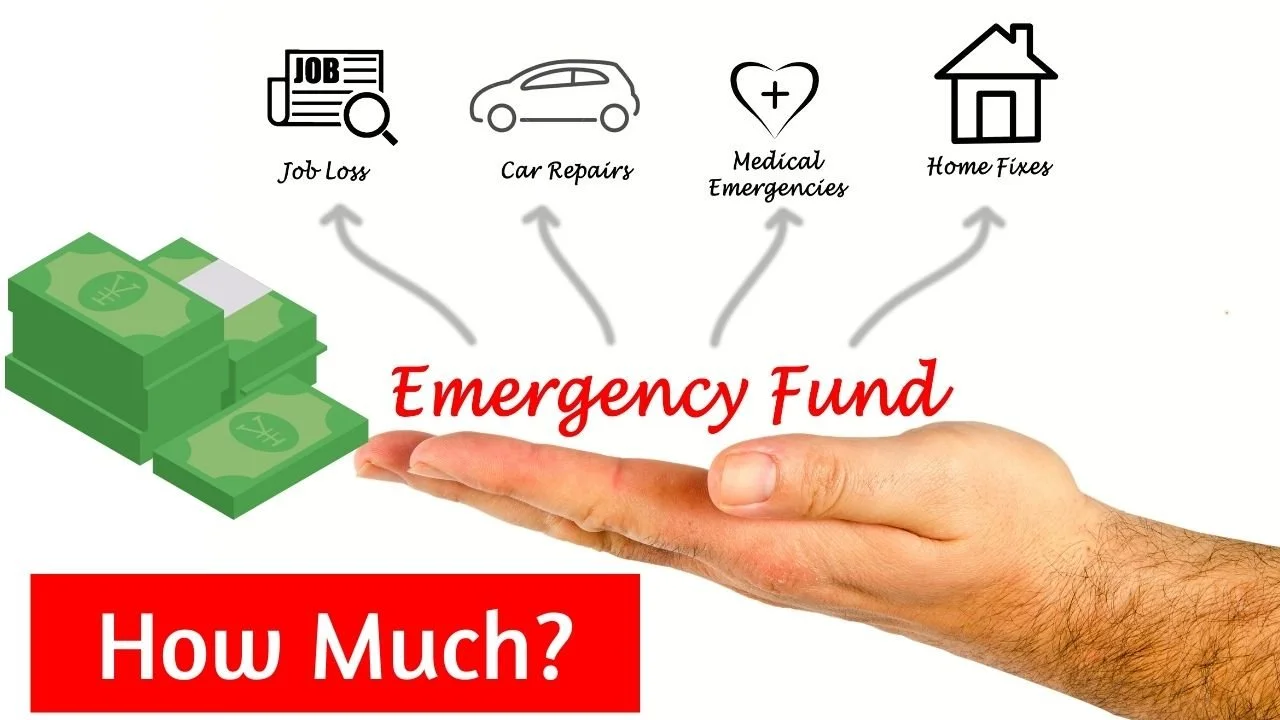
How Much Should You Have In An Emergency Fund?
Establishing an emergency fund is an important step in achieving financial stability and growth. Not only does it help protect you when big expenses arise or when a spouse loses a job but it also helps keep your other financial goals on track.
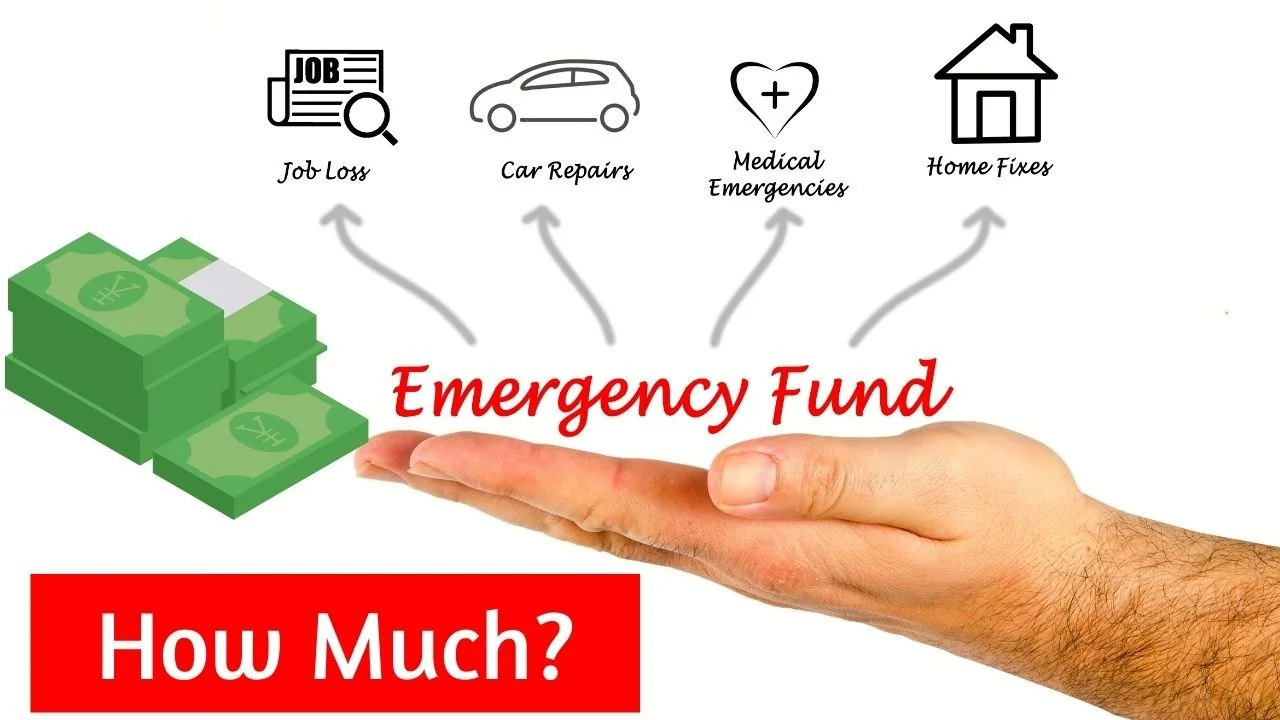
Establishing an emergency fund is an important step in achieving financial stability and growth. Not only does it help protect you when big expenses arise or when a spouse loses a job but it also helps keep your other financial goals on track. When we educate clients on emergency funds, the follow questions typically arise:
How much should you have in an emergency fund?
Does the amount vary if you are retired versus still working?
Should your emergency fund be held in a savings account or invested?
When is your emergency fund too large?
How do you coordinate this with your other financial goals?
Emergency Fund Amount
In general, your emergency fund should typically be 4 to 6 months of your total monthly expenses. To calculate this, you will have to complete a monthly budget listing all of your expenses. Here is a link to an excel spreadsheet that we provide to our clients to assist them with this budgeting exercise: GFG Expense Planner.
Big unforeseen expenses come in all shapes and sizes but frequently include:
You or your spouse lose a job
Medical expenses
Unexpected tax bill
Household expenses (storm, flooding, roof, furnace, fire)
Major car expenses
Increase in childcare expenses
Family member has an emergency and needs financial support
Without a cash reserve, surprise financial events like these can set you back a year, 5 years, 10 years, or worse, force you into bankruptcy, require you to move, or to sell your house. Having the discipline to establish an emergency fund will help to insulate you and your family from these unfortunate events.
Cash Is King
We usually advise clients to keep their emergency fund in a savings account that is liquid and readily available. That will usually prompt the question: “But my savings account is earning minimal interest, isn’t it a waste to have that much sitting in cash earning nothing?” The purpose of the emergency fund it to be able write a check on the spot in the event of a financial emergency. If your emergency fund is invested in the stock market and the stock market drops by 20%, it may be an inopportune time to liquidate that investment, or your emergency fund amount may no longer be the adequate amount.
Even though that cash is just sitting in your savings account earning little to no interest, it prevents you from having to go into debt, take a 401(k) loan, or liquidate investments at an inopportune time to meet the unforeseen expense.
Cash Reserve When You Retire
I will receive the question from retirees: “Should your cash reserve be larger once you are retired because you are no longer receiving a paycheck?” In general, my answer is “no”, as long as you have your 4 months of living expenses in cash, that should be sufficient. I will explain why in the next section.
Your Cash Reserve Is Too Large
There is such a thing as having too much cash. Cash can provide financial security but beyond that, holding cash does not provide a lot of financial benefits. If 4 months of your living expenses is $20,000 and you are holding $100,000 in cash in your savings account, whether you are retired or not, that additional $80,000 in cash over and above your emergency fund amount could probably be working harder for you doing something else. There is a long list of options, but it could include:
Paying down debt (including the mortgage)
Making contributions to retirement accounts to lower your income tax liability
Roth conversions
College savings accounts for your kids or grandchildren\
Gifting strategies
Investing the money in an effort to hedge inflation and receive a higher long-term return
Emergency Fund & Other Financial Goals
It’s not uncommon for individuals and families to find it difficult to accumulate 4 months worth of savings when they have so many other bills. If you are living paycheck to paycheck right now and you have debt such as credit cards or student loans, you may first have to focus on a plan for paying down your debt to increase the amount of extra money you have left over to begin working toward your emergency fund goal. If you find yourself in this situation, a great book to read is “The Total Money Makeover” by Dave Ramsey.
The probability of achieving your various financial goals in life increases dramatically once you have an emergency fund in place. If you plan to retire at a certain age, pay for your children to go college, be mortgage and debt free, purchase a second house, whatever the goal may be, large unexpected expenses can either derail those financial goals completely, or set you back years from achieving them.
Remember, life is full of surprises and usually those surprises end up costing you money. Having that emergency fund in place allows you to handle those surprise expenses without causing stress or jeopardizing your financial future.

About Michael……...
Hi, I’m Michael Ruger. I’m the managing partner of Greenbush Financial Group and the creator of the nationally recognized Money Smart Board blog . I created the blog because there are a lot of events in life that require important financial decisions. The goal is to help our readers avoid big financial missteps, discover financial solutions that they were not aware of, and to optimize their financial future.
Frequently Asked Questions (FAQs):
How much should you have in an emergency fund?
Most financial experts recommend saving between four and six months’ worth of essential living expenses. To determine your target amount, create a monthly budget of housing, utilities, insurance, food, transportation, and other recurring costs, then multiply that total by the desired number of months.
Should your emergency fund be different if you’re retired?
Not necessarily. A reserve of about four months of living expenses is usually sufficient for retirees, provided that regular income sources such as pensions or Social Security are stable. Holding too much cash in retirement can limit growth opportunities and reduce purchasing power over time.
Where should you keep your emergency fund?
An emergency fund should be kept in a liquid, low-risk account such as a savings or money market account. While the interest rate may be modest, the priority is accessibility and protection from market fluctuations, ensuring the money is available when needed.
Can an emergency fund be too large?
Yes. Once your fund exceeds four to six months of expenses, the extra cash could be more productive elsewhere—such as paying down debt, contributing to retirement accounts, or investing for long-term goals. Cash beyond what you truly need for emergencies often loses value to inflation.
How can you build an emergency fund while managing debt or other goals?
If you’re living paycheck to paycheck or carrying high-interest debt, start small and automate savings to gradually build your fund. Paying off debt first can free up monthly cash flow, making it easier to reach your savings goal without sacrificing progress toward other financial priorities.
Why is an emergency fund important for long-term financial success?
An emergency fund protects you from having to use credit cards, take loans, or sell investments at a loss when unexpected expenses occur. It provides peace of mind and keeps your retirement, education, and other financial goals on track even during difficult times.