How Does Depreciation Work for Rental Properties?
Rental property depreciation allows investors to reduce taxable income by spreading the cost of a property over 27.5 years. This article explains how depreciation works, how it offsets rental income, and how improvements are treated. It also covers what happens when a property is fully depreciated and how depreciation recapture impacts taxes when selling. Understanding these rules can help investors maximize tax efficiency and avoid costly surprises.
By Michael Ruger, CFP®
Partner and Chief Investment Officer at Greenbush Financial Group
Depreciation is one of the most important tax benefits of owning rental property. It allows property owners to offset part of the cost of owning the property against the rental income they receive, which can significantly reduce taxes in the early years of ownership.
In this article, we’ll cover:
What depreciation is and how it works
The 27.5-year depreciation rule for rental properties
How depreciation can offset rental income
How improvements are depreciated
What happens when depreciation runs out
What depreciation recapture is when you sell the property
What Is Depreciation?
Depreciation is a tax deduction that allows rental property owners to recover the cost of a property over time. Even though real estate often increases in value, the IRS allows you to treat the property as if it is wearing out over time and deduct a portion of its value each year.
This deduction can be used to offset rental income, which may reduce how much tax you owe on the income the property generates.
The 27.5-Year Depreciation Rule
Residential rental properties are typically depreciated over 27.5 years.
This means you take the purchase price of the property (excluding land value) and divide it by 27.5 to determine your annual depreciation deduction.
Example:

So, if you purchased a rental property for $300,000, you can depreciate roughly $11,000 per year.
How Depreciation Offsets Rental Income
Depreciation is considered a non-cash expense, meaning you don’t actually write a check for it, but you still get the tax deduction.
Example Scenario:
Rental income: $11,000 per year
Depreciation: $11,000 per year
In this example, the depreciation deduction offsets the rental income, which may result in little to no taxable rental income for that year.
This is one of the reasons rental real estate can be a very tax-efficient investment.
Depreciation on Improvements
Many rental property owners make improvements to their property, such as:
New roof
New furnace or heating system
Kitchen renovation
Bathroom remodel
Flooring
Additions
These are called capital improvements, and each improvement typically has its own depreciation schedule separate from the original property purchase.
For example:
Appliances: Often 5-year depreciation
Carpeting: Often 5–7 years
Roof: Often 27.5 years
HVAC systems: Often 15–27.5 years depending on classification
There are also situations where bonus depreciation or Section 179 may allow you to deduct a larger portion of the improvement cost upfront.
This is an area where working with a knowledgeable tax professional is very important, because depreciation schedules vary depending on the type of improvement.
What Happens When a Property Is Fully Depreciated?
After 27.5 years, the property is considered fully depreciated.
This means:
You no longer receive the annual depreciation deduction
More of your rental income becomes taxable
Your tax liability on rental income may increase
However, you still own the property and still collect rental income — you just don’t get the depreciation tax benefit anymore.
What Is Depreciation Recapture?
Depreciation is a great tax benefit while you own the property, but when you sell the property, the IRS requires something called depreciation recapture.
When you sell a rental property:
You pay capital gains tax on the profit from the sale
You also pay tax on all the depreciation you took over the years
Depreciation recapture is taxed at a flat 25% federal tax rate
Example:
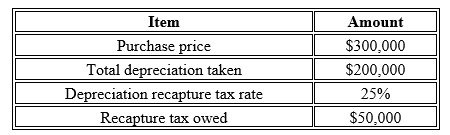
So in this example, when the property is sold, the owner would owe:
Capital gains tax on the profit plus
$50,000 in depreciation recapture tax
This surprises many real estate investors if they are not prepared for it.

About Michael……...
Hi, I’m Michael Ruger. I’m the managing partner of Greenbush Financial Group and the creator of the nationally recognized Money Smart Board blog . I created the blog because there are a lot of events in life that require important financial decisions. The goal is to help our readers avoid big financial missteps, discover financial solutions that they were not aware of, and to optimize their financial future.
Frequently Asked Questions (FAQs)
-
How long do you depreciate a rental property?Residential rental property is depreciated over 27.5 years.
-
What happens if I don't take depreciation?The IRS assumes you took it anyway, and you may still have to pay depreciation recapture when you sell.
-
Can I depreciate renovations on my rental property?Yes, but renovations and improvements typically have their own depreciation schedules.
-
What is bonus depreciation?Bonus depreciation allows you to deduct a large portion of certain improvements upfront instead of spreading the deduction over many years.
-
Do I have to pay depreciation back when I sell the property?When you sell the property, you may be subject to depreciation recapture, which taxes the total depreciation amount taken by 25%.
-
What happens after 27.5 years of depreciation?The property is fully depreciated and you no longer receive the annual depreciation deduction.
-
Does depreciation reduce my capital gains when I sell?No. Depreciation actually lowers your cost basis, which can increase your taxable gain and trigger depreciation recapture.
-
Can depreciation create a loss on paper?Yes. Depreciation can sometimes create a taxable loss even if the property is producing positive cash flow.
-
Should I work with a CPA if I own rental property?It's highly recommended. Depreciation, improvements, and recapture rules are complex, and a knowledgeable CPA can help you maximize tax benefits and avoid costly mistakes.