
Social Security Cost of Living Increase Only 2.8% for 2026
The Social Security Administration announced a 2.8% cost-of-living adjustment (COLA) for 2026, slightly higher than 2025’s 2.5% increase but still below the long-term average. This modest rise may not keep pace with the real cost of living, as retirees continue to face rising prices for essentials like food, utilities, and healthcare. Learn how this affects your benefits, why COLA timing matters, and strategies to help offset inflation in retirement.

By Michael Ruger, CFP®
Partner and Chief Investment Officer at Greenbush Financial Group
The Social Security Administration (SSA) has announced that the annual Cost-of-Living Adjustment (COLA) for 2026 will be 2.8%, up slightly from 2.5% in 2025, but still below the ten-year average of about 3.1%. While any increase in Social Security benefits is welcome news for retirees, many experts and retirees alike worry that this modest adjustment may not be enough to keep pace with rising living costs.
In this article, we’ll cover:
How the 2026 COLA compares to previous years
Why this year’s increase may not keep up with inflation
The lag retirees face when inflation heats up
Possible strategies to help offset higher costs
The 2026 COLA: Modest in Historical Context
While the 2.8% increase may seem like a fair bump, it’s actually on the lower end of recent COLA adjustments. Here’s a look at the last five years of Social Security COLAs:
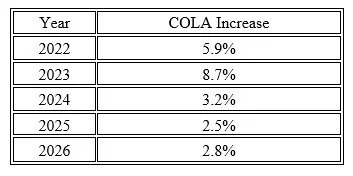
As the table shows, retirees experienced significant boosts during the high-inflation years of 2022 and 2023, but those increases have tapered off as inflation cooled — at least according to official data. However, many households continue to feel that everyday prices for groceries, utilities, and especially healthcare haven’t truly come back down.
Why the 2026 COLA May Not Be Enough
Although the 2.8% COLA aims to help beneficiaries keep up with inflation, many retirees report that their actual cost of living has increased by well over 3%. Everyday expenses — particularly healthcare premiums, prescription drugs, and food — have outpaced average inflation in recent years.
For retirees living on a fixed income, this can feel like a slow squeeze. Even small differences between the COLA and real inflation can add up to a meaningful loss in purchasing power over time.
The Timing Problem: If Inflation Heats Up, Help May Be a Year Away
One major challenge with the COLA system is timing. Adjustments are made once per year, based on inflation readings from the third quarter of the previous year.
That means if inflation begins to surge again in mid-2026 — say, to 4% or higher — retirees won’t see an increase in their Social Security benefits until January 2027. By then, a full year of higher prices could have eroded much of their financial cushion.
For retirees already struggling to cover basic costs, that lag can create a serious hardship.
What Can Retirees Do?
If the COLA isn’t keeping up with rising expenses, retirees may need to take proactive steps to protect their financial well-being. A few options to consider:
Reevaluate annual spending. Look for non-essential expenses that can be trimmed or delayed.
Explore part-time or flexible income. Even modest earnings can help bridge the gap during higher-inflation periods.
Lean on family support if necessary. Having an honest discussion about temporary help from family members can make a meaningful difference.
Revisit your financial plan. This is a good time to review your withdrawal strategy, investment income, and emergency savings to make sure your plan can weather inflation surprises.
The Importance of Adjusting Retirement Projections for Inflation
When planning for retirement, it’s critical to adjust annual expenses for inflation in your projections. Even modest inflation can dramatically change your future spending needs.
Let’s look at an example:
A 65-year-old retiree today has annual living expenses of $60,000.
If inflation averages 3% per year, by age 75, those same expenses would grow to roughly $80,600.
That’s over $20,000 more per year — just to maintain the same standard of living.
Failing to account for inflation in your retirement projections can lead to underestimating how much income you’ll truly need down the road. Whether you’re living off investment withdrawals, pensions, or Social Security, it’s essential to plan for rising costs and ensure your income sources can keep pace.
Final Thoughts
Now more than ever, staying proactive about budgeting, income planning, and inflation protection strategies is essential. Social Security was never meant to cover all retirement expenses — and in today’s environment, it’s important to ensure your broader financial plan can pick up where the COLA falls short.

About Michael……...
Hi, I’m Michael Ruger. I’m the managing partner of Greenbush Financial Group and the creator of the nationally recognized Money Smart Board blog . I created the blog because there are a lot of events in life that require important financial decisions. The goal is to help our readers avoid big financial missteps, discover financial solutions that they were not aware of, and to optimize their financial future.
Frequently Asked Questions (FAQ)
How much will Social Security benefits increase in 2026?
The Social Security Administration announced a 2.8% Cost-of-Living Adjustment (COLA) for 2026, a modest rise from 2.5% in 2025. This increase remains below the ten-year average of roughly 3.1%.
Why is the 2026 COLA increase considered modest?
While the 2.8% adjustment helps offset inflation, it’s smaller than the larger increases retirees saw in 2022 and 2023 during periods of high inflation. Many retirees feel everyday costs, especially for healthcare and essentials, continue to rise faster than official inflation measures suggest.
How does the timing of COLA adjustments affect retirees?
COLA calculations are based on inflation data from the third quarter of the previous year, meaning there’s often a delay in responding to rising prices. If inflation increases during 2026, beneficiaries won’t see higher payments until 2027, leaving a potential gap between expenses and income.
What can retirees do if their Social Security increase isn’t keeping up with inflation?
Retirees can review spending habits, trim non-essential costs, explore part-time income opportunities, and update financial plans to better manage inflation risks. Maintaining flexibility and preparing for price changes can help preserve purchasing power.
How can inflation impact long-term retirement planning?
Even moderate inflation significantly raises living costs over time. For example, a retiree spending $60,000 annually could need over $80,000 within ten years if inflation averages 3%, underscoring the importance of including inflation adjustments in retirement projections.
Why is it important to revisit a financial plan regularly during retirement?
Regularly reviewing your financial plan helps ensure that income sources, such as investments or pensions, continue to meet rising expenses. Adjusting for inflation, healthcare costs, and market changes can help retirees maintain their desired standard of living.