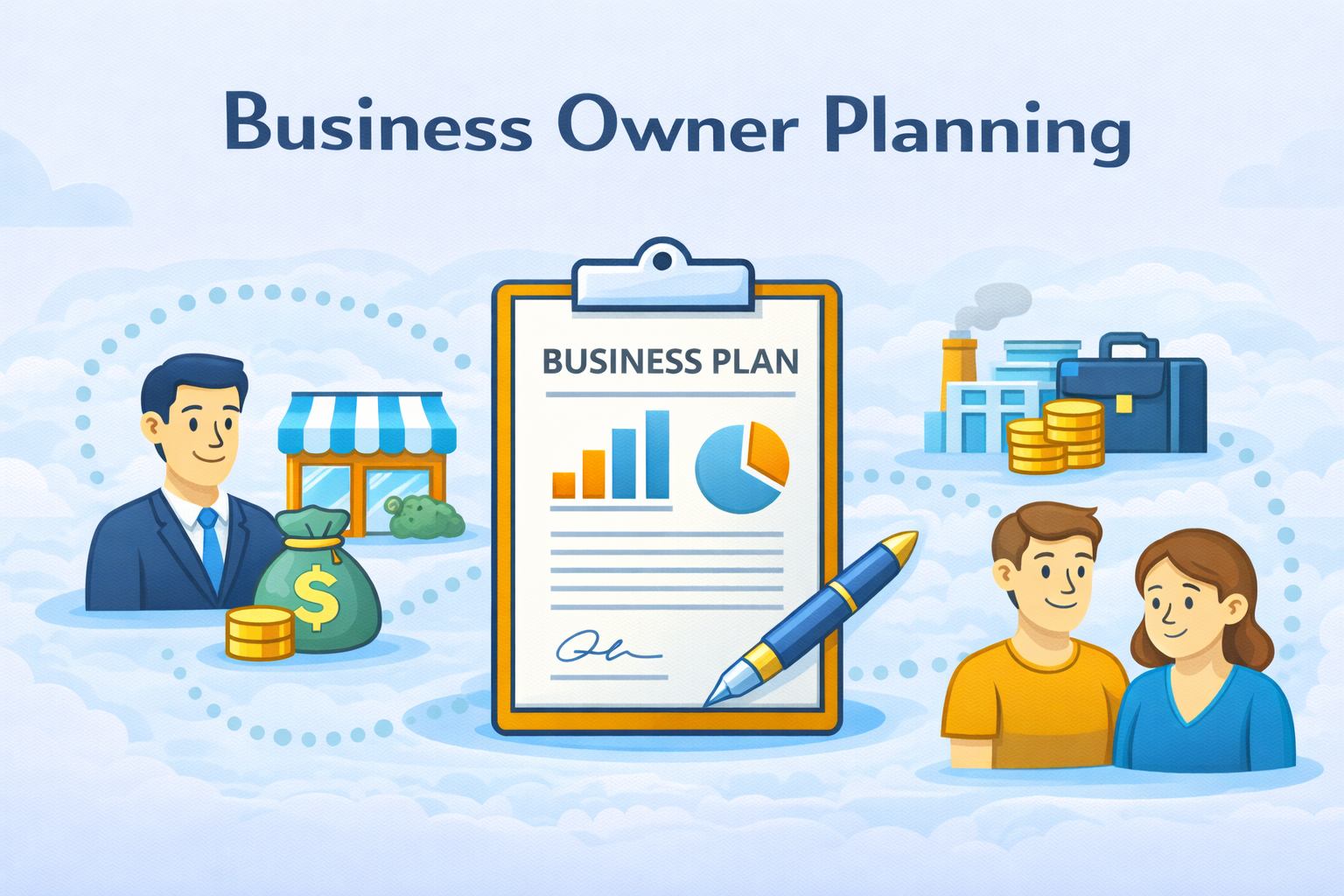
Business Owner Planning (Self-Employed)
Integrated Financial Planning for Entrepreneurs and Self-Employed Professionals
For individuals who are self-employed, financial planning looks very different than it does for W-2 employees. Business owners have access to unique tax strategies, specialized retirement plans, and planning opportunities that are simply not available to most employees—but they also face more complexity.
Because the business is often the largest asset on the balance sheet, a financial plan for a self-employed individual must fully integrate the business plan with the personal plan. These two are rarely separate—and treating them as such can lead to missed opportunities and unnecessary taxes.
Unique Tax Planning Opportunities for Business Owners
Self-employed individuals have far more control over their tax strategy than W-2 employees.
Planning opportunities often include:
Business structure analysis
Deduction optimization
Income timing strategies
Retirement contribution planning
Long-term tax minimization strategies
Because income can fluctuate significantly from year to year, tax planning for business owners must be dynamic and proactive, not reactive.
Employer-Sponsored Retirement Plan Options
One of the most powerful planning tools available to business owners is the ability to choose the type of retirement plan sponsored by the business.
Options may include:
SEP IRAs
SIMPLE IRAs
Solo 401(k) plans
Cash balance plans
For higher-earning self-employed individuals, cash balance plans can allow for $200,000+ in annual pre-tax contributions, far exceeding what is available to most W-2 employees.
Selecting the right plan depends on:
Income level
Number of employees
Cash-flow consistency
Long-term business goals
Cash Flow Planning for Variable Income
Unlike salaried employees, business owners often experience uneven cash flow.
This requires special planning around:
Emergency reserves
Tax payments
Retirement contributions
Personal spending consistency
Cash flow planning ensures stability during lower-income periods while still maximizing growth and tax efficiency during strong years.
Succession Planning and Business Continuity
Succession planning is a critical—but often overlooked—part of business owner planning.
Key considerations include:
What happens to the business if you retire?
What happens if you become disabled or pass away?
Who would take over operations?
How would the business be valued and transferred?
Succession planning helps protect both the business and the owner’s family.
Planning for the Sale of a Business
For many self-employed individuals, selling the business represents one of the largest financial events of their lifetime.
Advance planning allows us to:
Optimize the tax treatment of the sale
Structure the transaction efficiently
Integrate sale proceeds into retirement planning
Coordinate estate and legacy planning
Waiting until a sale is imminent often limits options and increases tax exposure.
Investment and Retirement Planning for Business Owners
Business owners often have:
A large portion of net worth tied to the business
Concentration risk
Irregular savings patterns
Investment planning must account for:
Business risk exposure
Diversification needs
Retirement income planning
Tax exposure
Tax strategy becomes even more important as business owners transition from accumulation to retirement.
No Two Business Owners Are the Same
Financial planning for self-employed individuals varies a lot from person to person.
Each business differs by:
Industry
Size
Growth trajectory
Employee structure
Revenue consistency
This is why we spend significant time understanding:
How the business operates
Where opportunities exist
How to optimize both the business and personal financial picture
Our Approach to Business Owner Planning
At Greenbush Financial Group, we:
Integrate business and personal planning
Identify advanced tax strategies
Design optimal retirement plans
Coordinate succession and exit planning
Adjust strategies as the business evolves
Our goal is to help business owners use their business as a tool to build long-term personal wealth, not just income.





Our Business Owner Planning Articles






“Michael Ruger was quick to respond to my questions and very informed about the retirement and investment concerns I have as a business owner. Would certainly recommend. ⭐⭐⭐⭐⭐”
This endorsement provided for Greenbush Financial Group, LLC on Google Review was made by a non-client, and it was a non-paid review. This non-client was solicited by Greenbush Financial Group, LLC to provide the endorsement.


“Michael and David you guys have done an amazing job explaining the sales process and what to expect. David your experience comes through with your down to earth explanation and regular non financial vocabulary. Thank you”
This endorsement provided for Greenbush Financial Group, LLC on YouTube was a non-solicited and non-paid comment by a non-client.
Frequently Asked Questions About Financial Planning for Self-Employed Individuals
-
Why do self-employed individuals need specialized financial planning?Because business owners have unique tax, retirement, and cash-flow opportunities not available to employees.
-
What retirement plans are available to business owners?Options include SEP IRAs, SIMPLE IRAs, Solo 401(k)s, and cash balance plans.
-
How much can a self-employed person save for retirement?Depending on the plan, contributions can exceed $200,000 per year using advanced strategies.
-
How do fluctuating income levels affect planning?Variable income requires flexible cash-flow and tax planning strategies.
-
Should my business be part of my retirement plan?It depends on the type of business and how business would be valued if it was sold.
-
When should I start planning for the sale of my business?Ideally several years in advance to maximize tax efficiency and value.
-
Do business owners need succession planning?Typically, yes. Succession planning protects both the business and the owner’s family.
-
Can business expenses help reduce personal taxes?When structured properly, business strategies can significantly reduce overall tax liability.
Contact Us . . . .

All of our services start with a complimentary consult. No high pressure sales tactics. We are financial planners, not salesmen.
About Our Firm: Greenbush Financial Group is an independent registered investment advisory firm based in Albany, New York, that provides four main services to clients: fee-based financial planning services, investment management, employer-sponsored retirement plans, and retirement planning services. The firm serves clients locally in the Albany region and virtually across the United States.