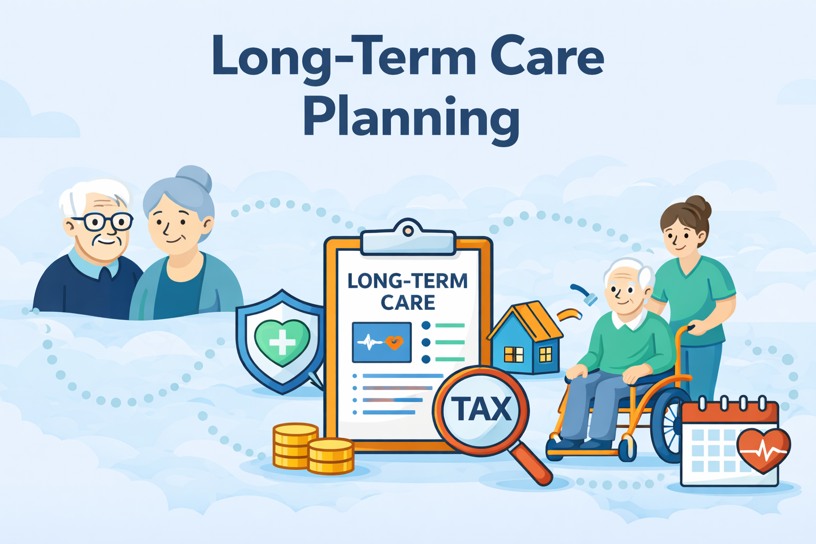
Long-Term Care Planning
Preparing for Care Needs With Clarity, Flexibility, and Peace of Mind
Long-term care planning has become an increasingly important part of the financial planning process as life expectancy continues to increase. While living longer is a positive development, it also means that many individuals become more frail in their later years and are more likely to experience a long-term care event.
Long-term care events are often very costly, emotionally taxing, and complex to manage—making advance planning essential. There is also significant variation among clients in terms of how and where they would want care provided, which directly impacts the planning solutions we recommend.
The Different Phases of Long-Term Care Needs
Long-term care needs often evolve gradually rather than all at once.
In the early stages:
Individuals may only need assistance a few hours per day
Care is often provided by home health aides
Costs can be relatively manageable
As care needs increase:
Assistance may be required daily or seven days per week
Supervision, medical support, and safety concerns become more significant
Families must evaluate more comprehensive solutions
At this stage, individuals typically weigh:
Full-time in-home care
Assisted living facilities
Nursing homes
While most people prefer to remain in their homes, 24/7 private in-home care is one of the most expensive options, often exceeding what many families can sustainably afford.
Quality of Care vs. Cost of Care
One of the most common—and misunderstood—assumptions we see is the belief that:
“If I put my assets into a Medicaid trust, I’ll automatically qualify for Medicaid and get the care I want.”
In reality, this is often not the case.
If Medicaid is paying for care:
The individual can only receive care at facilities with Medicaid beds available
Options may be limited
Quality of care may not align with personal preferences
24/7 private in-home care is not an option under Medicaid
This is why it is critical to determine what type of care a client would actually want, and then build a financial plan around that preference—rather than defaulting to a single solution.
The Three Primary Ways to Pay for Long-Term Care
From a planning standpoint, there are three main approaches to paying for long-term care:
1. Long-Term Care Insurance
Historically, long-term care insurance was the default solution. Over the last decade, this has changed dramatically.
Challenges include:
Significant premium increases
Insurers underestimating longevity and care costs
Policyholders paying for underwriting mistakes
Many carriers exiting the market entirely
In New York, for example, only one insurance carrier is currently issuing new long-term care policies—resulting in limited competition and high costs.
2. Self-Insuring
Because of rising insurance costs, many individuals now choose to self-insure.
This approach involves:
Setting aside a dedicated pool of assets early in retirement
Treating those assets as a long-term care “reserve”
Allowing those assets to grow over time
Excluding them from normal spending and return projections
If care is needed, there is a clear plan for which assets will be used.
If care is never needed, the assets pass to heirs.
Self-insurance requires careful modeling to determine:
How much to set aside
How to fund care for one spouse vs. two
How to invest the long-term care self-insurance account
3. Medicaid Planning Through Irrevocable Trusts
For individuals who do not have sufficient assets to privately pay for care, Medicaid planning can be appropriate.
This typically involves:
Transferring non-retirement assets (real estate, brokerage accounts, savings) into an irrevocable trust
Assets no longer being considered owned by the individual
Avoiding the Medicaid spend-down process
Preserving assets for a spouse or heirs
However:
States like New York impose a five-year look-back period
Transfers within that period can result in penalties
Advanced planning is required well before care is needed
This solution can be effective—but only when implemented thoughtfully and early.
Understanding Medicaid Rules Is Critical
Long-term care planning also requires a detailed understanding of Medicaid rules, including:
Countable vs. non-countable assets
Income that must be committed to care (pensions, Social Security, RMDs)
Assets that may be exempt
How trusts, gifting, and other strategies interact with eligibility
There are often multiple planning paths beyond just using a trust, each with different tax and financial implications.
The Family Impact of Not Having a Plan
Without a long-term care plan:
Care decisions often happen during a crisis
Adult children are forced to step in unexpectedly
Options become limited
Assets may be spent down unnecessarily
Emotional and financial stress increases significantly
Having a plan is not just about money—it is about reducing the burden on family members and ensuring care decisions reflect your wishes.
Our Approach to Long-Term Care Planning
At Greenbush Financial Group, we help clients:
Clarify their care preferences
Evaluate insurance, self-insurance, and Medicaid strategies
Model long-term care costs into retirement projections
Coordinate with estate and elder law attorneys
Understand tax and Medicaid implications
Create flexible plans that evolve over time
Advanced planning is the key to preserving both financial security and family peace of mind.





Our Long-Term Care Planning Articles





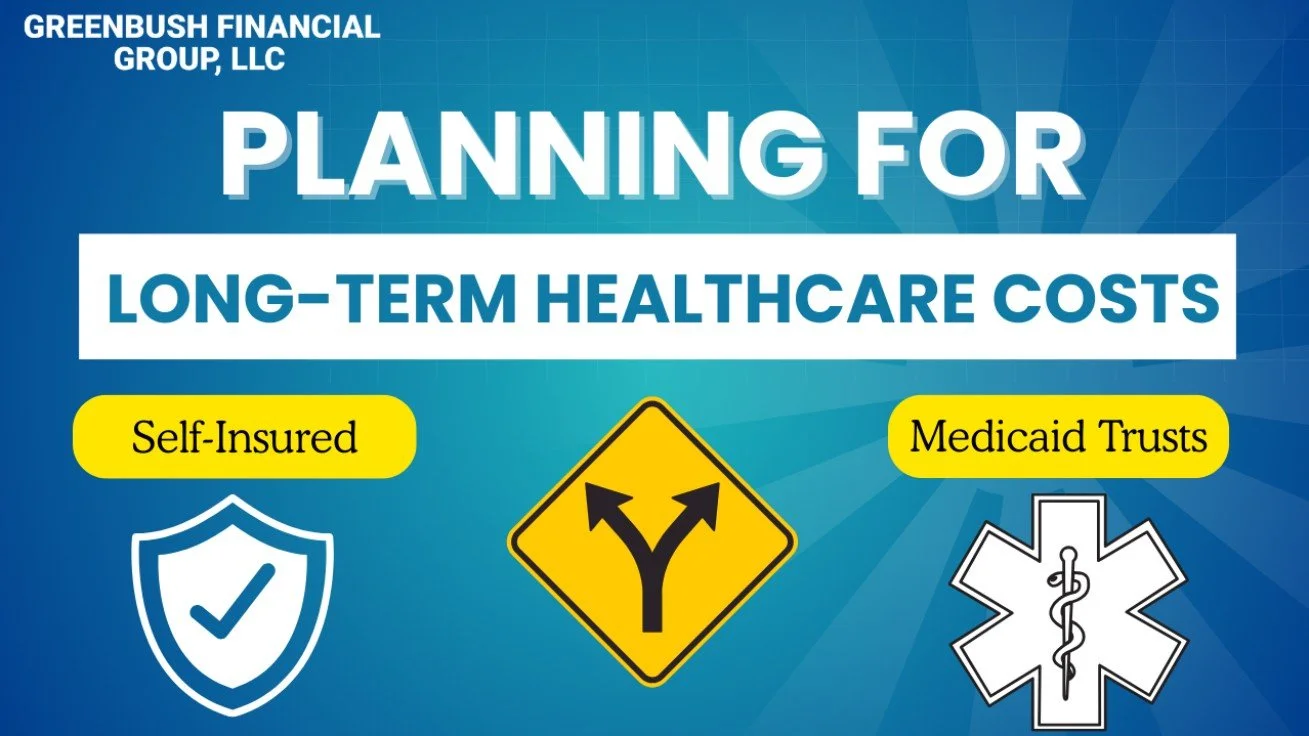
Frequently Asked Questions About Long-Term Care Planning
-
What is considered a long-term care event?A long-term care event involves assistance with daily living activities due to aging, illness, or cognitive decline, often lasting months or years.
-
How much does long-term care typically cost?Costs vary widely but can range from tens of thousands annually for part-time care to over $250,000 per year for full-time in-home care.
-
Is long-term care insurance still worth it?For some, yes—but rising premiums, limited carriers, and underwriting challenges have made it less viable for many families.
-
What does it mean to self-insure for long-term care?Self-insuring means setting aside dedicated assets to pay for future care rather than relying on insurance.
-
Does Medicaid pay for in-home care?Medicaid coverage is limited and does not typically cover 24/7 private in-home care.
-
What is the Medicaid five-year look-back rule?Medicaid reviews asset transfers made within five years of applying and may impose penalties for those transfers.
-
Can a trust protect assets from long-term care costs?Yes, an irrevocable trust can protect assets if structured properly and funded outside the look-back period.
-
When should long-term care planning begin?Ideally well before retirement or any health decline—early planning provides the most flexibility and options.
Contact Us . . . .

All of our services start with a complimentary consult. No high pressure sales tactics. We are financial planners, not salesmen.
About Our Firm: Greenbush Financial Group is an independent registered investment advisory firm based in Albany, New York, that provides four main services to clients: fee-based financial planning services, investment management, employer-sponsored retirement plans, and retirement planning services. The firm serves clients locally in the Albany region and virtually across the United States.