
Trump Accounts For Minor Children Explained: A New Wealth-Building Opportunity
Trump Accounts are a new retirement savings vehicle created under the 2025 tax reform that allow parents, grandparents, and even employers to contribute up to $5,000 per year for a minor child — even if the child has no earned income. In this article, we explain how Trump Accounts work, contribution limits, tax rules, planning opportunities, and the key considerations to understand before opening one.
By Michael Ruger, CFP®
Partner and Chief Investment Officer at Greenbush Financial Group
Over the past several months, we’ve received a lot of questions from parents and grandparents about the new Trump Accounts created under the 2025 tax reform. Most of those questions fall into a few clear categories:
How do Trump Accounts get set up?
Who can fund them, and how much can be contributed?
What makes them different from traditional or Roth IRAs?
And most importantly—are they really worth it?
What’s driving so much interest is that these accounts can be a tremendous long-term wealth-building opportunity for children and grandchildren. Unlike traditional or Roth IRAs, which require earned income to contribute, Trump Accounts allow up to $5,000 per year in contributions even if the child has no income at all. That creates decades of potential tax-deferred compounding.
That said, Trump Accounts also come with a unique set of rules, especially while the account owner is a minor. In this article, we’ll break down how Trump Accounts work, how they’re funded, how they interact with other retirement accounts, and where the real planning opportunities—and responsibilities—exist.
What Is a Trump Account?
A Trump Account is a new type of retirement account designed specifically for minors, created as part of the One Big Beautiful Bill Act of 2025. Conceptually, it is built on the framework of a traditional IRA, but with special rules that apply from birth through age 17.
The goal of these accounts is simple: to jump-start retirement savings as early as possible, even before a child has their first job.
Contribution Limits and Funding Rules
Annual Contribution Limits
Total annual contributions are limited to $5,000 per year
Of that amount, up to $2,500 may come from an employer
These limits apply beginning in 2026 and will be indexed for inflation in future years
Who Can Contribute?
Trump Accounts can receive contributions from several sources:
Parents, grandparents, or other individuals (after-tax)
Employers (pre-tax)
Government or charitable entities (pre-tax)
A one-time $1,000 federal government contribution for eligible children
Importantly, individual contributions are made with after-tax dollars, meaning they create “basis” in the account, while employer and government contributions are pre-tax.
The $1,000 Government Contribution
As part of a pilot program, the federal government will contribute $1,000 to a Trump Account for children born between 2025 and 2028, provided the parent or guardian opts in.
Key points:
The contribution is pre-tax
It does not count toward the $5,000 annual limit
Parents must actively elect the contribution—it is not automatic
This is essentially “free money,” and for many families, that alone may justify opening the account.
How Trump Accounts Can Be Invested
Trump Accounts have very strict investment rules:
Accounts must be established with initial trustees selected by the U.S. Treasury
Individuals may have only one Trump Account
Investments are limited to unleveraged mutual funds or ETFs
The investments must track a qualified index of primarily U.S. equities
Holding cash is virtually not allowed
Total investment fees cannot exceed 0.10%
At this time, the list of approved custodians has not yet been released, and is expected sometime in 2026.
How and When Trump Accounts Are Set Up
Trump Accounts cannot be opened with a traditional custodian yet.
Here’s what we know about the setup process:
Accounts become operational starting July 4, 2026
All accounts must initially be opened using U.S. Treasury–approved trustees
A new IRS Form 4547 and an online application at trumpaccounts.gov are expected to launch in mid-2026
To establish the accounts Form 4547 or the special application can be submitted prior to the July 4, 2026 program launch date
That same process will be used to request the $1,000 government contribution
Once established, families can begin making annual contributions.
Special Rule for Working Minors
One of the most powerful planning features applies to minors who do have earned income.
If a child earns income:
They can contribute to a Trump Account
They can also contribute to a traditional IRA or Roth IRA
The contribution limits do not reduce or affect one another
In other words, a working minor can fund both account types in the same year, creating even more long-term compounding potential.
Roth Conversion Opportunity After Age 18
Once the account owner turns 18, Trump Accounts largely revert to standard traditional IRA rules.
This is where advanced planning opportunities emerge:
It can then be converted to a Roth IRA
Once converted, future growth and qualified withdrawals may be tax-free
However, there’s an important catch.
Tracking Basis Is Critical
Individual contributions were made with after-tax dollars
Employer and government contributions are pre-tax
Investment growth is pre-tax
This creates a mixed-tax account, requiring careful basis tracking over time. If records aren’t maintained, the IRS may treat withdrawals as fully taxable.
Beware of Kiddie Tax: Roth conversions trigger a taxable event for any pre-tax contributions or earnings held within the Trump Account. Conversions and distributions from IRAs are considered unearned income of the minor child, which can trigger the Kiddie tax, making the taxable distribution amount subject to tax at the parent’s tax rate instead of the child’s.
Employer Contributions Are Allowed
Employers are permitted to contribute to Trump Accounts:
Contributions are pre-tax
They may be made for the employee or the employee’s dependent child
Employer contributions count toward the $5,000 annual limit (up to $2,500)
This opens the door for unique employer-based benefits and planning strategies.
How Trump Account Distributions Work After Age 18
Once a child reaches age 18, Trump Accounts undergo an important transition. While these accounts are designed for minors, the distribution rules after age 18 closely resemble those of a traditional IRA, which introduces both flexibility and responsibility.
Understanding how distributions work at this stage is critical, because mistakes can create unnecessary taxes or penalties.
No Distributions Before Age 18
First, it’s important to note that Trump Accounts do not allow distributions prior to age 18. Until then, the account is strictly a long-term retirement vehicle.
Once the account owner reaches the year they turn 18, distributions become available—but that does not mean they are penalty-free.
Traditional IRA Rules Apply After Age 18
Beginning in the year the child turns 18, the Trump Account is treated much like a traditional IRA for tax purposes. That means:
Distributions are generally taxable
Early withdrawals may be subject to a 10% penalty
The account follows pro-rata taxation rules if it contains both after-tax and pre-tax money
How Distributions Are Taxed
Trump Accounts typically hold two types of money:
After-tax contributions (from parents, grandparents, or others)
Pre-tax dollars, which include:
Employer contributions
Government contributions (including the $1,000 pilot contribution)
All investment growth
When a distribution is taken, the IRS does not allow the account owner to choose which dollars come out. Instead, each withdrawal is treated as a proportional mix of taxable and non-taxable funds.
Example (Simplified)
If 25% of the account consists of after-tax contributions, then:
25% of any distribution is tax-free
75% is taxable as ordinary income
This makes accurate recordkeeping essential, since the after-tax portion (known as “basis”) must be documented to avoid overpaying taxes.
Early Withdrawal Penalties Still Apply
Although distributions are allowed after age 18, they are not automatically penalty-free.
Withdrawals before age 59½ generally incur a 10% early withdrawal penalty
Certain exceptions may apply, such as:
Qualified higher education expenses
Limited first-time home purchase expenses
Certain structured payment arrangements
Absent one of these exceptions, both income taxes and penalties may apply.
Rollovers and Roth Conversions Instead of Distributions
Rather than taking cash distributions, many families will focus on rollovers and Roth conversions, which are allowed once the account owner turns 18.
At that point:
The Trump Account can be rolled into a traditional IRA
It may then be converted to a Roth IRA
A Roth conversion is taxable on the pre-tax portion of the account, but once completed, future growth and qualified withdrawals can be tax-free.
This strategy can be especially powerful if conversions are done during low-income years, though taxes still must be paid—ideally using funds outside the account to avoid penalties.
Final Thoughts
Trump Accounts represent a powerful but complex planning tool. For families focused on long-term retirement wealth for children or grandchildren, they offer an early start that was never possible before. However, the rules around taxation, investment limitations, and recordkeeping mean these accounts should be used strategically, not blindly.
As always, thoughtful planning—and understanding how these accounts fit into the bigger financial picture—makes all the difference.

About Michael……...
Hi, I’m Michael Ruger. I’m the managing partner of Greenbush Financial Group and the creator of the nationally recognized Money Smart Board blog . I created the blog because there are a lot of events in life that require important financial decisions. The goal is to help our readers avoid big financial missteps, discover financial solutions that they were not aware of, and to optimize their financial future.
Frequently Asked Questions (FAQ)
1. Do children need earned income to have a Trump Account?
No. Earned income is not required.
2. Are contributions tax-deductible?
Individual contributions are not deductible. Employer and government contributions are pre-tax.
3. Can grandparents contribute?
Yes, as long as total annual limits are respected.
4. Can a child have more than one Trump Account?
No. Only one account per individual is allowed.
5. When can withdrawals be taken?
Distributions follow traditional IRA rules and generally are penalty-free after age 59½.
6. Are Roth conversions allowed?
Yes, starting at age 18 once the account follows IRA rules.
7. Are these accounts required to invest in stocks?
Yes. Investments must track qualified U.S. equity indexes.
8. Is the $1,000 government contribution automatic?
No. Parents must opt in using the IRS process.


















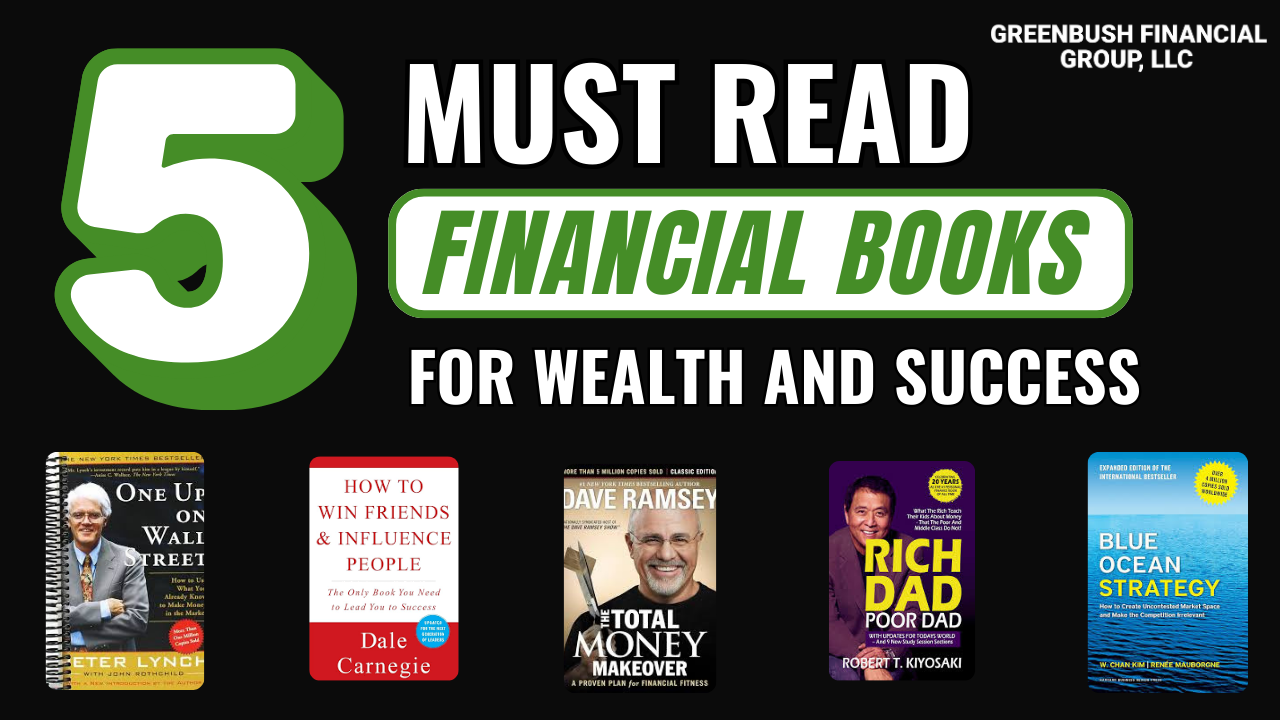
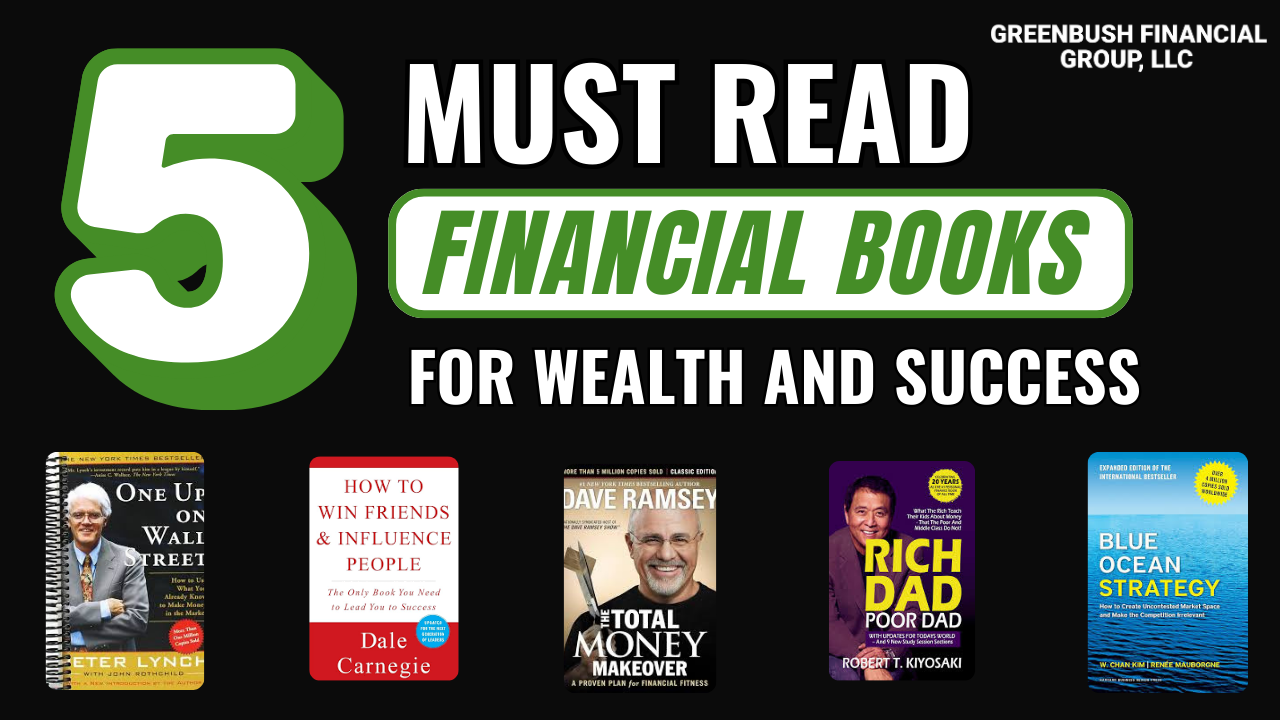
5 Must-Read Financial Books to Build Wealth and Success at Any Stage of Life
Looking to build wealth and sharpen your money skills? Greenbush Financial Group highlights 5 must-read financial books that cover debt, investing, business strategy, and long-term success. Perfect for every stage of life.
By Michael Ruger, CFP®
Partner and Chief Investment Officer at Greenbush Financial Group
Knowledge is power—especially when it comes to money. The earlier you learn the fundamentals of personal finance and business, the faster you can avoid mistakes and build wealth compared to your peers. But whether you’re just starting out in your career, navigating mid-life financial challenges, or planning for retirement, the right financial knowledge can create opportunities and help you achieve greater freedom.
As the Managing Partner of Greenbush Financial Group, I often recommend books as a way to jump-start that education. The right book can provide not only financial strategies but also the mindset shifts needed to succeed both personally and professionally. Below are five must-read books that cover everything from managing debt to investing to starting a business:
The Total Money Makeover by Dave Ramsey
How to Win Friends and Influence People by Dale Carnegie
Rich Dad Poor Dad by Robert Kiyosaki
Blue Ocean Strategy by W. Chan Kim and Renée Mauborgne
One Up on Wall Street by Peter Lynch
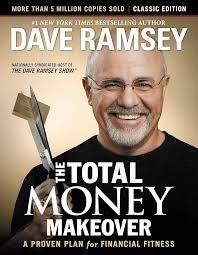
1. The Total Money Makeover by Dave Ramsey
For individuals who find themselves weighed down by student loans, credit card balances, or car payments, this book is the perfect starting point. Ramsey lays out a proven system—his famous “baby steps”—to help readers eliminate debt, build an emergency fund, and begin saving for the future. His approach is straightforward, no-nonsense, and centered on living a debt-free lifestyle.
Key Lessons:
Start with a written budget and tell every dollar where to go.
Attack debt with the “debt snowball” method—paying off the smallest balances first.
Build an emergency fund to protect against unexpected expenses.
Avoid credit cards and debt as a lifestyle—cash is freedom.
Live below your means to create margin for saving and investing.
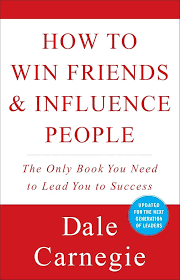
2. How to Win Friends and Influence People by Dale Carnegie
Originally published in 1936, this timeless classic focuses on building strong relationships—a skill just as valuable in business as it is in everyday life. Carnegie teaches that success often depends more on how you treat people than on technical expertise. For anyone looking to grow their career, improve leadership skills, or strengthen communication, this book remains one of the best guides available.
Key Lessons:
Don’t criticize, condemn, or complain—lead with kindness.
Give honest and sincere appreciation—people thrive on recognition.
Become genuinely interested in others, and remember their names.
Avoid arguments—approach conversations with warmth and curiosity.
Let others feel ownership of ideas—collaboration builds stronger outcomes.
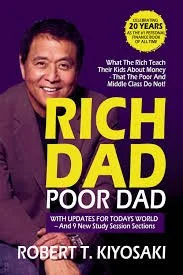
3. Rich Dad Poor Dad by Robert Kiyosaki
This book reshapes the way many people think about money. Through the contrast of his “rich dad” and “poor dad,” Kiyosaki explains why building assets and investing are essential, while relying solely on a paycheck can limit financial growth. The book highlights the benefits of owning a business or investing in income-producing assets versus being stuck in the cycle of working for money.
Key Lessons:
Assets put money in your pocket, liabilities take it out—know the difference.
Don’t work only for money—learn how money works and put it to work for you.
Entrepreneurship and investing create wealth faster than wages.
Financial education is more important than formal education.
Take calculated risks instead of seeking complete security.
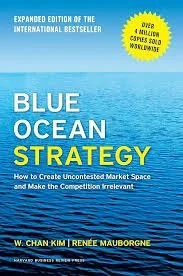
4. Blue Ocean Strategy by W. Chan Kim and Renée Mauborgne
For those who aspire to start their own business, this book is essential. The authors explain how companies can break away from crowded, competitive “red oceans” and instead create innovative products or services in uncontested “blue oceans.” This strategy allows entrepreneurs to differentiate themselves, grow faster, and avoid the race-to-the-bottom competition.
Key Lessons:
Don’t compete in crowded markets—create new market space.
Focus on differentiation and value innovation, not price wars.
Eliminate what doesn’t add value, and elevate what customers truly care about.
Small, creative ideas can disrupt entire industries.
Long-term success comes from standing apart, not blending in.

5. One Up on Wall Street by Peter Lynch
Originally published in 1989, this classic investment book remains one of the most practical guides for everyday investors. Lynch, one of the most successful mutual fund managers of all time, explains how average people can use their everyday knowledge—like the products they buy and the companies they interact with—to make smart investment decisions. While the markets have evolved since the book’s release, the core principles remain timeless.
Key Lessons:
Invest in what you know—your everyday life can reveal great companies.
Do your own research before following Wall Street trends.
Long-term investing beats short-term speculation.
A simple, understandable company is often a better investment than a complex one.
Patience and discipline are critical—ignore market noise.
Final Thoughts
Each of these books delivers valuable lessons that can change the way you approach money, career, and business. From getting out of debt, to building stronger relationships, to launching innovative companies, these resources provide a roadmap to success.
No matter your stage of life or career, pick the book that speaks most to your current situation and commit to applying what you learn. Over time, the habits and strategies you gain will compound, setting you apart and positioning you for long-term wealth.
About Michael……...
Hi, I’m Michael Ruger. I’m the managing partner of Greenbush Financial Group and the creator of the nationally recognized Money Smart Board blog . I created the blog because there are a lot of events in life that require important financial decisions. The goal is to help our readers avoid big financial missteps, discover financial solutions that they were not aware of, and to optimize their financial future.
Frequently Asked Questions (FAQs)
Why is financial education so important?
Financial knowledge helps individuals make informed decisions about saving, investing, and managing debt. The earlier you learn core principles, the more effectively you can avoid mistakes, build wealth, and create financial independence over time.
What are the best books to start learning about personal finance?
Books like The Total Money Makeover by Dave Ramsey, Rich Dad Poor Dad by Robert Kiyosaki, and One Up on Wall Street by Peter Lynch offer practical guidance on budgeting, investing, and building long-term wealth. Each provides actionable strategies for different stages of life.
How can The Total Money Makeover help with debt management?
Dave Ramsey’s book focuses on eliminating debt through a structured “baby steps” plan. It teaches readers to live on a budget, build an emergency fund, and use the “debt snowball” method to gain momentum toward financial freedom.
What’s the main takeaway from Rich Dad Poor Dad?
The book emphasizes that wealth comes from owning assets and understanding how money works, not just earning a paycheck. It encourages entrepreneurship, investing, and financial education as the keys to long-term success.
Why is How to Win Friends and Influence People valuable for financial success?
Success in business and personal finance often depends on relationships and communication. Dale Carnegie’s classic teaches principles of empathy, influence, and connection that are vital for leadership, networking, and negotiation.
Who should read Blue Ocean Strategy?
Aspiring entrepreneurs and business leaders can benefit from this book’s insights on creating new markets instead of competing in saturated ones. It provides a framework for innovation, differentiation, and long-term growth.
What investing lessons does One Up on Wall Street teach?
Peter Lynch shows that everyday investors can identify great opportunities by observing products and companies they already know. His approach focuses on patience, research, and long-term investing rather than short-term speculation.
