

Social Security: A Complete Guide to Benefits
Social Security isn’t just a retirement check—it’s a complex system of benefits that could impact your entire family. In this article, we walk through the four major types of Social Security benefits.

While most Americans understand Social Security as a monthly retirement benefit, the system is far more expansive than that. It provides a foundation of income not only for retirees, but also for spouses, surviving family members, and even minor children.
For many, Social Security is one of the largest sources of guaranteed income in retirement. Yet, without a clear understanding of how the program works, individuals often leave money on the table or make filing decisions that reduce lifetime benefits. In this guide, we’ll walk through the primary types of Social Security benefits available and the planning opportunities they create for you and your family.
Retirement Benefits
Retirement benefits are the most common form of Social Security income and are based on your earnings record over your working years. You must earn 40 quarters of work credit (typically 10 years of work) to qualify.
Filing Age Matters
You can begin collecting benefits as early as age 62, but doing so permanently reduces your monthly benefit. On the other hand, delaying benefits past your Full Retirement Age (FRA) can increase your monthly payment by as much as 8% per year until age 70.
For example, if your Full Retirement Age is 67 and your monthly benefit at that age is $2,000, delaying until age 70 would increase your benefit to approximately $2,480 per month for life.
Planning Strategy:
If you have other sources of income, delaying Social Security can be a powerful way to hedge against longevity risk. Higher lifetime benefits can also increase survivor benefits for a spouse, which is especially important if one spouse is expected to live significantly longer than the other.
Spousal Benefits
Spousal benefits allow a lower-earning spouse (or a non-working spouse) to claim up to 50% of their spouse’s full retirement benefit.
Eligibility Criteria:
Must be at least 62 years old
The higher-earning spouse must have filed for their own benefit
Marriage must have lasted at least 1 year (or 10 years if divorced)
For example, if your spouse's full benefit is $2,000 per month, you could receive $1,000 per month as a spousal benefit—even if you never worked.
Planning Tip:
If your own benefit is less than half of your spouse’s, spousal benefits can provide a significant boost to household income. However, if you claim before your FRA, your spousal benefit will also be reduced.
Survivor Benefits
When a worker passes away, their spouse and dependent children may be eligible for survivor benefits based on the deceased’s earnings record. These benefits can be a critical form of income replacement.
Who Can Claim:
A surviving spouse as early as age 60 (or 50 if disabled)
Surviving divorced spouses (if the marriage lasted 10+ years)
Minor children under age 18 (or 19 if still in high school)
Disabled adult children whose disability began before age 22
Survivor benefits can be up to 100% of the deceased worker’s benefit amount. However, claiming early will reduce the amount received.
Strategy Example:
A widow claiming survivor benefits at age 60 may receive 71.5% of the deceased spouse’s benefit, while waiting until her FRA allows her to claim the full 100%.
If the surviving spouse is also eligible for their own retirement benefit, they can switch between benefits to maximize lifetime payouts. For example, they might take survivor benefits early and delay their own retirement benefit until age 70 to receive delayed credits.
Benefits for Minor Children
Children of retired, disabled, or deceased workers may also qualify for Social Security benefits.
Eligibility:
Must be under age 18 (or 19 if still in high school)
Must be unmarried
Or, must have a disability that began before age 22
Each eligible child may receive up to 50% of the parent’s benefit (or 75% if the parent is deceased), subject to a family maximum of 150% to 180% of the worker’s benefit amount.
Planning Opportunity:
Parents nearing retirement who still have minor children can increase household income by claiming their own benefit and triggering minor benefits for their children. In some cases, this can result in tens of thousands of dollars in additional family income.
Disability Benefits (SSDI)
Social Security Disability Insurance (SSDI) is available to workers who have a qualifying disability and a sufficient work history.
Key Points:
The disability must be expected to last at least 12 months or result in death
The number of required work credits depends on your age at the time of disability
Benefits are based on your average lifetime earnings, similar to retirement benefits
SSDI also includes dependent benefits for minor children and spouses in certain cases, making it another critical piece of the Social Security safety net.
Taxation of Benefits
Many people are surprised to learn that Social Security benefits can be taxable at the federal level, depending on your income. The social security provisional income formula determines what portion of your social security benefits will be taxed at the federal level which ranges from 0% to 85%.
Provisional Income Calculation:
The provisional income formula is as follows:
Provisional income = AGI + tax-exempt interest + 50% of Social Security benefits
If your provisional income exceeds the IRS thresholds below, up to 85% of your Social Security benefits may be subject to federal income tax:
Single filers: Benefits become taxable if income > $25,000
Married filing jointly: Threshold starts at $32,000
Planning Tip:
Roth IRA distributions and qualified withdrawals from a Health Savings Account (HSA) do not count toward provisional income, making them useful tools in managing your tax liability in retirement.
Earnings Limits Before FRA
If you claim benefits before Full Retirement Age and continue working, your benefits may be temporarily reduced.
2025 Earnings Limit:
$23,400/year before FRA
$1 for every $2 earned above this limit is withheld
In the year you reach FRA, a higher threshold applies
No limit applies after reaching FRA
The good news: Any withheld benefits are recalculated into your future payments once you reach FRA, so the money is not lost—it’s just delayed.
Final Thoughts
Social Security is more than just a retirement benefit—it’s an income safety net for families, widows, children, and disabled workers. Understanding how and when to claim each type of benefit can create significant long-term financial value.
Whether you are approaching retirement or already receiving benefits, strategic planning around Social Security can impact your taxes, cash flow, and even legacy planning for future generations.

About Michael……...
Hi, I’m Michael Ruger. I’m the managing partner of Greenbush Financial Group and the creator of the nationally recognized Money Smart Board blog . I created the blog because there are a lot of events in life that require important financial decisions. The goal is to help our readers avoid big financial missteps, discover financial solutions that they were not aware of, and to optimize their financial future.
Frequently Asked Questions (FAQs):
What are the main types of Social Security benefits available?
Social Security provides several types of benefits, including retirement, spousal, survivor, disability (SSDI), and benefits for minor children. Each type is based on specific eligibility criteria tied to a worker’s earnings record and family situation.
How does the age at which I claim Social Security affect my benefit amount?
Claiming benefits before your Full Retirement Age (FRA) reduces your monthly payments permanently, while delaying benefits past FRA can increase them by up to 8% per year until age 70. The best claiming age depends on factors like life expectancy, income needs, and spousal considerations.
Can a spouse who never worked receive Social Security benefits?
Yes, a non-working or lower-earning spouse can receive up to 50% of their spouse’s full retirement benefit as a spousal benefit. To qualify, the higher-earning spouse must have filed for benefits, and the marriage must meet the required duration rules.
What are survivor benefits and who can claim them?
Survivor benefits provide income to the spouse, children, or other dependents of a deceased worker. A surviving spouse can claim benefits as early as age 60, while dependent children and certain disabled adults may also qualify based on the worker’s earnings record.
Are Social Security benefits taxable?
Depending on your income, up to 85% of your Social Security benefits may be subject to federal income tax. The taxable portion is determined using your “provisional income,” which includes your adjusted gross income, tax-exempt interest, and half of your Social Security benefits.
How does working before Full Retirement Age affect my benefits?
If you claim benefits before FRA and continue to work, part of your payments may be temporarily withheld if your earnings exceed annual limits. Once you reach FRA, the withheld amounts are recalculated into future payments, effectively restoring the value over time.
Can children receive Social Security benefits based on a parent’s record?
Yes, children of retired, disabled, or deceased workers may qualify for benefits if they are under 18 (or 19 if still in high school) or became disabled before age 22. These payments can provide up to 50–75% of the parent’s benefit amount, subject to family maximum limits.




















Non-Taxable Income in Retirement: 5 Sources You Should Know About
When it comes to retirement income, not all dollars are created equal. Some income sources are fully taxable, others partially — but a select few can be completely tax-free. And understanding the difference could mean thousands of dollars in savings each year.
When it comes to retirement income, not all dollars are treated equally. Some are fully taxable, others partially taxable, and a select few are entirely tax-free. Understanding the difference is critical to building a retirement income plan that protects your nest egg from unnecessary taxation, especially in a high-inflation, high-cost-of-living environment.
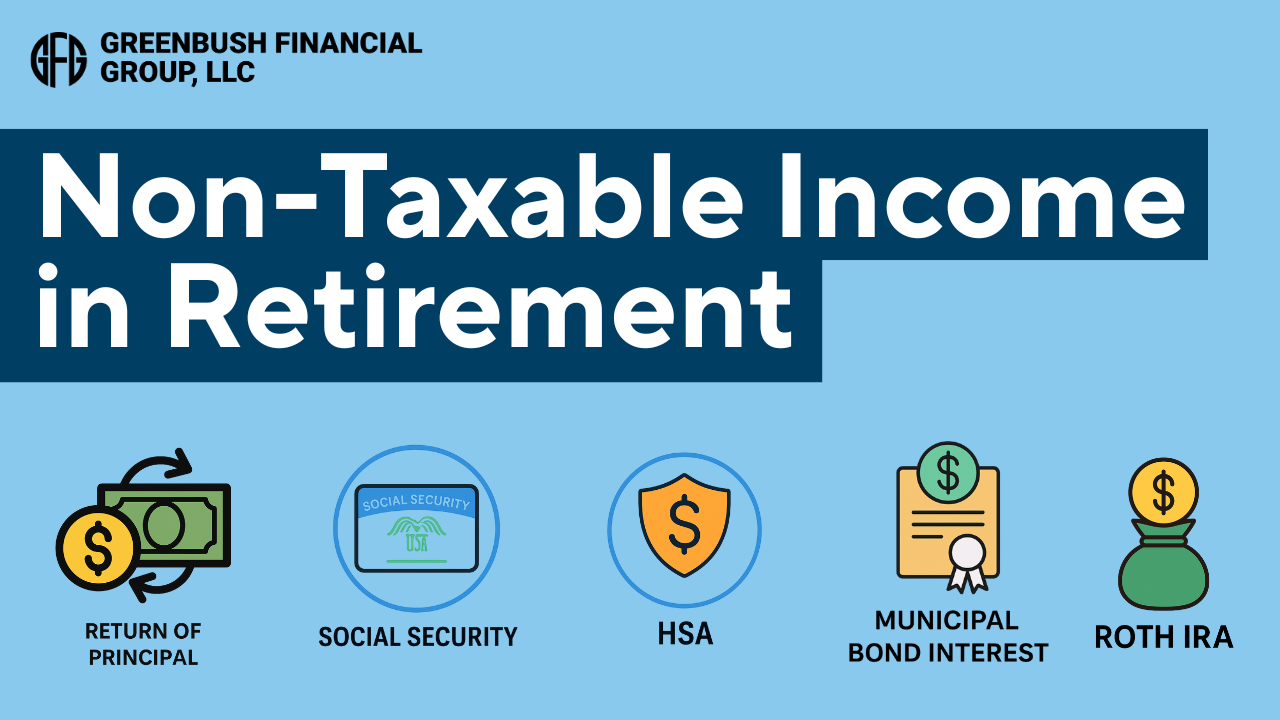
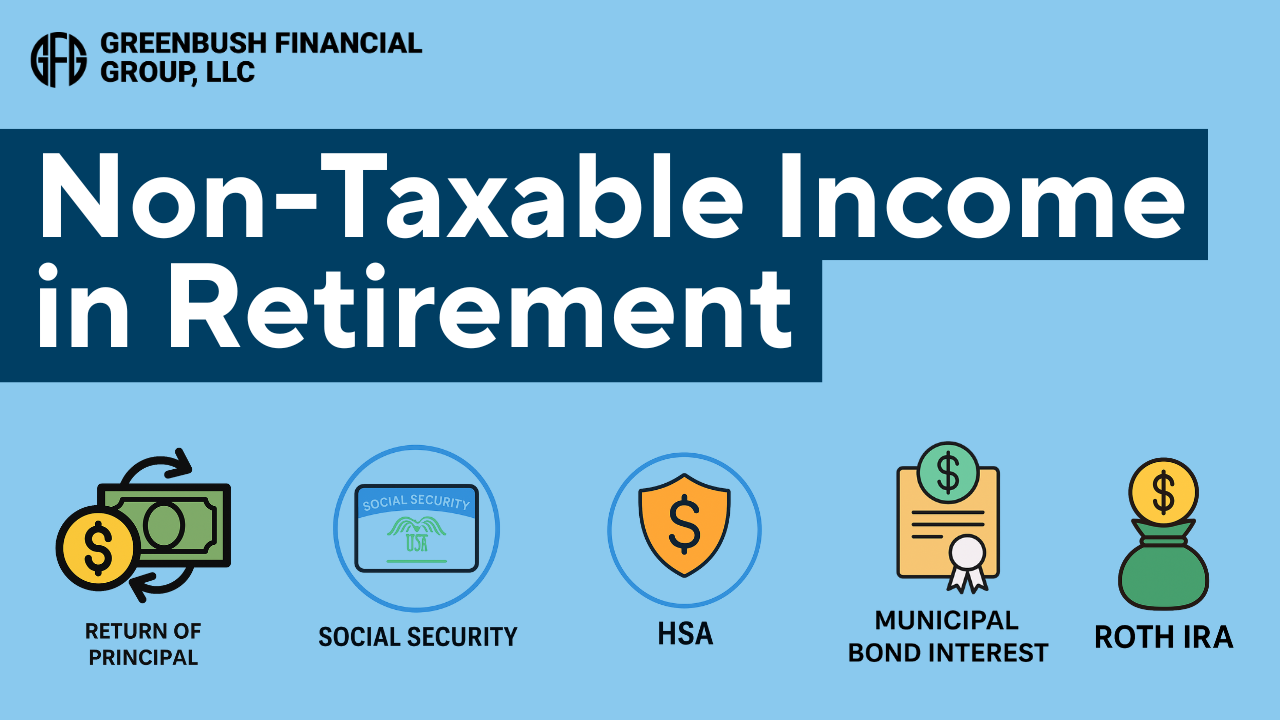
In this article, we break down five sources of non-taxable income in retirement, how they work, and how to strategically use them to lower your tax bill and preserve long-term wealth.
1. Roth IRA Withdrawals
A Roth IRA offers one of the most powerful tax benefits available to retirees — tax-free growth and qualified tax-free withdrawals.
To qualify, withdrawals must occur after age 59½ and at least five years after your first contribution or Roth conversion. If both conditions are met, all distributions (contributions and growth) are 100% tax-free.
Why it matters:
Withdrawals from pre-tax retirement accounts like Traditional IRAs and 401(k)s are taxed as ordinary income, which can push you into a higher tax bracket, increase Medicare premiums, and reduce the portion of your Social Security benefits that are tax-free. With Roth IRAs, none of those problems exist.
Planning strategy:
Many retirees choose to complete Roth conversions during low-income years (such as early retirement) to move pre-tax funds into a Roth IRA while controlling their tax rate. This allows them to create a future pool of tax-free income while reducing Required Minimum Distributions (RMDs) down the line.
2. Health Savings Account (HSA) Distributions for Medical Expenses
HSAs are the only account type that offers triple tax advantages:
Contributions are tax-deductible
Growth is tax-deferred
Withdrawals are tax-free if used for qualified medical expenses
Qualified expenses include Medicare premiums, prescriptions, dental and vision care, long-term care insurance premiums (subject to limits), and more.
Why it matters:
Healthcare is often one of the largest expenses in retirement, and using HSA funds tax-free for these costs allows retirees to preserve their other taxable accounts.
Planning strategy:
For clients who are still working and enrolled in a high-deductible health plan, the strategy may be to contribute the maximum amount to an HSA and pay current medical expenses out-of-pocket. This allows the HSA to grow and be used as a supplemental retirement account for tax-free medical reimbursements later in life.
3. Social Security (Partially Non-Taxable)
Up to 85% of Social Security benefits can be taxable at the federal level, depending on your provisional income (which includes half of your Social Security benefits, taxable income, and tax-exempt interest).
However, if a retiree has very little income other than their social security, it’s possible that they may not pay any tax on their social security benefits.
Why it matters:
Retirees who rely heavily on Roth IRA withdrawals or return of principal from brokerage accounts may be able to keep their provisional income low enough to shield some or all of their Social Security benefits from taxation.
Planning strategy:
By building a tax-efficient distribution plan in retirement, retirees can often reduce the amount of tax paid on their Social Security benefits and improve net income in retirement.
4. Municipal Bond Interest
Interest from municipal bonds is generally exempt from federal income tax. If you reside in the state where the bond was issued, that interest may also be exempt from state and local taxes.
Why it matters:
For retirees in high tax brackets, municipal bonds can provide steady, tax-advantaged income without adding to provisional income or triggering taxes on Social Security.
Planning strategy:
Retirees in high-income tax brackets may hold municipal bonds in taxable brokerage accounts, while keeping higher-yield taxable bonds inside IRAs or 401(k)s where the interest won’t be taxed annually.
5. Return of Principal from Non-Retirement Accounts
Withdrawals from taxable brokerage accounts can be structured to return your cost basis first, which is not subject to tax. Only the gains portion of a sale is subject to capital gains tax — and long-term capital gains may be taxed at 0% if your taxable income is below certain thresholds.
Why it matters:
This allows retirees to tap into their investments in a low-tax or no-tax manner — especially when drawing from principal rather than interest, dividends, or gains.
Planning strategy:
Coordinate asset sales to manage taxable gains, and consider drawing from principal early in retirement to reduce future RMDs or pay the tax liability generated by Roth conversions in lower-income years.
Final Thoughts: Build a Tax-Efficient Retirement Income Plan
Most retirees understand the importance of investment performance, but few give the same attention to tax efficiency, even though taxes can quietly erode thousands of dollars in retirement income each year.
By blending these non-taxable income sources into your withdrawal strategy, you can:
Reduce your tax liability
Lower Medicare surcharges
Improve portfolio longevity
Increase the amount of inheritance passed to the next generation
About Michael……...
Hi, I’m Michael Ruger. I’m the managing partner of Greenbush Financial Group and the creator of the nationally recognized Money Smart Board blog . I created the blog because there are a lot of events in life that require important financial decisions. The goal is to help our readers avoid big financial missteps, discover financial solutions that they were not aware of, and to optimize their financial future.
Frequently Asked Questions (FAQs):
What types of retirement income are tax-free?
Common sources of tax-free retirement income include qualified Roth IRA withdrawals, Health Savings Account (HSA) distributions for medical expenses, a portion of Social Security benefits, municipal bond interest, and the return of principal from non-retirement investments. These sources can help retirees reduce overall taxable income and extend portfolio longevity.
Why are Roth IRA withdrawals tax-free in retirement?
Roth IRA withdrawals are tax-free if you’re over age 59½ and the account has been open for at least five years. Because Roth withdrawals don’t count toward taxable income, they won’t increase your tax bracket, affect Medicare premiums, or reduce the tax-free portion of your Social Security benefits.
How can a Health Savings Account (HSA) provide tax-free income in retirement?
HSAs offer triple tax advantages: contributions are tax-deductible, growth is tax-deferred, and withdrawals are tax-free for qualified medical expenses. Retirees can use HSA funds to pay for Medicare premiums, prescriptions, and other healthcare costs without generating taxable income.
Are Social Security benefits always taxable?
No. Depending on your provisional income, up to 85% of Social Security benefits may be taxable, but some retirees owe no tax on their benefits. Keeping taxable income low through Roth withdrawals or return of principal from brokerage accounts can help reduce or eliminate Social Security taxation.
How are municipal bond earnings taxed?
Interest earned from municipal bonds is typically exempt from federal income tax and, if the bonds are issued by your home state, may also be exempt from state and local taxes. This makes municipal bonds a valuable source of tax-advantaged income for retirees in higher tax brackets.
What does “return of principal” mean for taxable accounts?
When you sell investments in a taxable brokerage account, the portion representing your original cost basis is considered a return of principal and isn’t taxed. Only the gains portion is subject to capital gains tax, which may be as low as 0% for retirees in lower income brackets.
How can retirees use non-taxable income to improve their financial plan?
Strategically blending tax-free and taxable income sources can lower your overall tax burden, reduce Medicare surcharges, and improve long-term portfolio sustainability. This approach helps preserve wealth and increase the amount that can ultimately be passed to heirs.
