

Should You Retire at 62, 65, or 67? The Tradeoffs Most People Overlook
Should you retire at 62, 65, or 67? The answer involves much more than Social Security. Learn how healthcare costs, taxes, Roth conversions, and portfolio withdrawals can influence the best retirement age for your situation.

Deciding whether to retire at 62, 65, or 67 involves much more than simply choosing when to claim Social Security. Your retirement age can impact healthcare costs, taxes, portfolio withdrawals, Roth conversion opportunities, and long-term financial security. In this article, Greenbush Financial Group breaks down the real tradeoffs retirees should consider, including situations where retiring earlier may make sense and when waiting could provide better long-term outcomes.
Should You Retire at 62, 65, or 67? The Tradeoffs Most People Overlook
For many Americans, retirement planning often centers around one question:
“When should I retire?”
The most common ages people consider are 62, 65, and 67 because each one connects to major financial milestones:
Age 62: Earliest Social Security eligibility
Age 65: Medicare eligibility
Age 67: Full Retirement Age (FRA) for many retirees
But the reality is that retirement timing is rarely just about Social Security.
The age you stop working can affect:
Your healthcare costs
Your tax strategy
Your withdrawal rate
Your investment risk
Your long-term retirement security
Your emotional well-being
And despite what many headlines suggest, there is no universally “perfect” retirement age.
At Greenbush Financial Group, we often find that the best retirement age depends less on rules and more on how all the moving pieces fit together for a household.
The Real Difference in Social Security at 62 vs. 65 vs. 67
One of the biggest factors in retirement timing is Social Security income.
Here’s a simplified example using someone whose Full Retirement Age benefit at 67 is $3,000 per month.
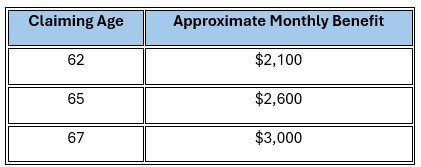
That difference can become substantial over a 25- to 30-year retirement.
For a married couple, coordinated claiming decisions may impact lifetime income by hundreds of thousands of dollars.
However, larger Social Security checks do not automatically mean delaying retirement is always better.
The bigger question is:
What are you giving up by waiting?
The Tradeoff Most People Miss
Many retirement articles focus only on maximizing Social Security benefits.
But retiring later can also mean:
Fewer healthy retirement years
Higher stress or burnout
Less flexibility with family
Missing Roth conversion opportunities
Paying more taxes later
Delaying goals you care about
Meanwhile, retiring earlier may increase:
Portfolio withdrawal pressure
Healthcare costs before Medicare
Sequence of returns risk
Longevity concerns
The goal is not simply maximizing one variable.
The goal is building a retirement plan that balances income, taxes, lifestyle, healthcare, and risk.
How Retiring Early Impacts Medicare and Healthcare Costs
One of the largest financial gaps in early retirement is health insurance before Medicare begins at 65.
If you retire at 62, you may need to bridge three years of healthcare costs before Medicare eligibility.
Depending on your income and coverage needs, that could mean:
ACA marketplace plans
COBRA coverage
Private insurance
Spousal employer coverage
For many couples, healthcare premiums and out-of-pocket costs can easily exceed:
$15,000 to $30,000+ annually before age 65
That expense is often underestimated.
Example: Retiring at 62 Before Medicare
A couple retires at 62 with:
$1.2 million invested
No pension
$70,000 annual spending goal
Because Social Security has not started yet, they may need to withdraw:
$70,000+ annually from investments
Plus healthcare costs
Plus taxes
If markets decline early in retirement, those larger withdrawals can create pressure on the portfolio much sooner than expected.
The Sequence of Returns Risk Most Retirees Ignore
One of the biggest risks in early retirement is something called sequence of returns risk.
This means poor market returns early in retirement can damage a portfolio more severely when withdrawals are happening simultaneously.
For example:
A major market decline at age 63 may hurt far more than the same decline at age 78.
Early losses combined with withdrawals can permanently reduce future recovery potential.
This becomes especially important for retirees stopping work before Social Security and Medicare begin.
Example
Two retirees both average 6% annual returns over retirement.
But:
Retiree A experiences strong returns early
Retiree B experiences a bear market immediately after retiring
Even with identical average returns, Retiree B may run out of money significantly sooner because withdrawals occurred during market declines.
This is why retirement timing and market conditions should be evaluated together.
Break-Even Analysis: How Long Do You Need to Live for Waiting to Pay Off?
One of the most common questions retirees ask is:
“How long do I need to live for delaying Social Security to make sense?”
A simplified break-even analysis often shows:
Delaying from 62 to 67 may break even somewhere in the late 70s or early 80s
But this analysis is incomplete unless you also consider:
Taxes
Investment withdrawals
Survivor benefits
Healthcare costs
Portfolio growth
Longevity expectations
Spousal coordination
For married couples especially, the higher earner delaying benefits may significantly improve survivor income later.
That can become critically important if one spouse lives well into their 80s or 90s.
Situations Where Retiring at 62 May Actually Make Sense
Retiring at 62 is not automatically a mistake.
In some situations, it may be entirely reasonable.
Retiring Earlier May Work Well If:
1. You Have Strong Savings Relative to Spending
For example:
$1.5 million portfolio
Low debt
Moderate spending needs
Flexible lifestyle
In this case, early retirement may create manageable withdrawal rates.
2. Your Health or Energy Is Declining
Many retirees prioritize healthy active years over maximizing income later.
This is especially true if:
Work stress is affecting health
A physically demanding career becomes difficult
Family longevity expectations are shorter
3. You Want Roth Conversion Opportunities
Retiring before Social Security and RMDs begin can create lower-income years.
Those years may allow:
Strategic Roth conversions
Lower future RMDs
Reduced future tax exposure
Potentially lower IRMAA surcharges later
This planning opportunity is often overlooked.
Situations Where Waiting Until 67 May Be Smarter
In other cases, delaying retirement may improve long-term security substantially.
Waiting May Make More Sense If:
1. You Are Heavily Reliant on Social Security
If Social Security represents a large portion of future retirement income, delaying may significantly improve financial flexibility later.
Example
Someone expecting:
$3,200/month at 67
Only $2,200/month at 62
That additional guaranteed income may reduce long-term portfolio pressure considerably.
2. You Have Limited Retirement Savings
Working longer may provide:
More years to save
Fewer years withdrawing
Higher Social Security benefits
Additional healthcare coverage through work
3. You Are Concerned About Longevity Risk
For retirees with strong family longevity histories, larger guaranteed income later may provide more confidence throughout retirement.
The Tax Consequences Most People Never Consider
Retirement timing is not just an income decision.
It is also a tax planning decision.
Roth Conversion Windows
Many retirees temporarily fall into lower tax brackets between:
Retirement
Social Security
Required Minimum Distributions (RMDs)
That window may create opportunities to convert portions of traditional IRAs into Roth accounts strategically.
Waiting too long to evaluate this can lead to:
Larger future RMDs
Higher Medicare premiums
Increased survivor tax burdens
IRMAA Brackets and Medicare Premiums
Higher retirement income can increase Medicare premiums through IRMAA surcharges.
Large:
Roth conversions
Capital gains
IRA withdrawals
Can trigger higher Medicare costs later.
Strategic income coordination becomes especially important after age 63 because Medicare premiums use a two-year lookback.
Capital Gains Timing
Retirement may temporarily create years with lower taxable income.
That could allow:
Tax-efficient capital gains harvesting
Reduced future embedded gains
More efficient portfolio repositioning
This planning window often closes once:
RMDs begin
Social Security starts
Pension income increases
Common Mistakes Couples Make When Coordinating Retirement Timing
Couples often retire at different times or have different income levels.
That creates additional planning complexity.
Common Mistakes Include:
Both Spouses Claiming Social Security Too Early
This may permanently reduce survivor income later.
Ignoring Healthcare Coordination
One spouse retiring early while the other still has employer coverage may create valuable healthcare planning opportunities.
Not Coordinating Tax Brackets
Retirement timing affects:
Roth conversions
IRA withdrawals
Medicare premiums
Social Security taxation
Assuming Both Spouses Should Retire Simultaneously
Sometimes staggered retirement dates improve:
Cash flow
Healthcare access
Tax flexibility
Emotional adjustment
The Emotional Side of Retirement Timing
Retirement decisions are not purely mathematical.
Many people struggle with competing fears:
Fear of Working Too Long
Some retirees worry about:
Losing healthy years
Delaying travel
Missing time with family
Burnout
Fear of Running Out of Money
Others fear:
Market volatility
Healthcare costs
Inflation
Longevity risk
Both concerns are valid.
The best retirement decision often balances financial sustainability with quality of life.
A Simple Framework for Deciding
Retiring Earlier May Work If These 3 Things Are True
Your withdrawal rate appears sustainable
You have a healthcare bridge to Medicare
You value time and flexibility more than maximizing guaranteed income
Waiting Longer May Make Sense If These 3 Things Are True
Social Security will be a major income source
You need additional savings or healthcare coverage
You are concerned about long-term longevity risk
Real-World Example: Couple Retiring at 62
A married couple has:
$1.2 million portfolio
$85,000 annual spending target
Modest pension income
Social Security delayed until 67
Potential Advantages
More years for travel and family
Roth conversion opportunities
Reduced work stress
Potential Challenges
Larger portfolio withdrawals initially
Three years before Medicare eligibility
Greater exposure to early market downturns
In this scenario, success may depend heavily on:
Spending flexibility
Tax management
Investment allocation
Market conditions early in retirement
Real-World Example: Heavy Social Security Reliance
Another retiree has:
$350,000 portfolio
Social Security expected to cover most future expenses
For this retiree, delaying benefits and potentially working longer may significantly improve long-term stability because guaranteed income becomes more valuable than preserving leisure years earlier.
Important Note About “The Perfect Retirement Age”
There is no universally optimal age to retire.
The “best” decision depends on:
Your health
Your goals
Your savings
Your tax situation
Your family dynamics
Your spending needs
Your emotional priorities
At Greenbush Financial Group, retirement planning often involves evaluating tradeoffs rather than searching for a perfect answer.
Sometimes retiring earlier creates the better life decision.
Sometimes waiting provides more security and flexibility.
Most importantly, retirees should understand the long-term implications before making irreversible decisions.
Final Thoughts
The decision to retire at 62, 65, or 67 affects far more than your monthly Social Security check.
It can influence:
Taxes
Medicare costs
Investment risk
Withdrawal rates
Long-term portfolio sustainability
Survivor income
Lifestyle flexibility
The key is understanding the tradeoffs honestly rather than assuming there is one universally correct answer.
A well-designed retirement plan should coordinate:
Social Security
Tax strategy
Healthcare planning
Investment withdrawals
Roth conversion opportunities
Long-term income sustainability
At Greenbush Financial Group, we help retirees evaluate these decisions within the context of their full financial picture so retirement timing aligns with both financial security and personal goals.

Rob Mangold
About Rob……...
Hi, I’m Rob Mangold. I’m the Chief Operating Officer at Greenbush Financial Group and a contributor to the Money Smart Board blog. We created the blog to provide strategies that will help our readers personally, professionally, and financially. Our blog is meant to be a resource. If there are questions that you need answered, please feel free to join in on the discussion or contact me directly.
FAQ Section
-
Is it better to retire at 62 or 67?Neither is universally better. Retiring at 62 provides more flexibility and earlier retirement years, while waiting until 67 increases guaranteed Social Security income and may reduce long-term portfolio pressure.
-
How much less Social Security do you get at 62?Benefits may be reduced by roughly 30% compared to claiming at Full Retirement Age, depending on your birth year.
-
What is the biggest risk of retiring early?One of the biggest risks is sequence of returns risk, where poor market performance early in retirement combined with withdrawals can permanently weaken a portfolio.
-
Why is age 65 important for retirement?Age 65 is when most Americans become eligible for Medicare, which can significantly reduce healthcare costs compared to private insurance before 65.
-
Should married couples retire at the same time?Not necessarily. Staggering retirement dates can improve healthcare access, tax flexibility, and Social Security coordination.
-
Does delaying Social Security always pay off?No. Delaying benefits may improve lifetime income for some retirees, especially higher earners or couples concerned about longevity, but it is not automatically the best decision for everyone.
-
What are Roth conversion windows in retirement?These are lower-income years between retirement and RMD age that may allow retirees to convert IRA assets into Roth accounts at lower tax rates.
-
Can retiring too early increase taxes later?Yes. Larger future RMDs, higher Social Security taxation, and increased Medicare premiums can occur if tax planning opportunities are missed early in retirement.






2026 How Much Can You Spend in Retirement? Safe Withdrawal Breakdown
How much can you safely spend in retirement without running out of money? Learn how withdrawal rates, Social Security, taxes, and inflation work together to determine your sustainable retirement income.
The amount you can safely spend in retirement depends on your portfolio size, withdrawal strategy, and how long your retirement may last. A common rule of thumb is withdrawing 3% to 4% of your portfolio annually, which aims to provide sustainable income over 25 to 30 years. At Greenbush Financial Group, our analysis shows that while these guidelines are helpful, the “right” spending level depends on your tax situation, market conditions, and flexibility in retirement.
What Is a Safe Withdrawal Rate?
A safe withdrawal rate is the percentage of your retirement portfolio you can withdraw each year without running out of money.
General Guidelines
3% withdrawal rate → More conservative, longer-lasting
4% withdrawal rate → Balanced approach
5%+ withdrawal rate → Higher income but increased risk
Example Based on Portfolio Size
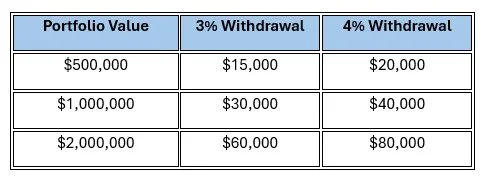
At Greenbush Financial Group, we often see retirees lean toward the lower end of this range when planning for longer life expectancies.
Why the 4% Rule Is Only a Starting Point
The 4% rule is one of the most widely used retirement planning guidelines, but it is not a guarantee.
What the Rule Assumes
A 30-year retirement
A balanced investment portfolio (stocks and bonds)
Consistent inflation adjustments
Why It Needs Adjustment
People are living longer
Market returns are unpredictable
Inflation can vary significantly
Because of these variables, our analysis at Greenbush Financial Group often incorporates more flexible withdrawal strategies rather than relying on a fixed percentage every year.
How Inflation Impacts Your Spending Power
Your retirement spending needs will likely increase over time due to inflation.
Example
Starting income need: $50,000
20 years later at 3% inflation ≈ $90,000
This means your withdrawal strategy needs to account for rising costs, not just current expenses.
Key Planning Insight
Maintaining some exposure to growth investments can help your portfolio keep pace with inflation over time.
The Role of Social Security and Other Income Sources
Your safe spending level is not just based on your portfolio.
Common Income Sources
Social Security benefits
Pensions
Rental income
Part-time work
Example Scenario
Portfolio withdrawal: $40,000
Social Security: $30,000
Total annual income: $70,000
At Greenbush Financial Group, we find that combining guaranteed income sources with portfolio withdrawals often leads to more stable retirement plans.
Sequence of Returns Risk: Why Timing Matters
One of the biggest risks to retirement spending is experiencing poor market returns early in retirement.
Why It Matters
If you withdraw from your portfolio during a market downturn, you may lock in losses that reduce long-term sustainability.
Example
Two retirees with identical portfolios can have very different outcomes depending on when market downturns occur.
Planning Strategy
Reduce withdrawals during down markets
Maintain a cash reserve
Use diversified income sources
Flexible Spending vs Fixed Spending
Rigid withdrawal strategies can increase risk. Flexibility often improves outcomes.
Fixed Spending Approach
Withdraw the same inflation-adjusted amount each year
Simple, but less adaptable
Flexible Spending Approach
Adjust withdrawals based on market performance
Spend less in down years
Increase spending when markets perform well
At Greenbush Financial Group, we often see better long-term success with flexible withdrawal strategies.
Taxes: The Hidden Impact on Retirement Spending
Your withdrawal amount is not the same as your spendable income.
Key Tax Considerations
Traditional retirement account withdrawals are taxable
Roth accounts can provide tax-free income
Social Security may be partially taxable
Required Minimum Distributions (RMDs) can increase taxable income later
Example
Withdrawal: $50,000
Taxes owed: $5,000–$10,000 (varies)
Net spendable income: $40,000–$45,000
Tax planning plays a major role in determining how much you can actually spend each year.
How to Determine Your Personal Spending Number
There is no universal answer, but you can estimate your safe spending range by combining several factors.
Step-by-Step Approach
Calculate your total retirement savings
Apply a 3% to 4% withdrawal rate
Add guaranteed income sources
Adjust for taxes
Factor in inflation and healthcare costs
Example
Portfolio: $1,000,000
4% withdrawal: $40,000
Social Security: $30,000
Estimated total income: $70,000
When You May Need to Spend Less
Certain situations require a more conservative approach.
Common Scenarios
Early retirement (longer time horizon)
High healthcare costs before Medicare
Market volatility early in retirement
High fixed expenses
In these cases, a 3% withdrawal rate or flexible strategy may be more appropriate.
Final Thoughts
Your safe retirement spending level is not just about a percentage. It is about balancing income, taxes, investment strategy, and flexibility. At Greenbush Financial Group, our analysis shows that retirees who adjust spending based on market conditions and maintain multiple income sources tend to have more sustainable outcomes.
Understanding how much you can safely spend each year is one of the most important steps in building a retirement plan that lasts.
Rob Mangold
About Rob……...
Hi, I’m Rob Mangold. I’m the Chief Operating Officer at Greenbush Financial Group and a contributor to the Money Smart Board blog. We created the blog to provide strategies that will help our readers personally, professionally, and financially. Our blog is meant to be a resource. If there are questions that you need answered, please feel free to join in on the discussion or contact me directly.
Frequently Asked Questions
-
What is the safest withdrawal rate in retirement?Around 3% is generally considered more conservative for long retirements.
-
Is the 4% rule still reliable?It is a useful guideline, but many planners now recommend flexibility depending on market conditions.
-
How much can I spend each year in retirement?Typically 3% to 4% of your portfolio, plus any additional income like Social Security.
-
Should I adjust my spending each year?Yes, adjusting based on market performance can improve long-term outcomes.
-
Do taxes reduce my retirement income?Yes, taxes can significantly reduce your net spendable income depending on account types.

2026 Spousal vs Survivor Benefits Explained: How Social Security Works for Couples
Social Security spousal and survivor benefits can significantly impact retirement income for married couples. Learn the key rules, claiming strategies, and common mistakes that can affect lifetime benefits and financial security.
Social Security spousal and survivor benefits are critical components of retirement planning for married couples. A spouse may be eligible to receive up to 50% of their partner’s benefit while both are alive, and up to 100% of the higher benefit after a spouse passes away. At Greenbush Financial Group, our analysis shows that understanding how these benefits work can significantly impact lifetime income and financial security.
What Are Social Security Spousal Benefits?
Spousal benefits allow one spouse to receive a portion of the other spouse’s Social Security benefit.
Key Rules
Spousal benefit is up to 50% of the higher earner’s benefit
Must wait until the primary earner files for benefits
Available to current spouses and some divorced spouses
Example
Higher earner benefit = $2,000/month
Spousal benefit = up to $1,000/month
Important Note
You do not receive both your own benefit and the spousal benefit. Social Security pays the higher of the two amounts.
At Greenbush Financial Group, we often see this misunderstood, leading to unrealistic income expectations.
When Can You Claim Spousal Benefits?
Timing affects how much you receive.
Claiming Ages
Age 62 → Reduced spousal benefit
Full Retirement Age (67) → Full 50% benefit
No additional increase beyond FRA for spousal benefits
Key Insight
Unlike your own benefit, spousal benefits do not grow after full retirement age.
What Are Social Security Survivor Benefits?
Survivor benefits apply when one spouse passes away.
Key Rules
Surviving spouse can receive up to 100% of the higher benefit
Can switch from their own benefit to survivor benefit if advantageous
Available as early as age 60 (reduced), or full benefit at FRA
Example
Spouse A benefit = $2,500
Spouse B benefit = $1,500
After Spouse A passes, Spouse B receives $2,500
At Greenbush Financial Group, survivor planning is one of the most important considerations for long-term income security.
Spousal vs Survivor Benefits: Key Differences
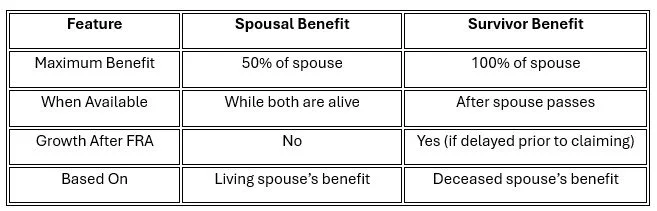
How Timing Impacts Couples’ Benefits
The timing of when each spouse claims benefits can significantly affect total lifetime income.
Key Strategy
Higher earner delays benefits to increase survivor income
Lower earner may claim earlier depending on income needs
Why This Matters
Delaying benefits for the higher earner increases:
Monthly retirement income
Survivor benefit for the remaining spouse
At Greenbush Financial Group, we often prioritize maximizing the higher earner’s benefit for long-term protection.
Divorced Spouse Benefits
Even divorced individuals may qualify for spousal or survivor benefits.
Requirements
Marriage lasted at least 10 years
Individual is currently unmarried
Ex-spouse is eligible for benefits
Key Insight
Claiming on an ex-spouse’s record does not reduce their benefit.
Common Mistakes to Avoid
Claiming too early without considering survivor impact
Assuming both spouses receive full benefits simultaneously
Ignoring the importance of the higher earner delaying benefits
Not coordinating claiming strategies as a couple
Overlooking divorced spouse eligibility
A Real-World Planning Example
Scenario
Husband benefit: $2,800
Wife benefit: $1,200
Strategy
Husband delays until age 70
Wife claims earlier or at FRA
Outcome
Higher household income later
Increased survivor benefit for wife
This type of coordinated strategy can significantly improve long-term outcomes.
How Taxes Impact Spousal and Survivor Benefits
Social Security benefits may be taxable depending on total income.
Key Considerations
Up to 85% of benefits can be taxable
IRA withdrawals can increase taxation
Survivor filing status may increase tax burden
Planning Insight
A surviving spouse often files as single, which can lead to higher taxes on the same income.
At Greenbush Financial Group, tax planning is often integrated with Social Security decisions.
Final Thoughts
Social Security spousal and survivor benefits are not just supplemental income, they are a core part of retirement planning for couples. The decisions around timing and coordination can have a lasting impact on both partners.
At Greenbush Financial Group, our analysis shows that couples who plan their Social Security strategy together tend to maximize lifetime income and provide better financial security for the surviving spouse.
Rob Mangold
About Rob……...
Hi, I’m Rob Mangold. I’m the Chief Operating Officer at Greenbush Financial Group and a contributor to the Money Smart Board blog. We created the blog to provide strategies that will help our readers personally, professionally, and financially. Our blog is meant to be a resource. If there are questions that you need answered, please feel free to join in on the discussion or contact me directly.
Frequently Asked Questions
-
How much is a spousal Social Security benefit?
Up to 50% of the higher earner's benefit at full retirement age. -
Do spousal benefits increase after age 67?
No, they do not increase beyond full retirement age. -
What happens to Social Security when a spouse dies?
The surviving spouse can receive up to 100% of the higher benefit. -
Can a divorced spouse claim Social Security benefits?
Yes, if the marriage lasted at least 10 years and other requirements are met. -
Can I receive both my benefit and my spouse's benefit?
No, you receive the higher of the two, not both.

A Financial Advisor’s Pre-Retirement Checklist
The years leading up to retirement are often when the most important financial decisions are made. This article explores 10 key retirement planning considerations, including Social Security claiming strategies, Medicare enrollment, retirement tax planning, investment risk, pension elections, and estate planning. Understanding these decisions can help retirees avoid costly mistakes and improve long-term financial confidence. Proper retirement planning requires coordinating income, taxes, healthcare, investments, and risk management into a comprehensive strategy.
Retirement is not just a financial milestone. It is a transition that changes how you generate income, pay taxes, manage healthcare, invest your savings, and plan for the future.
Many retirees focus almost entirely on building their retirement accounts, but the years immediately before retirement are often when the most important decisions get made. Choices involving Social Security, Medicare, taxes, pensions, investments, and withdrawal strategies can affect your financial security for decades.
Some of these decisions are irreversible. Others can create unexpected tax consequences or increase financial stress if they are not reviewed carefully.
Before you leave your job, here are 10 critical retirement decisions worth reviewing carefully.
1. Can You Actually Afford to Retire?
Why It Matters
This is the most important retirement question and often the most emotional one.
Many people focus on whether they have “enough” saved, but retirement planning is really about whether your income can sustainably support your lifestyle over a retirement that could last 25 to 30 years.
The biggest risk is not simply running out of money. It is retiring without understanding:
how your income will work
how inflation affects spending
how market declines impact withdrawals
how taxes reduce retirement income
how healthcare costs fit into the plan
What to Review
Your expected monthly retirement expenses
Guaranteed income sources
Investment withdrawal strategy
Inflation assumptions
Sequence of returns risk
Emergency reserves
Expected retirement longevity
Example
A couple retiring at age 62 may initially believe they only need $7,000 per month. But after factoring in healthcare premiums, inflation, travel, taxes, home maintenance, and irregular expenses, their actual spending may be closer to $9,000 monthly.
That difference can significantly impact how sustainable their retirement plan is.
Key Insight
Retirement success is not just about portfolio size. It is about whether your income plan can survive inflation, market volatility, and unexpected expenses over time.
2. When Should You Claim Social Security?
Why It Matters
Social Security is one of the most important retirement income decisions because claiming timing can permanently affect your lifetime benefits.
Many retirees underestimate:
how much benefits increase by waiting
the impact on surviving spouses
how taxes affect benefits
how working before full retirement age can temporarily reduce payments
What to Review
Claiming at 62 vs. full retirement age vs. 70
Spousal benefits
Survivor benefits
Earnings limits before full retirement age
Taxation of benefits
Longevity expectations
Coordination with retirement withdrawals
Example
A retiree eligible for $2,200 monthly at full retirement age could receive roughly:
$1,540 at age 62
$2,200 at full retirement age
nearly $2,900 at age 70
That difference can significantly impact lifetime household income, especially for married couples.
Important Note
The best Social Security strategy is not always about maximizing benefits. It is about coordinating benefits with taxes, investments, pensions, and overall retirement income planning.
3. Have You Planned for Healthcare and Medicare Costs?
Why It Matters
Healthcare is one of the biggest retirement expenses and one of the largest sources of financial anxiety for retirees.
People retiring before age 65 often underestimate the cost of private health insurance before Medicare begins. Others make Medicare enrollment mistakes that create lifelong penalties or unexpected coverage gaps.
What to Review
Healthcare costs before Medicare eligibility
Medicare enrollment deadlines
Medicare Part B and Part D coverage
Medicare Advantage vs. Medigap
IRMAA surcharges
Long-term care exposure
Health Savings Account planning
Example
A retiree who delays Medicare enrollment because they misunderstand employer coverage rules could face permanent premium penalties later.
Similarly, higher-income retirees may unknowingly trigger IRMAA surcharges that significantly increase Medicare premiums.
Key Insight
Healthcare planning is not just about insurance coverage. It is also about tax planning, income management, and preparing for future care needs.
4. Have You Reviewed Your Retirement Tax Strategy?
Why It Matters
One of the biggest surprises retirees face is discovering that retirement does not automatically lower taxes.
Different retirement accounts are taxed differently, and poor withdrawal sequencing can unintentionally push retirees into higher tax brackets.
What to Review
Roth conversion opportunities
Future RMD exposure
Tax diversification
Capital gains planning
Social Security taxation
Medicare IRMAA thresholds
Withdrawal sequencing
Example
A retiree with large traditional IRA balances may face substantial required minimum distributions later in retirement, even if they do not need the income.
Strategic Roth conversions before RMD age can sometimes reduce future tax exposure and improve long-term flexibility.
Important Note
Many retirees focus on investment returns but overlook lifetime tax efficiency. The way retirement income is structured can be just as important as portfolio performance.
5. Do You Have a Reliable Retirement Income Strategy?
Why It Matters
Retirement changes the financial mindset from accumulation to distribution.
That transition can feel uncomfortable because your paycheck stops and your portfolio becomes the primary income source.
Without a clear strategy, retirees often either overspend too early or become afraid to spend at all.
What to Review
Which accounts to withdraw from first
Cash reserve strategy
Sequence of returns risk
Dividend income assumptions
Withdrawal sustainability
Coordination between income sources
Example
Two retirees with identical portfolios can experience very different outcomes depending on when market declines occur early in retirement.
Large withdrawals during market downturns can permanently damage long-term portfolio sustainability.
Key Insight
A retirement income plan should balance:
stability
flexibility
tax efficiency
long-term growth potential
6. Is Your Investment Risk Appropriate for Retirement?
Why It Matters
Many people approaching retirement ask the same questions:
“Am I taking too much risk?”
“What if there’s another 2008?”
“Should I move everything to cash?”
The challenge is balancing protection with growth.
Being too aggressive can increase volatility at the wrong time. But being too conservative can create inflation risk and reduce long-term purchasing power.
What to Review
Current asset allocation
Portfolio downside risk
Retirement timeline
Cash reserves
Bond allocation
Inflation protection
Income needs from investments
Example
A retiree holding overly conservative investments may struggle to maintain purchasing power over a 25-year retirement, especially during periods of elevated inflation.
Important Note
Retirement investing is not about eliminating risk entirely. It is about managing risk appropriately for your goals, income needs, and time horizon.
7. Have You Reviewed Your Pension Options Carefully?
Why It Matters
Pension elections are often irreversible.
For retirees with pensions, decisions involving lump sums, survivor benefits, and payout structures can have major long-term implications for household income and estate planning.
What to Review
Lump sum vs. monthly pension
Survivor benefit elections
Inflation adjustments
Pension solvency considerations
Tax implications
Coordination with Social Security
Example
Choosing the highest monthly pension payout without survivor protection may leave a surviving spouse with significantly reduced household income later.
Key Insight
The best pension decision depends on:
health
marital status
other retirement assets
legacy goals
guaranteed income needs
8. Have You Updated Your Estate Plan and Beneficiaries?
Why It Matters
Many retirees assume their estate documents are current when they have not reviewed them in years.
Outdated beneficiary designations and missing legal documents can create unnecessary complications for family members later.
What to Review
Wills and trusts
Powers of attorney
Healthcare directives
Beneficiary designations
Transfer-on-death accounts
Inherited IRA rules
Estate tax considerations
Example
An outdated IRA beneficiary form can override instructions written in a will.
That mistake can unintentionally direct retirement assets to the wrong person.
Important Note
Estate planning is not just about wealth transfer. It is also about maintaining control, simplifying administration, and protecting family members during difficult situations.
9. Have You Reviewed Your Debt and Spending Plan?
Why It Matters
Retirement spending often changes more than people expect.
Some retirees spend less. Others spend significantly more during the first decade of retirement due to travel, hobbies, home projects, or helping family members financially.
What to Review
Mortgage payoff decisions
Credit card debt
Retirement budget assumptions
Downsizing considerations
Support for adult children
Large one-time expenses
Lifestyle expectations
Example
A retiree may choose to keep a low-interest mortgage rather than aggressively paying it off in order to preserve liquidity and investment flexibility.
The right decision depends on both financial and emotional factors.
Key Insight
A realistic retirement spending plan should account for both expected and unexpected expenses.
10. What Happens If Something Goes Wrong?
Why It Matters
One of the biggest retirement planning mistakes is assuming everything will go according to plan.
Strong retirement planning includes preparing for uncertainty.
What to Review
Long-term care exposure
Widowhood planning
Emergency reserves
Market downturn scenarios
Caregiving costs
Family health history
Insurance coverage
Example
A major healthcare event or long-term care need can dramatically change retirement spending and income needs later in life.
Preparing in advance can help reduce financial stress during difficult situations.
Important Note
Retirement planning is not about predicting the future perfectly. It is about building flexibility into the plan.
Common Retirement Mistakes to Avoid
Some of the most common retirement mistakes happen during the transition into retirement itself.
These include:
Claiming Social Security too early without reviewing alternatives
Ignoring tax planning opportunities before RMD age
Underestimating healthcare costs
Taking too much or too little investment risk
Failing to stress-test retirement income
Overlooking beneficiary designations
Retiring without a coordinated withdrawal strategy
Assuming retirement spending will remain constant
Final Thoughts
Retirement is one of the biggest financial transitions of your life. The decisions made in the years immediately before retirement can affect your income, taxes, healthcare costs, and financial flexibility for decades.
Many of the most expensive retirement mistakes are preventable with proactive planning and careful coordination.
At Greenbush Financial Group, we believe retirement planning should go beyond investment performance alone. A successful retirement plan coordinates income, taxes, healthcare, investments, estate planning, and long-term risk management into a strategy designed to support both confidence and flexibility throughout retirement.
Before you stop working, make sure you review the decisions that matter most.
Rob Mangold
About Rob……...
Hi, I’m Rob Mangold. I’m the Chief Operating Officer at Greenbush Financial Group and a contributor to the Money Smart Board blog. We created the blog to provide strategies that will help our readers personally, professionally, and financially. Our blog is meant to be a resource. If there are questions that you need answered, please feel free to join in on the discussion or contact me directly.
FAQ Section
-
What is the most important financial decision before retirement?
The most important decision is determining whether your retirement income plan is sustainable. This includes reviewing spending needs, withdrawal strategies, taxes, inflation, and healthcare costs. -
When should I claim Social Security?
The right claiming age depends on your health, marital status, income needs, longevity expectations, and overall retirement plan. Claiming early permanently reduces benefits, while delaying can increase lifetime income. -
How much should I have saved before retirement?
There is no universal number. Retirement readiness depends on your expected spending, income sources, taxes, healthcare costs, and lifestyle goals. -
What are the biggest retirement tax mistakes?
Common mistakes include ignoring Roth conversion opportunities, triggering higher Medicare premiums, poor withdrawal sequencing, and failing to prepare for RMDs. -
Should I pay off my mortgage before retirement?
It depends on your cash flow, interest rate, liquidity needs, and personal comfort level. Some retirees prioritize debt elimination, while others prefer maintaining investment flexibility. -
How do I prepare for healthcare costs in retirement?
Review Medicare options, estimate out-of-pocket expenses, understand IRMAA rules, and consider how long-term care costs could affect your retirement plan. -
What happens if the market crashes early in retirement?
Early retirement market declines can increase sequence of returns risk, especially when withdrawals are occurring simultaneously. Maintaining proper diversification and cash reserves can help reduce this risk. -
Why is retirement planning more than just investing?
Retirement planning also involves taxes, healthcare, income coordination, estate planning, Social Security, spending strategy, and risk management decisions that affect long-term financial security.

Buying Out Your Lease: When It’s a Smart Move—and When It Isn’t
At the end of a car lease, deciding whether to buy or return the vehicle can have a significant financial impact. Learn how to compare market value, financing costs, maintenance expenses, and long-term goals before making your decision.
Many drivers reach the end of a lease unsure whether they should buy the vehicle or return it. In some situations, purchasing a leased car can provide significant value, especially if the vehicle is worth more than the buyout price or fits long-term financial goals. But in other cases, keeping the lease separate from ownership may be the smarter move financially. Understanding the numbers, financing costs, maintenance risks, and long-term transportation goals can help drivers make a more informed decision.
The End of a Car Lease Creates an Important Financial Decision
When a lease ends, many drivers focus only on one question:
“Do I like the car enough to keep it?”
But the better financial question is:
“Does buying this car make sense compared to my other options?”
Sometimes the answer is yes.
Sometimes returning the vehicle and moving on is financially smarter.
The key is understanding that a lease buyout is not just an emotional decision.
It is also a valuation decision, financing decision, and long-term budgeting decision.
What Is a Lease Buyout?
A lease buyout means purchasing the vehicle at the end of the lease instead of returning it.
The buyout amount is usually based on the vehicle’s:
Residual value
Remaining fees
Taxes
Purchase-related costs
The residual value was typically established when the lease originally began.
Sometimes that residual value becomes very attractive.
Other times it does not.
When Buying Out Your Lease Can Make Sense
1. The Car Is Worth More Than the Buyout Price
This is one of the strongest reasons to consider a buyout.
If the vehicle’s current market value is higher than the lease buyout price, you may effectively be purchasing the car below market value.
Example
Suppose:
Your lease buyout price is $22,000
Similar vehicles currently sell for $28,000
That difference may represent meaningful value.
This situation became especially common during periods of limited vehicle inventory and rising used-car prices.
2. You Already Know the Vehicle’s History
One advantage of buying your leased vehicle is familiarity.
You already know:
How the car was maintained
Whether it has accident history
How it drives
Whether major repairs have occurred
How reliable it has been
That reduces some uncertainty compared to purchasing another used vehicle.
For many buyers, that peace of mind has real value.
3. Financing a Replacement Vehicle Would Be More Expensive
Interest rates matter.
If replacing the vehicle means:
Higher monthly payments
Higher interest rates
More expensive vehicles overall
Then keeping the current vehicle may become financially attractive.
This is especially true if:
The car is still reliable
Mileage is reasonable
Maintenance costs remain manageable
4. You Drive Less Than Expected During the Lease
Some drivers finish leases with:
Lower mileage
Less wear and tear
Better-than-expected vehicle condition
That can make the residual value more attractive relative to the car’s actual condition and market value.
5. You Want to Avoid Starting Over Financially
Many drivers underestimate how expensive “resetting” into another vehicle can become.
Starting another lease or loan may involve:
New dealer fees
Sales taxes
Registration costs
Higher insurance premiums
Larger monthly payments
Buying a current leased vehicle may help stabilize transportation costs.
When Buying Out Your Lease May NOT Make Sense
1. The Vehicle’s Market Value Is Lower Than the Buyout Price
This is one of the clearest warning signs.
If comparable vehicles sell for less than your buyout amount, purchasing the car may not be financially attractive.
Example
Your buyout price:
$31,000
Comparable market value:
$26,000
In that case, returning the vehicle may make more sense financially.
2. The Vehicle Is Becoming Expensive to Maintain
As vehicles age, ownership costs can increase.
Consider:
Tire replacement
Brake work
Transmission concerns
Warranty expiration
Electrical issues
A car that felt inexpensive during the lease may become much more expensive afterward.
3. You Need a Different Vehicle for Life Changes
Sometimes the issue is not the car itself.
Your lifestyle may have changed.
Examples include:
Growing family
Longer commute
Downsizing expenses
Retirement
Business needs
Desire for lower insurance costs
Keeping a vehicle that no longer fits your needs may create unnecessary expenses later.
4. The Buyout Requires Expensive Financing
Many drivers focus only on the monthly payment without evaluating financing terms.
A lease buyout loan with:
High interest rates
Long repayment periods
Minimal equity
May reduce the financial benefit of the purchase.
The financing structure matters just as much as the buyout price.
One of the Biggest Mistakes: Making the Decision Emotionally
Many lease buyouts happen because drivers simply:
Like the vehicle
Want convenience
Dislike car shopping
Feel emotionally attached
Those feelings are understandable.
But the financial side still matters.
A strong lease buyout decision should evaluate:
Market value
Financing costs
Long-term reliability
Insurance
Maintenance expectations
Overall affordability
Not just comfort and familiarity.
The Retirement Angle Many Drivers Overlook
For retirees and pre-retirees, transportation decisions often become part of broader cash-flow planning.
Buying out a reliable vehicle may sometimes make sense because it can:
Reduce future car payments
Create predictable transportation costs
Lower financial stress
Delay larger vehicle purchases later
But retirees should also consider:
Fixed-income budgeting
Insurance costs
Long-term maintenance
Emergency reserves
Healthcare spending priorities
Transportation decisions should fit the overall financial plan.
A Real-World Example
David leased an SUV three years ago.
At lease end:
Buyout price: $24,000
Similar vehicles selling for: $30,000
The SUV has:
Low mileage
Strong maintenance history
No accidents
Initially, David planned to return it automatically.
But after comparing replacement costs, interest rates, and used-car pricing, he realized purchasing the vehicle created more value than leasing another one.
Instead of taking on a larger payment for a replacement SUV, he financed the buyout and plans to keep the vehicle several more years.
The decision was not just about liking the vehicle.
It was about comparing long-term costs realistically.
Questions to Ask Before Buying Out Your Lease
Important questions include:
What is the current market value of the vehicle?
How does the buyout price compare?
What interest rate would apply to financing?
How reliable is the vehicle likely to be long term?
What repairs may be coming soon?
Would another vehicle better fit future needs?
How does this decision affect monthly cash flow?
Will insurance costs change?
The more objective the analysis becomes, the better the decision usually is.
Common Lease Buyout Mistakes
1. Looking Only at Monthly Payments
The total cost matters more than the payment alone.
2. Ignoring Market Value Comparisons
Drivers should compare the buyout amount against real-world vehicle pricing.
3. Overlooking Future Maintenance Costs
Ownership costs often increase after warranties expire.
4. Financing the Buyout Poorly
High-interest financing can erase much of the financial benefit.
5. Automatically Returning the Vehicle Without Comparing Options
Sometimes the leased vehicle may actually represent the best available value.
Final Thoughts
Buying out a car lease can absolutely make financial sense in the right situation.
Especially when:
The vehicle’s value exceeds the buyout price
The car remains reliable
Replacement costs are high
Financing terms are reasonable
But not every lease buyout is automatically a good deal.
The best approach is evaluating the decision objectively rather than emotionally.
At Greenbush Financial Group, we often encourage clients to view transportation decisions the same way they view larger financial decisions: through the lens of long-term cash flow, flexibility, and overall financial priorities.
The goal is not simply keeping a familiar vehicle.
It is making a decision that fits your broader financial picture.
Rob Mangold
About Rob……...
Hi, I’m Rob Mangold. I’m the Chief Operating Officer at Greenbush Financial Group and a contributor to the Money Smart Board blog. We created the blog to provide strategies that will help our readers personally, professionally, and financially. Our blog is meant to be a resource. If there are questions that you need answered, please feel free to join in on the discussion or contact me directly.
FAQ
-
What is a lease buyout?
A lease buyout allows you to purchase your leased vehicle instead of returning it at the end of the lease term. -
How do I know if my lease buyout is a good deal?
Compare the buyout price to the vehicle's current market value, financing costs, and expected maintenance expenses. -
Is it cheaper to buy out a lease or lease another car?
It depends on market conditions, interest rates, vehicle value, and long-term ownership goals. -
Can buying out a lease help save money?
Sometimes. Especially if the car's market value exceeds the residual value established in the lease agreement. -
Should I finance a lease buyout?
Many drivers finance lease buyouts, but interest rates and loan terms should be evaluated carefully. -
What happens if the car needs major repairs soon?
Potential repair costs should absolutely factor into the buyout decision, especially if warranties are expiring. -
Is buying out a lease better for retirees?
In some cases, yes. Keeping a reliable vehicle may help stabilize transportation costs during retirement. -
What is the biggest mistake people make with lease buyouts?
One of the biggest mistakes is making the decision emotionally without comparing market value, financing costs, and long-term ownership expenses.

The Real Cost of Buying a Home: Expenses First-Time Buyers Often Miss
The true cost of buying a home extends far beyond the mortgage payment. First-time home buyers should plan for closing costs, maintenance, property taxes, homeowners insurance, utilities, HOA fees, and emergency repairs. Understanding these expenses can help avoid cash flow surprises and improve long-term affordability. Greenbush Financial Group explains how thoughtful budgeting and financial preparation can make homeownership more sustainable and less stressful.
Many first-time home buyers focus almost entirely on the down payment and monthly mortgage. But the real cost of homeownership often includes additional expenses that can strain cash flow if they are not planned for ahead of time. Closing costs, maintenance, property taxes, insurance, utilities, and unexpected repairs can all affect affordability. At Greenbush Financial Group, we often find that buyers feel more confident when they understand the full financial picture before purchasing a home.
Buying a Home Costs More Than Most First-Time Buyers Expect
For many people, buying a first home feels like reaching a major financial milestone.
But one of the biggest surprises for first-time buyers is realizing that the monthly mortgage payment is only part of the total cost.
Many buyers spend years saving for:
The down payment
Moving expenses
Furniture
Mortgage qualification
Yet still feel financially stretched after moving in because they underestimated the ongoing costs of homeownership.
The goal is not avoiding homeownership.
The goal is understanding the full financial commitment before signing the paperwork.
Because the hidden costs are often what create stress later.
The Mortgage Payment Is Only the Starting Point
When buyers estimate affordability, they often focus only on:
Principal
Interest
But homeownership usually includes several additional recurring expenses.
Monthly Housing Costs May Include:
Property taxes
Homeowners insurance
HOA fees
Maintenance costs
Utilities
Lawn care
Pest control
Repairs
Internet and security systems
In many cases, the true monthly cost of owning a home can be significantly higher than the mortgage itself.
Hidden Cost #1: Closing Costs
Many first-time buyers are surprised to learn that the down payment is not the only upfront expense.
Closing costs can often range from:
2%–5% of the purchase price
These costs may include:
Loan origination fees
Appraisal fees
Title insurance
Attorney fees
Escrow funding
Recording fees
Inspection costs
Prepaid taxes and insurance
Example
A buyer purchasing a $400,000 home may face:
$8,000–$20,000 in closing costs
In addition to the down payment.
That can create a major cash-flow surprise if buyers are not prepared.
Hidden Cost #2: Maintenance and Repairs
One of the biggest lifestyle adjustments for renters is realizing that homeowners become responsible for everything.
When something breaks, there is no landlord to call.
Common Expenses Include:
Roof repairs
HVAC replacement
Water heaters
Plumbing issues
Appliance replacement
Landscaping
Gutter cleaning
Electrical repairs
A Common Rule of Thumb
Many homeowners should expect to budget roughly:
1%–2% of the home’s value annually for maintenance
That does not mean every year will be expensive.
But large repairs tend to arrive eventually.
Hidden Cost #3: Property Taxes Often Increase
Many buyers underestimate how property taxes may change over time.
Taxes can increase because of:
Rising home values
Local tax reassessments
School district changes
Municipal budget increases
In some areas, property taxes may rise significantly faster than buyers expect.
Important Note
Some online mortgage calculators underestimate future tax increases because they rely on previous owner assessments.
That can create affordability surprises later.
Hidden Cost #4: Homeowners Insurance
Insurance costs have become a growing issue in many parts of the country.
Premiums may rise because of:
Weather risks
Inflation
Construction costs
Claims history
Regional insurance market changes
Many first-time buyers focus heavily on mortgage rates while underestimating how much insurance may affect monthly costs.
Hidden Cost #5: Utilities Can Change Dramatically
Renters sometimes underestimate how utility costs change with larger spaces.
A new home may involve:
Higher electric bills
Water costs
Trash service
Gas bills
Internet upgrades
Older homes may also be less energy efficient than expected.
Hidden Cost #6: Furniture and Home Purchases
Many first-time homeowners spend heavily immediately after moving in.
Common purchases include:
Furniture
Appliances
Window treatments
Tools
Lawn equipment
Decor
Home office setup
Individually, these purchases may seem manageable.
Together, they can significantly strain savings during the first year.
Hidden Cost #7: HOA Fees and Special Assessments
Homeowners Association fees are often overlooked during budgeting.
Monthly HOA dues may cover:
Landscaping
Community maintenance
Amenities
Exterior upkeep
But HOAs can also issue special assessments for unexpected repairs or large projects.
That can create sudden expenses homeowners did not anticipate.
Hidden Cost #8: Emergency Cash Reserves
Many buyers use most of their savings for the down payment and closing costs.
That can leave very little flexibility afterward.
This becomes risky because homeownership often involves unexpected expenses shortly after moving in.
Examples include:
Appliance failure
Water leaks
HVAC repairs
Moving-related costs
Insurance deductibles
Maintaining emergency savings after the purchase is extremely important.
The Emotional Side of Buying a First Home
First-time buyers often feel pressure to:
Stretch their budget
Buy quickly
Win bidding wars
Maximize house size
Compete with peers
That emotional pressure can lead buyers to underestimate ongoing affordability concerns.
Important Question
The better question is often not:
“What is the maximum home I can qualify for?”
Instead ask:
“What home can I comfortably maintain while still saving for future goals?”
A Real-World Example
Sarah and Michael purchase their first home for:
$450,000
They budget carefully for:
Their down payment
Mortgage payment
But after moving in, they encounter:
$11,000 in closing costs
Higher-than-expected property taxes
A leaking water heater
Increased utility bills
Furniture purchases
HOA dues they underestimated
Within the first year, they spend far more than expected beyond the mortgage payment itself.
The issue was not buying the home.
The issue was underestimating total ownership costs.
How First-Time Buyers Can Prepare Financially
1. Stress-Test the Monthly Budget
Estimate housing costs using:
Mortgage
Taxes
Insurance
Maintenance
Utilities
HOA fees
Not just principal and interest.
2. Keep Cash Reserves After Closing
Avoid draining every dollar of savings for the purchase itself.
Many homeowners feel far more comfortable with emergency reserves intact.
3. Plan for Maintenance Early
Repairs are not “if” expenses.
They are “when” expenses.
Building maintenance savings into the budget can reduce future stress.
4. Avoid Furnishing the Entire House Immediately
Many buyers overspend during the first year trying to complete every room immediately.
Gradual upgrades often create less financial pressure.
5. Understand Long-Term Affordability
Ask whether the home still feels affordable if:
Property taxes rise
Insurance increases
One spouse changes jobs
Interest rates remain elevated
Maintenance costs increase
Homeownership should create stability, not constant financial pressure.
Common First-Time Buyer Mistakes
1. Spending All Savings on the Down Payment
This leaves little flexibility for repairs and emergencies.
2. Underestimating Maintenance Costs
Homeownership almost always includes ongoing repairs.
3. Focusing Only on the Mortgage Payment
Taxes, insurance, utilities, and maintenance matter too.
4. Buying Based on Loan Approval Instead of Comfort
Qualification amounts do not always reflect sustainable budgeting.
5. Ignoring Future Lifestyle Changes
Buyers should consider future:
Children
Job changes
Commutes
Healthcare costs
Income changes
Final Thoughts
Buying your first home can be exciting and financially meaningful.
But homeownership costs are often broader than many buyers initially expect.
At Greenbush Financial Group, we often find that financially successful homeowners are not necessarily the ones who buy the largest house. They are often the ones who prepare thoughtfully for both the expected and unexpected costs of ownership.
The goal is not avoiding homeownership.
It is understanding the full financial picture before making one of the largest purchases of your life.
Confidence usually comes from preparation, not stretching every dollar to the limit.
Rob Mangold
About Rob……...
Hi, I’m Rob Mangold. I’m the Chief Operating Officer at Greenbush Financial Group and a contributor to the Money Smart Board blog. We created the blog to provide strategies that will help our readers personally, professionally, and financially. Our blog is meant to be a resource. If there are questions that you need answered, please feel free to join in on the discussion or contact me directly.
-
What hidden costs do first-time home buyers often miss?
Common overlooked expenses include closing costs, maintenance, repairs, property taxes, insurance, HOA fees, and utility increases. -
How much should buyers budget for maintenance?
Many homeowners budget roughly 1%-2% of the home's value annually for maintenance and repairs. -
Are closing costs separate from the down payment?
Yes. Closing costs are additional expenses typically ranging from 2%-5% of the purchase price. -
Why do property taxes sometimes increase after purchase?
Taxes may rise because of reassessments, home value increases, or local government changes. -
How much emergency savings should homeowners keep?
Many financial professionals recommend maintaining emergency reserves even after paying the down payment and closing costs. -
Are HOA fees included in mortgage payments?
Sometimes HOA fees are separate from the mortgage payment and must be budgeted independently. -
Should buyers use all available savings for a down payment?
Usually not. Maintaining liquidity for emergencies and repairs is often important after moving into a home. -
What is the biggest mistake first-time home buyers make?
One of the biggest mistakes is focusing only on the mortgage payment while underestimating the full ongoing cost of homeownership.
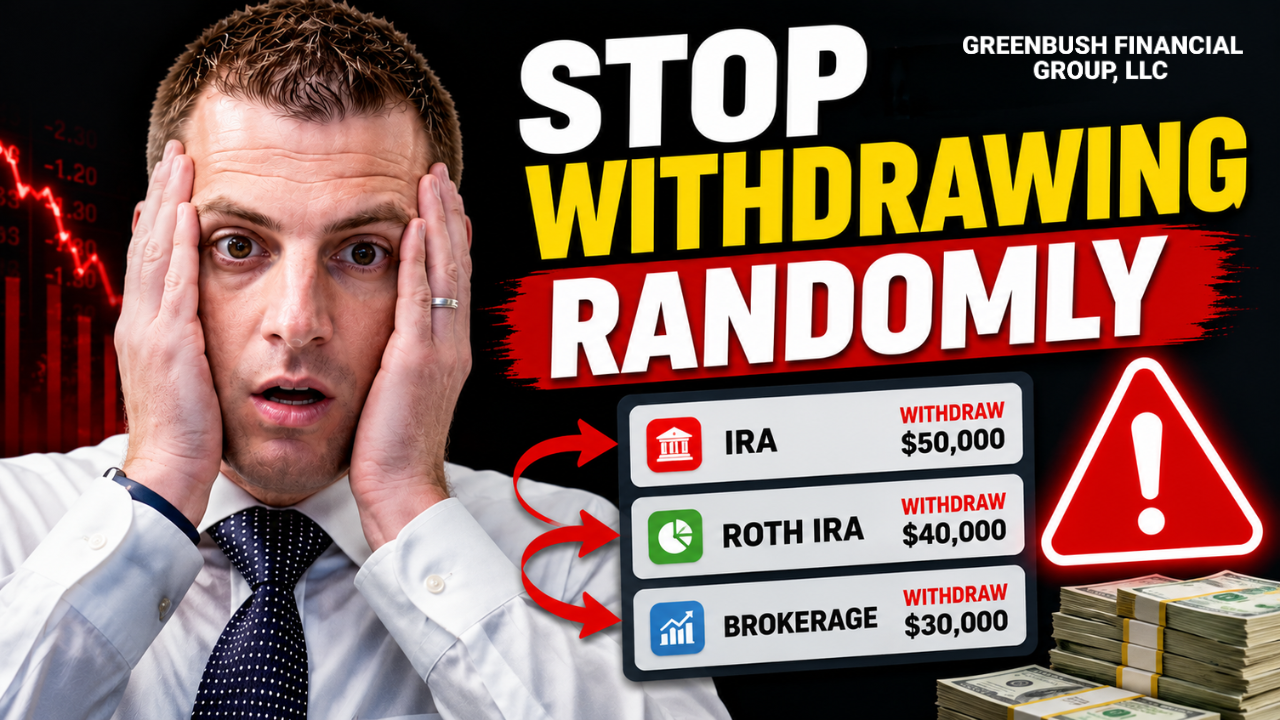
Retirement Income Planning: How to Pay Yourself Without a Job
Creating retirement income requires more than simply withdrawing money from investment accounts. This guide explains how retirees can coordinate Social Security benefits, investment withdrawals, and cash reserves to build a reliable retirement paycheck while managing taxes, sequence-of-returns risk, and market volatility. Learn practical withdrawal strategies that help improve long-term portfolio sustainability and increase retirement confidence. Discover why organized income planning often matters more than chasing investment returns alone.
The hardest part of retirement is not saving money. It is turning your savings into a paycheck that can last for decades. A strong retirement income strategy combines Social Security, investments, and cash reserves in a way that helps retirees manage taxes, market downturns, and long-term spending needs. At Greenbush Financial Group, we often find that retirees feel more confident once they move from random withdrawals to a structured retirement paycheck plan.
The Hardest Part of Retirement Is Not Saving. It’s Replacing Your Paycheck.
For most of your working life, income was automatic.
You worked, your paycheck arrived, taxes were withheld, and bills were paid.
Retirement changes that system overnight.
Now your income may need to come from:
Social Security
Investment accounts
IRAs
Roth IRAs
Cash savings
Brokerage accounts
Maybe a pension
That transition can feel uncomfortable even for financially responsible retirees.
Many people spend decades learning how to save for retirement but very little time learning how to withdraw from retirement.
That is why one of the biggest retirement questions becomes:
“How do I actually turn my savings into reliable monthly income?”
The answer is usually not:
Living only on dividends
Using the 4% rule blindly
Pulling money randomly from accounts
Staying fully invested with no cash reserves
A retirement paycheck works best when it is intentional, flexible, tax-aware, and designed to handle both good markets and bad ones.
What a Retirement Paycheck Actually Looks Like
A retirement paycheck is usually built from three primary sources:
Guaranteed income
Investment withdrawals
Cash reserves
Each source plays a different role.
The goal is not maximizing investment returns.
The goal is creating sustainable monthly income while reducing unnecessary financial stress.
The 3 Buckets of Retirement Income
Bucket #1: Guaranteed Income
This includes predictable income sources such as:
Social Security
Pensions
Certain annuities
For many retirees, this income helps cover core living expenses like:
Housing
Utilities
Groceries
Insurance
Basic healthcare costs
Guaranteed income creates stability.
The more predictable income a retiree has, the less pressure there may be on investment withdrawals during difficult markets.
Bucket #2: Investment Withdrawals
This is where retirees often generate additional income beyond Social Security.
Withdrawals may come from:
Traditional IRAs
401(k)s
Taxable brokerage accounts
Roth IRAs
This is also where many costly mistakes happen.
Without a strategy, retirees may:
Withdraw too much
Trigger unnecessary taxes
Increase Medicare premiums
Sell investments during downturns
Deplete the wrong accounts too early
The order of withdrawals matters.
Bucket #3: Cash Reserves
Cash reserves are one of the most overlooked parts of retirement income planning.
Cash reserves may include:
Savings accounts
Money market funds
CDs
Treasury bills
Short-term bond holdings
The purpose of cash is not maximizing returns.
Its purpose is flexibility.
Cash reserves help retirees avoid selling investments during bad markets when emotions are elevated and portfolio values are temporarily down.
How Retirement Income Is Structured Month to Month
Retirement income planning usually starts with one simple question:
“How much do you actually need each month?”
Step 1: Identify Monthly Spending Needs
Example:
John and Linda retire at age 66.
They estimate they need:
$8,000/month after taxes
That includes:
Property taxes
Insurance
Healthcare
Travel
Utilities
Food
Entertainment
Home maintenance
Step 2: Subtract Guaranteed Income
They receive:
$4,500/month combined from Social Security
That leaves:
$3,500/month that must come from investments and savings
This is called the income gap.
Step 3: Build a Withdrawal Strategy
Their assets include:
$950,000 in IRAs
$300,000 in brokerage accounts
$150,000 in cash reserves
$200,000 in Roth IRAs
Instead of taking income randomly, they decide to:
Use brokerage assets first for flexibility
Maintain 18 months of cash reserves
Delay larger IRA withdrawals strategically
Refill cash reserves during stronger market periods
Keep Roth assets growing longer for future flexibility
Now their retirement income becomes organized and repeatable rather than reactive.
Why Random Withdrawals Can Create Long-Term Problems
Many retirees withdraw from whichever account feels easiest at the time.
That can create ripple effects.
Example
Suppose a retiree withdraws $80,000 entirely from an IRA for spending and home renovations.
That withdrawal may:
Push income into higher tax brackets
Increase taxation of Social Security
Trigger Medicare IRMAA surcharges
Reduce future Roth conversion opportunities
A different withdrawal strategy may have created a better long-term outcome.
Retirement income planning is not just about generating cash.
It is about generating cash efficiently.
Why Cash Reserves Matter So Much in Retirement
Many retirees underestimate how emotionally different investing feels after paychecks stop.
During working years, market declines may feel temporary because new paychecks continue arriving.
Retirement changes that dynamic.
Now withdrawals may be happening while investments are falling.
That creates what planners call sequence-of-returns risk.
What Is Sequence Risk?
Sequence risk occurs when poor market returns happen early in retirement while withdrawals are occurring simultaneously.
This combination can permanently reduce long-term portfolio sustainability.
Example
Two retirees start with identical portfolios and identical spending.
One is forced to sell investments during a major downturn to fund living expenses.
The other uses cash reserves temporarily while allowing investments time to recover.
The long-term outcomes can look dramatically different.
How Much Cash Should Retirees Keep?
There is no perfect answer.
But many retirees feel more comfortable keeping:
12–24 months of planned withdrawals in cash or short-term reserves
The appropriate amount depends on:
Risk tolerance
Market exposure
Spending flexibility
Healthcare concerns
Pension income
Comfort during volatility
Important Note
Too little cash may force investment sales during downturns.
Too much cash may reduce long-term purchasing power because inflation slowly erodes cash value.
The goal is balance.
Should Retirees Live Off Dividends Only?
Many retirees like the idea of “never touching principal” and living entirely off dividends.
While dividend income can help, retirement income planning is usually more nuanced than that.
Dividend-only strategies can create problems such as:
Concentrated portfolios
Reduced diversification
Lower flexibility
Chasing yield
Tax inefficiencies
What matters most is not whether income comes from dividends or withdrawals.
What matters is:
Total return
Sustainability
Tax efficiency
Risk management
Flexibility during market declines
A well-designed retirement paycheck should focus on the overall income strategy, not just one type of investment income.
How Social Security Fits Into a Retirement Paycheck
Social Security is often the foundation of retirement income.
The timing decision affects:
Monthly income
Portfolio withdrawals
Survivor income
Longevity protection
Taxes
Claiming at 62
Taking benefits early provides income sooner but permanently reduces monthly payments.
This may reduce portfolio withdrawals initially.
But it also lowers guaranteed lifetime income.
Claiming at Full Retirement Age
Waiting until full retirement age increases monthly benefits and avoids early claiming reductions.
For many retirees, this creates a balance between income needs and future benefit growth.
Delaying Until Age 70
Benefits increase each year benefits are delayed beyond full retirement age.
For healthy retirees, delayed Social Security can act as additional protection against longevity risk later in retirement.
Especially for married couples, this can significantly affect survivor income.
How Retirees Avoid Selling Investments During Market Declines
A strong retirement paycheck strategy is designed before market volatility happens.
That strategy often includes:
Cash reserves
Diversification
Flexible withdrawals
Annual tax reviews
Periodic rebalancing
Spending flexibility
Example Strategy
A retiree may:
Hold 18 months of withdrawals in cash
Use Social Security for core expenses
Withdraw from brokerage accounts during stable markets
Reduce discretionary spending during downturns
Refill cash reserves after stronger market periods
This creates options during stressful periods instead of forcing emotional decisions.
How Often Should Retirement Income Plans Be Reviewed?
Retirement income planning is not a one-time event.
Most retirees should review their strategy annually.
Areas worth reviewing include:
Withdrawal rates
Tax brackets
Roth conversion opportunities
Medicare IRMAA exposure
Cash reserve levels
Investment allocation
Spending changes
Inflation adjustments
The goal is not constantly changing the plan.
The goal is making thoughtful adjustments as retirement evolves.
A Real-World Retirement Paycheck Example
Susan and Mark retire at ages 65 and 63.
They need:
$9,000/month after taxes
Their income plan looks like this:
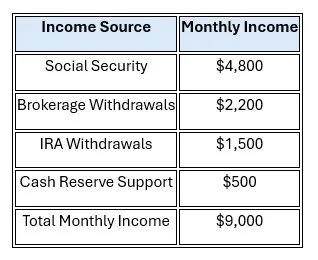
Their Strategy
They maintain:
18 months of cash reserves
Moderate stock exposure for long-term growth
Diversification across account types
Annual withdrawal reviews
Flexible discretionary spending
During strong markets, they replenish cash reserves.
During weaker markets, they temporarily rely more heavily on cash rather than aggressively selling investments.
This approach helps reduce emotional pressure during volatility.
Common Retirement Paycheck Mistakes
1. Withdrawing Randomly From Accounts
Random withdrawals often create tax inefficiencies and unnecessary portfolio stress.
2. Keeping Too Little Cash
Without adequate reserves, retirees may be forced to sell investments during downturns.
3. Keeping Too Much Cash
Excessive cash can reduce long-term purchasing power because of inflation.
4. Ignoring Taxes
Taxes affect:
IRA withdrawals
Social Security taxation
Medicare premiums
Roth conversion opportunities
Retirement income should be coordinated at the household level.
5. Assuming the Same Strategy Works Forever
Retirement income plans should evolve over time as:
Spending changes
Healthcare costs rise
Markets fluctuate
RMDs begin
Tax laws change
Flexibility matters.
What Retirees Often Discover
Many retirees initially focus almost entirely on investment performance.
But over time, confidence often comes more from:
Organized cash flow
Predictable income
Tax coordination
Flexibility during downturns
Understanding where each dollar comes from
A retirement paycheck is not about finding a perfect strategy.
It is about building a system that feels sustainable and manageable over time.
Final Thoughts
The hardest part of retirement is usually not building wealth.
It is learning how to turn decades of savings into reliable monthly income.
A thoughtful retirement paycheck strategy can help retirees:
Reduce financial stress
Improve tax efficiency
Navigate market downturns
Protect long-term portfolio sustainability
Feel more confident about spending decisions
At Greenbush Financial Group, we often find that retirees gain confidence when they stop thinking about retirement income as random withdrawals and start viewing it as a coordinated household paycheck strategy.
The goal is not predicting every market movement perfectly.
The goal is creating a flexible income system that can support retirement through both strong markets and difficult ones.
Rob Mangold
About Rob……...
Hi, I’m Rob Mangold. I’m the Chief Operating Officer at Greenbush Financial Group and a contributor to the Money Smart Board blog. We created the blog to provide strategies that will help our readers personally, professionally, and financially. Our blog is meant to be a resource. If there are questions that you need answered, please feel free to join in on the discussion or contact me directly.
FAQ
-
How do retirees create a monthly paycheck from investments?Most retirees combine Social Security, investment withdrawals, and cash reserves to create consistent monthly income. Withdrawals are typically coordinated across different account types to improve tax efficiency and manage market risk.
-
How much cash should retirees keep?Many retirees benefit from holding 12-24 months of planned withdrawals in cash or short-term reserves, especially during the early retirement years.
-
What accounts should retirees withdraw from first?The answer depends on taxes, age, income needs, and long-term planning goals. Many retirees use a combination of taxable accounts, IRAs, and Roth accounts strategically rather than withdrawing from only one source.
-
What is sequence-of-returns risk?Sequence risk occurs when poor market returns happen early in retirement while withdrawals are being taken. This can permanently reduce long-term portfolio sustainability.
-
Should retirees rely only on dividends for income?Not necessarily. While dividends can help, most retirement income plans work better when they focus on total return, diversification, flexibility, and tax efficiency rather than dividends alone.
-
How does Social Security fit into a retirement paycheck?Social Security often acts as the foundation of retirement income by covering a portion of essential expenses and reducing pressure on investment withdrawals.
-
How often should retirement income plans be reviewed?Most retirees should review income strategies annually to evaluate taxes, spending, investment allocation, withdrawal rates, and healthcare costs.
-
What is the biggest retirement income mistake?One of the biggest mistakes is withdrawing money randomly from investment accounts without coordinating taxes, cash reserves, and long-term income sustainability.

The First Year of Retirement: 7 Financial Moves to Make…and 5 to Avoid
The first year of retirement is one of the most important financial transition periods retirees face. This article explains how to build a retirement withdrawal strategy, evaluate Social Security timing, manage Roth conversion opportunities, avoid Medicare IRMAA surprises, and adjust investment risk after leaving work. Learn the financial mistakes many retirees make during year one and how thoughtful planning can improve long-term retirement income sustainability. Greenbush Financial Group outlines practical retirement planning strategies designed to help retirees build confidence and flexibility during the transition into retirement.
The first year of retirement is one of the most important financial transition periods you’ll ever experience. Decisions around withdrawals, Social Security, taxes, investments, and healthcare can affect your retirement income for decades. Many retirees focus on enjoying newfound freedom but overlook key planning opportunities that exist before year-end and before required distributions begin. At Greenbush Financial Group, we often see that the retirees who build confidence early are the ones who slow down and make intentional first-year decisions.
The First Year of Retirement Is a Transition Year, Not Just a Celebration Year
Retirement changes more than your schedule. It changes how your household generates income, pays taxes, handles market volatility, and manages financial decisions.
For decades, most people operated under a simple formula:
Work
Receive paycheck
Save for retirement
Repeat
Then retirement arrives, and suddenly everything reverses.
Now your investments may need to generate income. Tax planning becomes more flexible but also more important. Healthcare costs become more visible. Market declines can feel more emotional once paychecks stop.
The first year of retirement is often what we call an “adjustment year.” The decisions made during this period can shape:
Future tax brackets
Medicare premiums
Portfolio longevity
Social Security income
Roth conversion opportunities
Spending habits
Confidence during market volatility
The goal is not perfection.
The goal is avoiding expensive mistakes while building a sustainable retirement income strategy.
7 Smart Financial Moves to Make During Your First Year of Retirement
1. Build a Retirement Paycheck Plan Before Taking Withdrawals
One of the biggest mistakes new retirees make is randomly pulling money from accounts as expenses arise.
Retirement income should be coordinated intentionally.
Before taking withdrawals, determine:
How much monthly income you actually need
Which accounts will fund that income
How taxes will affect withdrawals
Which accounts should remain invested longer
How cash reserves will be handled
Many retirees discover their actual spending differs from what they expected.
The first year is often more expensive because of:
Travel
Home projects
Healthcare changes
Helping family
Celebration spending
A paycheck-style withdrawal strategy can create structure and reduce emotional decision-making.
Example
A retired couple needs $7,000 per month after taxes.
They have:
$1.2 million invested
$700,000 in IRAs
$300,000 in taxable accounts
$200,000 in Roth IRAs
No Social Security yet
Instead of withdrawing entirely from their IRA, they may benefit from:
Using taxable savings first
Realizing lower capital gains
Keeping taxable income lower
Preserving future Roth growth opportunities
The order of withdrawals matters more than many retirees realize.
2. Reevaluate Whether to Claim Social Security Immediately
Many retirees automatically claim Social Security as soon as work ends.
That decision can permanently reduce lifetime income.
For healthy retirees with adequate assets, delaying benefits can sometimes improve long-term retirement security.
Key factors include:
Health and longevity expectations
Spousal benefits
Survivor income planning
Tax brackets
Portfolio withdrawal needs
Other income sources
Important Note
Claiming early is not always wrong.
But the first year of retirement is the time to evaluate the decision carefully rather than defaulting to “I stopped working, so I should claim now.”
Example
A retiree eligible for $2,200/month at age 62 may receive roughly $3,900/month if delaying until age 70.
For married couples, this can significantly affect survivor income later.
3. Review Roth Conversion Opportunities Before Year-End
The years between retirement and Required Minimum Distributions (RMDs) can create unusually low-income tax years.
Those years may offer valuable Roth conversion opportunities.
This is one of the most overlooked planning opportunities in retirement.
Converting portions of a traditional IRA to a Roth IRA during lower-income years may help:
Reduce future RMDs
Lower future tax exposure
Create tax-free income later
Reduce widow’s tax risk
Improve long-term tax flexibility
Example
A couple retires at 64 and delays Social Security until 67.
For several years, their taxable income may be significantly lower than during their working years.
They may intentionally convert enough IRA assets annually to “fill up” a lower tax bracket before:
RMDs begin
Social Security increases taxable income
Medicare IRMAA thresholds become an issue
Key Insight
The first retirement year is often more valuable for tax planning than people realize because income may temporarily drop before other retirement income sources begin.
4. Review Medicare IRMAA Exposure Early
Many retirees are surprised when Medicare premiums increase because of prior-year income.
IRMAA stands for Income-Related Monthly Adjustment Amount.
Higher-income retirees can pay significantly more for Medicare Part B and Part D premiums.
Common triggers include:
Large IRA withdrawals
Roth conversions
Capital gains
Selling property
Large bonuses during retirement year
Why This Matters in Year One
The retirement transition often creates unusual tax years.
Without planning, retirees can accidentally trigger higher Medicare premiums two years later.
Important Note
Sometimes triggering IRMAA still makes sense.
For example, a strategic Roth conversion today may still save substantial taxes later.
The key is understanding the tradeoff before making the move.
5. Keep a Larger Cash Reserve Than You Think You Need
The first few years of retirement are emotionally different from the accumulation years.
Market volatility can feel more stressful when paychecks stop.
A properly structured cash reserve can help retirees avoid selling investments during market declines.
This reserve may cover:
12–24 months of spending needs
Major healthcare expenses
Home repairs
Unexpected family support
Market downturns
What Many Retirees Get Wrong
Some retirees stay fully invested because they fear missing returns.
Others hold too much cash and reduce long-term growth potential.
The goal is balance.
A thoughtful reserve strategy can improve both flexibility and emotional confidence.
6. Recheck Your Investment Risk Now That You’re Retired
Many investors discover they were comfortable with risk only while employed.
Once retirement begins, market declines feel different.
This does not mean retirees should abandon growth investments entirely.
But it does mean portfolios should reflect:
Withdrawal needs
Time horizon
Income stability
Emotional tolerance for volatility
Sequence-of-returns risk
What Is Sequence Risk?
Poor market returns early in retirement can create lasting damage when withdrawals are occurring simultaneously.
This is why investment structure matters more after retirement begins.
Common First-Year Mistake
Making aggressive investment changes during a market drop.
Some retirees panic after their first retirement correction and move heavily to cash after losses already occurred.
That can permanently damage long-term retirement sustainability.
7. Review Estate Documents and Beneficiaries
Retirement is a major life transition and an ideal time to revisit estate planning.
Review:
Wills
Trusts
Powers of attorney
Healthcare directives
IRA beneficiaries
Life insurance beneficiaries
Common Issue
Beneficiary designations often override wills.
We regularly see outdated beneficiaries remain unchanged for decades.
Also Important
Review how retirement accounts align with tax planning and legacy goals.
For some households, Roth accounts may be more attractive legacy assets than traditional IRAs because of future tax implications for heirs.
5 Financial Moves to Avoid During Your First Year of Retirement
1. Avoid Major Lifestyle Purchases Too Quickly
Many retirees make large purchases immediately after retiring:
Vacation homes
RVs
Boats
Major renovations
Large gifts to children
The issue is not the purchase itself.
The issue is making irreversible financial decisions before understanding your long-term retirement spending pattern.
Better Approach
Give yourself time to observe:
Actual spending
Healthcare costs
Tax changes
Lifestyle adjustments
Market conditions
Your first-year spending may not reflect your long-term retirement reality.
2. Avoid Claiming Social Security Without Running the Numbers
Social Security timing is often permanent.
Many retirees underestimate:
Survivor implications
Inflation protection
Longevity risk
Tax coordination opportunities
Even delaying benefits by a few years can substantially improve long-term retirement income in some situations.
3. Avoid Taking Large IRA Withdrawals Without Tax Planning
Large withdrawals can create ripple effects:
Higher tax brackets
Increased Medicare premiums
Taxation of Social Security
Reduced Roth conversion opportunities
Example
A retiree withdraws $150,000 from an IRA for home renovations and gifting.
That single decision could:
Push income into higher brackets
Trigger IRMAA surcharges
Increase future tax exposure
Coordinating withdrawals over multiple years may create a better outcome.
4. Avoid Panic Decisions During Market Declines
The first market downturn after retirement can feel emotionally different.
This is often when retirees second-guess their entire plan.
Selling after declines can lock in losses and reduce future recovery potential.
Better Approach
Build a plan before volatility happens:
Maintain cash reserves
Diversify appropriately
Understand withdrawal flexibility
Revisit spending priorities
The goal is not eliminating volatility.
The goal is reducing the need for emotional decisions during volatility.
5. Avoid Treating Retirement Like a Permanent Vacation
Many retirees spend aggressively during the first year before understanding what sustainable retirement spending actually looks like.
This does not mean retirement should be restrictive.
But retirees benefit from observing:
Real monthly expenses
Healthcare changes
Inflation effects
Travel patterns
Long-term lifestyle costs
The first year should help establish sustainable habits and confidence.
A Real-World First-Year Retirement Scenario
John and Susan retire at 64.
They have:
$1.2 million invested
$80,000 in cash
A paid-off home
No pension
Estimated spending needs of $7,000/month after taxes
Their first instinct is:
Claim Social Security immediately
Withdraw additional income entirely from IRAs
Renovate the home
Increase stock exposure after hearing “retirees need growth”
Instead, after planning carefully, they decide to:
Delay Social Security until age 67
Use taxable savings for part of their income
Complete partial Roth conversions annually
Maintain 18 months of cash reserves
Reduce portfolio volatility modestly
Delay large home projects for one year
The Result
They create:
Lower projected lifetime taxes
Higher future guaranteed income
Better Medicare premium management
Greater flexibility during market declines
More confidence about long-term sustainability
None of the decisions were dramatic.
But together, they improved the odds of long-term retirement success.
Questions to Review Before December 31 of Your First Retirement Year
Your first retirement year may create unique tax planning opportunities before year-end.
Questions worth reviewing include:
Should you do a Roth conversion this year?
Are capital gains unusually low this year?
Should you harvest gains before Social Security begins?
Are Medicare IRMAA thresholds an issue?
Are you withholding enough taxes from withdrawals?
Should you rebalance investments?
Are charitable giving strategies appropriate?
Have beneficiaries been updated?
These decisions are often easier and more valuable before future retirement income sources begin.
Common First-Year Retirement Mistakes
Here are several patterns we frequently see:
Spending before building a withdrawal strategy
Claiming Social Security too quickly
Ignoring Roth conversion windows
Taking unnecessary taxable withdrawals
Underestimating healthcare costs
Overreacting to market volatility
Maintaining outdated investment allocations
Forgetting beneficiary reviews
Making emotional investment changes
The first year of retirement often sets the tone for future decision-making.
Final Thoughts
Your first year of retirement is not just about leaving work. It is about transitioning from accumulation to distribution, from saving to creating sustainable income.
The retirees who navigate this transition best are usually not the ones making dramatic moves.
They are the ones slowing down, reviewing tax opportunities carefully, building intentional withdrawal strategies, and avoiding irreversible mistakes too early.
At Greenbush Financial Group, we often find that the most successful retirement transitions come from thoughtful planning rather than reacting emotionally to headlines, market volatility, or uncertainty.
The goal of year one is not perfection.
It is building confidence, flexibility, and a financial foundation that can support the next several decades.
Rob Mangold
About Rob……...
Hi, I’m Rob Mangold. I’m the Chief Operating Officer at Greenbush Financial Group and a contributor to the Money Smart Board blog. We created the blog to provide strategies that will help our readers personally, professionally, and financially. Our blog is meant to be a resource. If there are questions that you need answered, please feel free to join in on the discussion or contact me directly.
FAQ
-
What is the biggest financial mistake retirees make in their first year?One of the biggest mistakes is withdrawing money from retirement accounts without a coordinated tax and income strategy. Poor withdrawal sequencing can increase taxes, Medicare premiums, and long-term portfolio stress.
-
Should I take Social Security as soon as I retire?Not necessarily. Many retirees benefit from delaying benefits, especially if they expect longer life expectancy or want to maximize survivor income for a spouse.
-
Should retirees use cash first before withdrawing from investments?In many cases, maintaining a cash reserve for near-term spending can reduce the need to sell investments during market declines. The right approach depends on taxes, market conditions, and withdrawal needs.
-
Why are Roth conversions often valuable early in retirement?Early retirement years may temporarily lower taxable income before RMDs and Social Security begin. This can create opportunities to convert IRA assets at lower tax rates.
-
How much cash should retirees keep during the first year?Many retirees benefit from holding 12-24 months of spending needs in cash or short-term reserves, especially during the retirement transition period.
-
Can retirement withdrawals increase Medicare premiums?Yes. Large IRA withdrawals, Roth conversions, and capital gains can increase income enough to trigger IRMAA surcharges for Medicare Part B and Part D.
-
Should retirees change investments immediately after retiring?Not automatically. However, retirement is a good time to reassess whether your portfolio still aligns with your income needs, risk tolerance, and withdrawal strategy.
-
What should retirees review before the end of their first retirement year?Retirees should review taxes, Roth conversions, Medicare income thresholds, investment allocations, withdrawal strategies, and beneficiary designations before December 31.
