

When One Social Security Check Disappears: What Retired Couples Need to Plan For
Many couples plan carefully for retirement together but overlook the financial realities of retirement alone. Learn how survivor Social Security benefits, taxes, healthcare costs, and estate planning can impact a surviving spouse.

Many married couples plan carefully for retirement together but spend very little time preparing for the financial realities of retirement alone. When one spouse dies, income may drop faster than expenses, taxes can increase, and important financial decisions suddenly fall on one person. Understanding survivor Social Security rules, tax changes, healthcare costs, and estate planning issues can help protect the surviving spouse financially and emotionally. At Greenbush Financial Group, we often find that the best survivor planning happens before a crisis occurs.
Most Couples Plan for Retirement Together—But Not for Retirement Alone
Many retired couples assume that if one spouse dies, household expenses simply get cut in half.
In reality, that rarely happens.
When one spouse passes away:
One Social Security check may disappear
Taxes may increase
Healthcare costs may remain high
Housing costs often stay similar
One person may suddenly manage all financial decisions alone
At the same time, the surviving spouse may also be dealing with grief, paperwork, legal decisions, and emotional stress.
This is why survivor planning is one of the most important and overlooked parts of retirement planning.
The goal is not to think pessimistically.
The goal is making sure either spouse could continue forward financially with clarity and confidence.
What Financially Changes When One Spouse Dies?
Several important financial changes can happen almost immediately after a spouse passes away.
Social Security Income Often Drops
This is one of the biggest surprises for many couples.
When both spouses are receiving Social Security, one benefit usually disappears after the first death.
The surviving spouse generally keeps:
Their own benefit
Or the higher of the two benefits
But not both full checks.
Example
John receives:
$3,200/month from Social Security
Susan receives:
$2,100/month
Combined household income:
$5,300/month
After John dies, Susan may keep the larger $3,200 benefit, but the smaller benefit disappears.
Household Social Security income drops by:
$2,100/month
Or more than $25,000 annually
Meanwhile, many expenses continue.
Expenses Often Do NOT Drop by 50%
This is one of the most important retirement realities couples should understand.
Certain expenses may decrease modestly:
Food
Travel
Clothing
Some healthcare expenses
But many major costs remain similar:
Property taxes
Utilities
Insurance
Home maintenance
Car expenses
Healthcare premiums
In many cases, household expenses may only decline by 20%–30% while income drops significantly more.
That gap can create financial pressure for surviving spouses.
Why Surviving Spouses Often Pay Higher Taxes
This surprises many retirees.
After one spouse dies, the surviving spouse usually transitions from:
Married Filing Jointly
to:Single tax filing status
That change can happen quickly.
The problem is that single tax brackets are less favorable at lower income levels.
This means surviving spouses may pay higher taxes even if household income decreases.
The Survivor Tax Trap
A surviving spouse may face:
Similar IRA balances
Similar investment income
Similar Required Minimum Distributions (RMDs)
But now with:
Less favorable tax brackets
One standard deduction instead of two
Potentially higher Medicare premiums
Example
A married couple may comfortably remain in the 22% bracket while filing jointly.
After one spouse dies, the survivor could move into higher effective tax exposure as a single filer with nearly the same retirement account balances.
This is one reason Roth conversion planning during joint lifetimes can become extremely valuable.
Why Roth Conversions Can Matter More Than Couples Realize
Many couples focus only on their current taxes.
But survivor planning often changes the equation.
Converting portions of traditional IRAs to Roth IRAs while both spouses are alive may help:
Reduce future RMDs
Lower future survivor tax exposure
Create tax-free withdrawal flexibility
Improve long-term tax diversification
Example
A retired couple in their mid-60s delays Social Security and intentionally converts moderate IRA amounts annually while remaining within a manageable tax bracket.
Years later, if one spouse dies, the surviving spouse may have:
Smaller RMDs
More Roth flexibility
Lower taxable income
Better control over Medicare premium exposure
The key is evaluating these opportunities before tax brackets potentially tighten later.
Pension Survivor Decisions Matter More Than Many Couples Realize
Some pensions offer choices such as:
Single-life payout
Joint-and-survivor payout
Reduced survivor benefits
Many retirees choose larger monthly income initially without fully understanding how survivor income changes later.
Important Question
If one spouse dies:
Will pension income continue?
Reduce?
Or disappear entirely?
These decisions are often permanent once retirement begins.
Healthcare and Long-Term Care Planning Become More Important
Healthcare planning can become more difficult for surviving spouses because:
One spouse may eventually need care alone
Adult children may live far away
Financial management responsibilities may suddenly shift
Couples should discuss:
Long-term care preferences
Healthcare directives
Emergency contacts
Account access
Caregiving expectations
These conversations are uncomfortable for many families, but avoiding them often creates more stress later.
One of the Biggest Risks: Only One Spouse Understands the Finances
In many households, one spouse handles:
Investments
Taxes
Bills
Insurance
Account logins
Estate planning
That may work fine until something unexpected happens.
Then the surviving spouse may suddenly feel overwhelmed managing decisions they were never involved in previously.
Important Step
Both spouses should understand:
Where accounts are located
How income is generated
Who to contact for help
How bills are paid
What the retirement income plan looks like
Financial organization itself can become a form of protection.
Beneficiary Mistakes Can Create Major Problems
Many retirement accounts pass through beneficiary designations rather than wills.
Outdated beneficiaries can create unintended outcomes.
Common issues include:
Ex-spouses still listed
Missing contingent beneficiaries
Unequal inheritance structures
Children added improperly to accounts
Retirement transitions are a good time to review:
IRA beneficiaries
Roth IRA beneficiaries
Life insurance
Transfer-on-death accounts
Trust coordination
A Real-World Survivor Planning Example
David and Karen retire at age 66.
They have:
$1.5 million invested
Two Social Security benefits totaling $5,800/month
Moderate IRA balances
A paid-off home
Initially, they focus mostly on investment growth and travel spending.
But after reviewing survivor planning, they realize several risks:
One Social Security check would disappear
Karen would likely face higher taxes as a single filer
Future RMDs could become problematic
Karen was unfamiliar with many financial accounts
They decide to:
Complete partial Roth conversions annually
Organize account records and passwords
Review estate documents
Stress-test survivor income needs
Ensure both spouses understand the retirement plan
None of these changes were dramatic.
But together, they significantly improved financial clarity and flexibility for the surviving spouse.
Questions Every Retired Couple Should Ask
If one spouse died tomorrow:
Would the surviving spouse know where everything is?
Would income still cover expenses?
Which Social Security benefit would remain?
Would taxes increase?
Would healthcare costs still be manageable?
Are beneficiaries updated?
Are estate documents current?
Does each spouse understand the financial plan?
These are difficult questions.
But they are often easier to address proactively than during a crisis.
Common Survivor Planning Mistakes
1. Ignoring Survivor Income Changes
Many couples underestimate how much income could disappear after the first death.
2. Delaying Estate Organization
Missing documents and unclear account structures create unnecessary stress.
3. Claiming Social Security Without Survivor Planning
Social Security timing decisions can significantly affect long-term survivor income.
4. Ignoring Future Survivor Tax Rates
Surviving spouses often face higher taxes with less favorable filing brackets.
5. Letting One Spouse Handle Everything Alone
Retirement planning works best when both spouses understand the overall strategy.
What Good Survivor Planning Really Looks Like
Good survivor planning is not about predicting the future perfectly.
It is about creating flexibility and reducing unnecessary uncertainty.
That may include:
Reviewing Social Security timing
Evaluating Roth conversions
Stress-testing survivor income
Organizing estate documents
Updating beneficiaries
Maintaining adequate liquidity
Ensuring both spouses understand the plan
The goal is not fear.
The goal is preparedness.
Final Thoughts
Most married couples spend years planning for retirement together.
Far fewer spend time planning for the financial realities one spouse may eventually face alone.
At Greenbush Financial Group, we often find that the strongest retirement plans are not just designed for ideal scenarios. They are also built to protect the surviving spouse from unnecessary financial stress, tax surprises, and confusion during difficult transitions.
These conversations are not always easy.
But they are some of the most valuable retirement planning discussions couples can have.
Good retirement planning is not just about helping both spouses retire comfortably.
It is about helping either spouse continue confidently if life changes unexpectedly.

Rob Mangold
About Rob……...
Hi, I’m Rob Mangold. I’m the Chief Operating Officer at Greenbush Financial Group and a contributor to the Money Smart Board blog. We created the blog to provide strategies that will help our readers personally, professionally, and financially. Our blog is meant to be a resource. If there are questions that you need answered, please feel free to join in on the discussion or contact me directly.
FAQ
-
What happens to Social Security when one spouse dies?The surviving spouse generally keeps the larger of the two Social Security benefits, while the smaller benefit stops.
-
Do taxes increase for surviving spouses?Often, yes. Surviving spouses usually transition from married filing jointly to single filing status, which can create higher tax exposure at lower income levels.
-
Do household expenses get cut in half after one spouse dies?Usually not. Many fixed expenses remain similar even though household income may decline significantly.
-
Why are Roth conversions important for married retirees?Roth conversions during joint lifetimes may help reduce future taxes, lower survivor RMDs, and improve tax flexibility for the surviving spouse.
-
Should both spouses understand the retirement plan?Absolutely. Both spouses should know where accounts are held, how income is generated, and who to contact for financial guidance.
-
What estate planning documents should retirees review?Retirees should review wills, trusts, powers of attorney, healthcare directives, and beneficiary designations regularly.
-
Can Medicare premiums increase for surviving spouses?Yes. Higher taxable income combined with single filing status may increase Medicare IRMAA exposure.
-
What is the biggest survivor planning mistake couples make?One of the biggest mistakes is assuming the surviving spouse will automatically be financially secure without reviewing income reductions, taxes, and account organization ahead of time.









Retirement Income Planning: How to Pay Yourself Without a Job
Creating retirement income requires more than simply withdrawing money from investment accounts. This guide explains how retirees can coordinate Social Security benefits, investment withdrawals, and cash reserves to build a reliable retirement paycheck while managing taxes, sequence-of-returns risk, and market volatility. Learn practical withdrawal strategies that help improve long-term portfolio sustainability and increase retirement confidence. Discover why organized income planning often matters more than chasing investment returns alone.
The hardest part of retirement is not saving money. It is turning your savings into a paycheck that can last for decades. A strong retirement income strategy combines Social Security, investments, and cash reserves in a way that helps retirees manage taxes, market downturns, and long-term spending needs. At Greenbush Financial Group, we often find that retirees feel more confident once they move from random withdrawals to a structured retirement paycheck plan.
The Hardest Part of Retirement Is Not Saving. It’s Replacing Your Paycheck.
For most of your working life, income was automatic.
You worked, your paycheck arrived, taxes were withheld, and bills were paid.
Retirement changes that system overnight.
Now your income may need to come from:
Social Security
Investment accounts
IRAs
Roth IRAs
Cash savings
Brokerage accounts
Maybe a pension
That transition can feel uncomfortable even for financially responsible retirees.
Many people spend decades learning how to save for retirement but very little time learning how to withdraw from retirement.
That is why one of the biggest retirement questions becomes:
“How do I actually turn my savings into reliable monthly income?”
The answer is usually not:
Living only on dividends
Using the 4% rule blindly
Pulling money randomly from accounts
Staying fully invested with no cash reserves
A retirement paycheck works best when it is intentional, flexible, tax-aware, and designed to handle both good markets and bad ones.
What a Retirement Paycheck Actually Looks Like
A retirement paycheck is usually built from three primary sources:
Guaranteed income
Investment withdrawals
Cash reserves
Each source plays a different role.
The goal is not maximizing investment returns.
The goal is creating sustainable monthly income while reducing unnecessary financial stress.
The 3 Buckets of Retirement Income
Bucket #1: Guaranteed Income
This includes predictable income sources such as:
Social Security
Pensions
Certain annuities
For many retirees, this income helps cover core living expenses like:
Housing
Utilities
Groceries
Insurance
Basic healthcare costs
Guaranteed income creates stability.
The more predictable income a retiree has, the less pressure there may be on investment withdrawals during difficult markets.
Bucket #2: Investment Withdrawals
This is where retirees often generate additional income beyond Social Security.
Withdrawals may come from:
Traditional IRAs
401(k)s
Taxable brokerage accounts
Roth IRAs
This is also where many costly mistakes happen.
Without a strategy, retirees may:
Withdraw too much
Trigger unnecessary taxes
Increase Medicare premiums
Sell investments during downturns
Deplete the wrong accounts too early
The order of withdrawals matters.
Bucket #3: Cash Reserves
Cash reserves are one of the most overlooked parts of retirement income planning.
Cash reserves may include:
Savings accounts
Money market funds
CDs
Treasury bills
Short-term bond holdings
The purpose of cash is not maximizing returns.
Its purpose is flexibility.
Cash reserves help retirees avoid selling investments during bad markets when emotions are elevated and portfolio values are temporarily down.
How Retirement Income Is Structured Month to Month
Retirement income planning usually starts with one simple question:
“How much do you actually need each month?”
Step 1: Identify Monthly Spending Needs
Example:
John and Linda retire at age 66.
They estimate they need:
$8,000/month after taxes
That includes:
Property taxes
Insurance
Healthcare
Travel
Utilities
Food
Entertainment
Home maintenance
Step 2: Subtract Guaranteed Income
They receive:
$4,500/month combined from Social Security
That leaves:
$3,500/month that must come from investments and savings
This is called the income gap.
Step 3: Build a Withdrawal Strategy
Their assets include:
$950,000 in IRAs
$300,000 in brokerage accounts
$150,000 in cash reserves
$200,000 in Roth IRAs
Instead of taking income randomly, they decide to:
Use brokerage assets first for flexibility
Maintain 18 months of cash reserves
Delay larger IRA withdrawals strategically
Refill cash reserves during stronger market periods
Keep Roth assets growing longer for future flexibility
Now their retirement income becomes organized and repeatable rather than reactive.
Why Random Withdrawals Can Create Long-Term Problems
Many retirees withdraw from whichever account feels easiest at the time.
That can create ripple effects.
Example
Suppose a retiree withdraws $80,000 entirely from an IRA for spending and home renovations.
That withdrawal may:
Push income into higher tax brackets
Increase taxation of Social Security
Trigger Medicare IRMAA surcharges
Reduce future Roth conversion opportunities
A different withdrawal strategy may have created a better long-term outcome.
Retirement income planning is not just about generating cash.
It is about generating cash efficiently.
Why Cash Reserves Matter So Much in Retirement
Many retirees underestimate how emotionally different investing feels after paychecks stop.
During working years, market declines may feel temporary because new paychecks continue arriving.
Retirement changes that dynamic.
Now withdrawals may be happening while investments are falling.
That creates what planners call sequence-of-returns risk.
What Is Sequence Risk?
Sequence risk occurs when poor market returns happen early in retirement while withdrawals are occurring simultaneously.
This combination can permanently reduce long-term portfolio sustainability.
Example
Two retirees start with identical portfolios and identical spending.
One is forced to sell investments during a major downturn to fund living expenses.
The other uses cash reserves temporarily while allowing investments time to recover.
The long-term outcomes can look dramatically different.
How Much Cash Should Retirees Keep?
There is no perfect answer.
But many retirees feel more comfortable keeping:
12–24 months of planned withdrawals in cash or short-term reserves
The appropriate amount depends on:
Risk tolerance
Market exposure
Spending flexibility
Healthcare concerns
Pension income
Comfort during volatility
Important Note
Too little cash may force investment sales during downturns.
Too much cash may reduce long-term purchasing power because inflation slowly erodes cash value.
The goal is balance.
Should Retirees Live Off Dividends Only?
Many retirees like the idea of “never touching principal” and living entirely off dividends.
While dividend income can help, retirement income planning is usually more nuanced than that.
Dividend-only strategies can create problems such as:
Concentrated portfolios
Reduced diversification
Lower flexibility
Chasing yield
Tax inefficiencies
What matters most is not whether income comes from dividends or withdrawals.
What matters is:
Total return
Sustainability
Tax efficiency
Risk management
Flexibility during market declines
A well-designed retirement paycheck should focus on the overall income strategy, not just one type of investment income.
How Social Security Fits Into a Retirement Paycheck
Social Security is often the foundation of retirement income.
The timing decision affects:
Monthly income
Portfolio withdrawals
Survivor income
Longevity protection
Taxes
Claiming at 62
Taking benefits early provides income sooner but permanently reduces monthly payments.
This may reduce portfolio withdrawals initially.
But it also lowers guaranteed lifetime income.
Claiming at Full Retirement Age
Waiting until full retirement age increases monthly benefits and avoids early claiming reductions.
For many retirees, this creates a balance between income needs and future benefit growth.
Delaying Until Age 70
Benefits increase each year benefits are delayed beyond full retirement age.
For healthy retirees, delayed Social Security can act as additional protection against longevity risk later in retirement.
Especially for married couples, this can significantly affect survivor income.
How Retirees Avoid Selling Investments During Market Declines
A strong retirement paycheck strategy is designed before market volatility happens.
That strategy often includes:
Cash reserves
Diversification
Flexible withdrawals
Annual tax reviews
Periodic rebalancing
Spending flexibility
Example Strategy
A retiree may:
Hold 18 months of withdrawals in cash
Use Social Security for core expenses
Withdraw from brokerage accounts during stable markets
Reduce discretionary spending during downturns
Refill cash reserves after stronger market periods
This creates options during stressful periods instead of forcing emotional decisions.
How Often Should Retirement Income Plans Be Reviewed?
Retirement income planning is not a one-time event.
Most retirees should review their strategy annually.
Areas worth reviewing include:
Withdrawal rates
Tax brackets
Roth conversion opportunities
Medicare IRMAA exposure
Cash reserve levels
Investment allocation
Spending changes
Inflation adjustments
The goal is not constantly changing the plan.
The goal is making thoughtful adjustments as retirement evolves.
A Real-World Retirement Paycheck Example
Susan and Mark retire at ages 65 and 63.
They need:
$9,000/month after taxes
Their income plan looks like this:
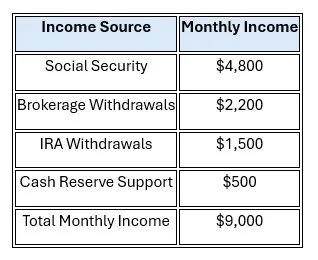
Their Strategy
They maintain:
18 months of cash reserves
Moderate stock exposure for long-term growth
Diversification across account types
Annual withdrawal reviews
Flexible discretionary spending
During strong markets, they replenish cash reserves.
During weaker markets, they temporarily rely more heavily on cash rather than aggressively selling investments.
This approach helps reduce emotional pressure during volatility.
Common Retirement Paycheck Mistakes
1. Withdrawing Randomly From Accounts
Random withdrawals often create tax inefficiencies and unnecessary portfolio stress.
2. Keeping Too Little Cash
Without adequate reserves, retirees may be forced to sell investments during downturns.
3. Keeping Too Much Cash
Excessive cash can reduce long-term purchasing power because of inflation.
4. Ignoring Taxes
Taxes affect:
IRA withdrawals
Social Security taxation
Medicare premiums
Roth conversion opportunities
Retirement income should be coordinated at the household level.
5. Assuming the Same Strategy Works Forever
Retirement income plans should evolve over time as:
Spending changes
Healthcare costs rise
Markets fluctuate
RMDs begin
Tax laws change
Flexibility matters.
What Retirees Often Discover
Many retirees initially focus almost entirely on investment performance.
But over time, confidence often comes more from:
Organized cash flow
Predictable income
Tax coordination
Flexibility during downturns
Understanding where each dollar comes from
A retirement paycheck is not about finding a perfect strategy.
It is about building a system that feels sustainable and manageable over time.
Final Thoughts
The hardest part of retirement is usually not building wealth.
It is learning how to turn decades of savings into reliable monthly income.
A thoughtful retirement paycheck strategy can help retirees:
Reduce financial stress
Improve tax efficiency
Navigate market downturns
Protect long-term portfolio sustainability
Feel more confident about spending decisions
At Greenbush Financial Group, we often find that retirees gain confidence when they stop thinking about retirement income as random withdrawals and start viewing it as a coordinated household paycheck strategy.
The goal is not predicting every market movement perfectly.
The goal is creating a flexible income system that can support retirement through both strong markets and difficult ones.
Rob Mangold
About Rob……...
Hi, I’m Rob Mangold. I’m the Chief Operating Officer at Greenbush Financial Group and a contributor to the Money Smart Board blog. We created the blog to provide strategies that will help our readers personally, professionally, and financially. Our blog is meant to be a resource. If there are questions that you need answered, please feel free to join in on the discussion or contact me directly.
FAQ
-
How do retirees create a monthly paycheck from investments?Most retirees combine Social Security, investment withdrawals, and cash reserves to create consistent monthly income. Withdrawals are typically coordinated across different account types to improve tax efficiency and manage market risk.
-
How much cash should retirees keep?Many retirees benefit from holding 12-24 months of planned withdrawals in cash or short-term reserves, especially during the early retirement years.
-
What accounts should retirees withdraw from first?The answer depends on taxes, age, income needs, and long-term planning goals. Many retirees use a combination of taxable accounts, IRAs, and Roth accounts strategically rather than withdrawing from only one source.
-
What is sequence-of-returns risk?Sequence risk occurs when poor market returns happen early in retirement while withdrawals are being taken. This can permanently reduce long-term portfolio sustainability.
-
Should retirees rely only on dividends for income?Not necessarily. While dividends can help, most retirement income plans work better when they focus on total return, diversification, flexibility, and tax efficiency rather than dividends alone.
-
How does Social Security fit into a retirement paycheck?Social Security often acts as the foundation of retirement income by covering a portion of essential expenses and reducing pressure on investment withdrawals.
-
How often should retirement income plans be reviewed?Most retirees should review income strategies annually to evaluate taxes, spending, investment allocation, withdrawal rates, and healthcare costs.
-
What is the biggest retirement income mistake?One of the biggest mistakes is withdrawing money randomly from investment accounts without coordinating taxes, cash reserves, and long-term income sustainability.

How to Maximize Social Security Benefits with Smart Claiming and Income Planning
Social Security is a cornerstone of retirement income—but when and how you claim can have a major impact on lifetime benefits. This article from Greenbush Financial Group explains 2025 thresholds, how benefits are calculated, and smart strategies for delaying, coordinating with taxes, and managing Medicare costs. Learn how to maximize your Social Security benefits and plan your income efficiently in retirement.

By Michael Ruger, CFP®
Partner and Chief Investment Officer at Greenbush Financial Group
For many retirees, Social Security is a cornerstone of their retirement income. But when and how you claim your benefits—and how you plan your income around them—can have a major impact on the total amount you receive over your lifetime. With updated Social Security thresholds, limits, and rules, there are new opportunities to optimize your claiming strategy and coordinate Social Security with your broader financial plan.
In this article, we’ll cover:
How Social Security benefits are calculated and funded
Four ways to increase your Social Security benefit amount
How income and taxes affect your benefits
The impact of Medicare premiums and income planning
How delaying Social Security can create opportunities for Roth conversions
What to know about the earned income penalty if you claim early
Answers to common Social Security claiming questions
Maximizing Social Security During the Working Years
The foundation for a strong Social Security benefit starts during your working years. Understanding how the system works helps you make informed decisions about your career, income, and retirement planning.
How Social Security Is Funded and Calculated
Social Security is primarily funded through payroll taxes under the Federal Insurance Contributions Act (FICA). In 2025, workers and employers each pay 6.2% of wages (for a total of 12.4%) up to the taxable wage base, which is $176,000 in 2025. Any earnings above that amount are not subject to Social Security tax and do not increase your benefit.
Your benefit is based on your highest 35 years of indexed earnings—meaning each year’s income is adjusted for inflation to reflect its value in today’s dollars. If you worked fewer than 35 years, zeros are included in the calculation, which can significantly reduce your average and therefore your monthly benefit.
Key takeaway: Once your annual income exceeds the taxable wage base, additional earnings don’t raise your future Social Security benefit. However, working longer can still increase your benefit if you replace lower-earning years or zeros in your 35-year average.
Four Ways to Increase Your Social Security Benefits
1. Fill in or Replace Zero Years
If you have fewer than 35 years of work history, each missing year is counted as zero. Even one extra year of income can replace a zero and raise your benefit.
Example: If you worked 32 years and earned $80,000 annually in your final three years, adding those years could significantly boost your benefit calculation.
2. Delay Claiming to Earn Higher Benefits
You can claim Social Security as early as age 62, but doing so permanently reduces your benefit—up to 30% less than your full retirement age (FRA) amount. For those born in 1960 or later, FRA is 67.
If you wait past FRA, your benefit grows by 8% per year up to age 70, plus annual cost-of-living adjustments (COLAs).
Example:
Claiming at 62: $1,400/month
Claiming at 67: $2,000/month
Claiming at 70: $2,480/month
That’s a $1,080 per month difference for waiting between the ages of 62 and 70.
3. Maximize Spousal and Dependent Benefits
Spousal and dependent benefits can be valuable for married couples or retirees with young children.
Spousal Benefit: A spouse can claim up to 50% of the higher earner’s FRA benefit, provided the higher earner has already filed.
Divorced Spouse Benefit: You may qualify if the marriage lasted 10 years or longer, and you haven’t remarried prior to age 60.
Dependent Benefit: Retirees age 62+ with children under 18 may receive additional benefits for dependents.
Planning tip: For individuals who plan to utilize the 50% spousal benefit and/or the dependent benefit, the path to the optimal filing strategy is more complex because the spouse and dependents cannot receive these benefits until that individual has actually turned on their social security benefit, which, in some cases, can favor not waiting until age 70 to file.
4. Understand Survivor Benefits
If one spouse passes away, the surviving spouse receives the higher of the two benefits. This makes it especially beneficial for the higher-earning spouse to delay claiming to age 70, maximizing the survivor benefit and providing long-term income protection.
How Social Security Benefits Are Taxed
Up to 85% of your Social Security benefits may be taxable, depending on your combined income (adjusted gross income + nontaxable interest + half of your Social Security benefits).
Single filers: Taxes begin at $25,000 of combined income
Married filing jointly: Taxes begin at $32,000 of combined income
If you don’t need Social Security to cover living expenses right away, delaying benefits can not only increase your future income but may also help manage taxes by controlling your income levels in early retirement.
Medicare Premiums and Income Planning
Once you reach age 65, you’ll typically enroll in Medicare Part B and D, and your premiums are based on your Modified Adjusted Gross Income (MAGI). Higher income means higher premiums under the Income-Related Monthly Adjustment Amount (IRMAA) rules.
Because Social Security benefits count as income for these purposes, timing your claiming strategy can help you manage Medicare costs.
Roth Conversions: Turning Delay into an Opportunity
Delaying Social Security creates a window for Roth conversions—moving money from a traditional IRA to a Roth IRA at potentially lower tax rates before Required Minimum Distributions (RMDs) begin at age 73 or 75.
Benefits of Roth conversions include:
Paying tax now at potentially lower rates
Reducing future RMDs
Potentially reduce future Medicare premiums
Creating a tax-free income source in retirement
Leaving tax-free assets to heirs
Coordinating your claiming strategy with Roth conversions can improve long-term tax efficiency and enhance your retirement flexibility.
Claiming Early? Know the Earned Income Penalty
If you claim Social Security before full retirement age and continue to work, your benefits may be temporarily reduced.
In 2025, the earnings limit is $23,400. For every $2 earned over the limit, $1 in benefits is withheld.
In the year you reach FRA, a higher limit applies: $62,160, and only $1 is withheld for every $3 earned above that.
Once you reach full retirement age, the penalty disappears, and your benefit is recalculated to credit any withheld amounts.

About Michael……...
Hi, I’m Michael Ruger. I’m the managing partner of Greenbush Financial Group and the creator of the nationally recognized Money Smart Board blog . I created the blog because there are a lot of events in life that require important financial decisions. The goal is to help our readers avoid big financial missteps, discover financial solutions that they were not aware of, and to optimize their financial future.
Frequently Asked Questions (FAQ)
How are Social Security benefits calculated?
Social Security benefits are based on your highest 35 years of indexed earnings, adjusted for inflation. If you worked fewer than 35 years, zeros are included in your calculation, which can reduce your benefit.
What are the main ways to increase your Social Security benefits?
You can boost your benefit by replacing “zero” earning years, delaying your claim up to age 70 for an 8% annual increase past full retirement age, and coordinating spousal or survivor benefits strategically. Working longer and earning more during high-income years can also improve your benefit calculation.
How does delaying Social Security affect taxes and Medicare premiums?
Delaying benefits can help you manage taxable income in early retirement and avoid higher Medicare premiums triggered by the IRMAA income thresholds. This window can also allow for Roth conversions, which reduce future Required Minimum Distributions (RMDs) and create tax-free income in later years.
How are Social Security benefits taxed?
Up to 85% of your benefits may be taxable depending on your combined income (adjusted gross income + nontaxable interest + half of your benefits). Taxes begin at $25,000 for single filers and $32,000 for married couples filing jointly. Managing income sources can help minimize these taxes.
What is the earned income penalty for claiming Social Security early?
If you claim before full retirement age and continue working, benefits are reduced by $1 for every $2 earned above $23,400 in 2025. In the year you reach full retirement age, the limit increases to $62,160, and only $1 is withheld for every $3 earned over that amount. The penalty ends at full retirement age, when your benefit is recalculated.
What are spousal and survivor Social Security benefits?
A spouse can claim up to 50% of the higher earner’s full retirement benefit once that person has filed. If one spouse passes away, the survivor receives the higher of the two benefits. This makes it especially advantageous for the higher earner to delay claiming to age 70 to maximize long-term income protection.
How can Roth conversions complement Social Security planning?
Performing Roth conversions in the years before claiming Social Security or reaching RMD age allows retirees to shift pre-tax funds into tax-free accounts at potentially lower tax rates. This strategy can reduce future taxable income, manage Medicare premiums, and increase retirement flexibility.






















Social Security Claiming Strategies: Early vs. Delayed Benefits Explained
Social Security can be one of your most powerful retirement assets—if you claim it strategically. In this article from Greenbush Financial Group, we compare early versus delayed claiming paths, explore spousal and survivor benefits, and explain how tax and income planning can help you unlock more lifetime income.

By Michael Ruger, CFP®
Partner and Chief Investment Officer at Greenbush Financial Group
For many retirees, Social Security ends up being the single largest and most reliable income source in retirement. It is inflation-protected, provides survivor benefits, and lasts for life. Yet, many people cost themselves hundreds of thousands of dollars in lifetime income by claiming too early—or by ignoring the tax and spousal rules that make timing so important.
This article explores two common paths for claiming Social Security, the tax and survivor strategies that matter most, and how to build a decision framework that balances both the math and the emotional realities of retirement.
The Two Paths: Early & Active vs. Delay & Fortify
There is no one-size-fits-all answer to Social Security timing. Instead, retirees can think of two primary paths:
Path A: Early & Active (Claiming at 62–65)
Works best for those with health concerns or shorter life expectancy.
Provides cash flow to enjoy active early retirement years.
Can unlock additional benefits, such as spousal add-ons or child benefits.
Trade-off: Lower lifetime income and reduced survivor benefits.
Path B: Delay & Fortify (Claiming at 67–70)
Higher earner delays to 70, maximizing both their lifetime benefit and the survivor benefit for their spouse.
Serves as “longevity insurance,” providing a larger, inflation-adjusted check for life.
Opens the door for Roth conversions to reduce future required minimum distributions (RMDs) and future Medicare premiums.
Trade-off: Requires income from working or pensions, or drawing down on assets in the meantime
Path A: Early & Active (Claiming at 62–65)
For many retirees, claiming Social Security early feels like “getting what’s yours” after decades of paying into the system. And in some cases, it’s absolutely the right move. This path prioritizes flexibility and cash flow in the early years of retirement — often before traditional pensions, investment income, or part-time work fully kick in.
Let’s unpack when and why early claiming can make sense, and the trade-offs to watch out for.
Works Best for Those with Health Concerns or Shorter Life Expectancy
Social Security benefits are designed around actuarial averages. The longer you live, the more a delayed claim pays off. But if you have health concerns, a family history of shorter life expectancy, or simply want to maximize income during the “go-go” years of retirement, claiming early can be a rational and emotionally satisfying choice.
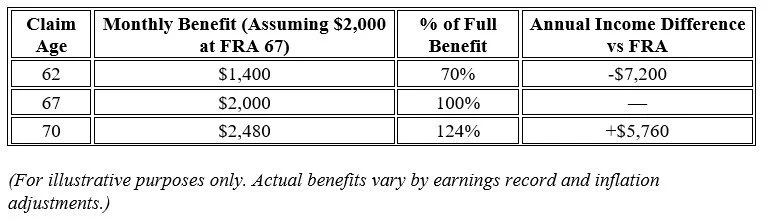
For example, a retiree who claims at 62 will receive about 70–75% of their full retirement age (FRA) benefit. While that’s a reduction, the earlier payments can add up over time if the individual doesn’t live into their 80s or 90s.
Rule of thumb: If you expect your life expectancy to be shorter than the early 80s, claiming before FRA may result in higher total lifetime benefits.
Provides Cash Flow to Enjoy Active Early Retirement Years
Many retirees want to travel, pursue hobbies, or help family members financially in their 60s while they’re still healthy and energetic. Social Security can serve as a predictable income base that helps fund this period — reducing the need to withdraw heavily from investment accounts during market downturns.
Consider a 63-year-old couple who wants to take advantage of early retirement while waiting for their portfolio to grow. Claiming one spouse’s benefit early might provide enough monthly income to bridge the gap and protect long-term assets.
Tip: Early claiming can work well as part of a “phased retirement” approach — easing out of the workforce while still maintaining a reliable income stream.
Can Unlock Additional Benefits, Such as Spousal Add-Ons or Child Benefits
Claiming early sometimes unlocks access to auxiliary benefits that wouldn’t otherwise be available. For instance:
A non-working spouse can start claiming a spousal benefit once the higher-earning spouse files for Social Security.
Dependent children under age 18 (or 19 if still in high school) may also qualify for benefits if a parent begins claiming.
This strategy can create a multi-benefit window, where the total family income from Social Security exceeds what the primary earner would receive alone — especially valuable for families still supporting dependents or paying for college.
Trade-Off: Lower Lifetime Income and Reduced Survivor Benefits
The biggest drawback to early claiming is mathematical: reduced monthly checks for life. Claiming at 62 permanently cuts benefits by roughly 25–30% compared to waiting until full retirement age. For married couples, this also means a smaller survivor benefit for the spouse who lives longer.
Over a 20- or 30-year retirement, that difference can add up to hundreds of thousands of dollars in lost income. It can also limit flexibility later in life when expenses like healthcare and long-term care rise.
To visualize this, here’s a simple comparison:
Path B: Delay & Fortify (Claiming at 67–70)
If the Early & Active path is about maximizing flexibility and early retirement enjoyment, the Delay & Fortify strategy is about building strength and security for the long haul. Delaying your Social Security claim allows your benefit to grow each year, providing powerful longevity insurance and boosting survivor protection for your spouse.
This path often works best for retirees who expect to live into their 80s or beyond, have other income sources to draw from in the meantime, or want to use the delay window for tax-efficient planning.
Higher Earner Delays to 70, Maximizing Both Their Lifetime Benefit and the Survivor Benefit for Their Spouse
For married couples, Social Security isn’t just an individual decision — it’s a household one. The higher-earning spouse’s benefit often becomes the survivor benefit for the remaining spouse.
By waiting to claim until age 70, the higher earner locks in delayed retirement credits that increase benefits by roughly 8% per year after full retirement age (up to age 70). That means a benefit that would have been $2,000 at age 67 could grow to about $2,480 per month by age 70 — a 24% increase for life.
That higher benefit continues for as long as either spouse is alive, making this strategy especially valuable for couples where one spouse is expected to live well into their 80s or 90s.
Example:
If one spouse claims early at 62 and the other delays to 70, the household creates a blend — immediate income now, and a larger, inflation-protected income base later that acts as a financial safety net for the survivor.
Serves as “Longevity Insurance,” Providing a Larger, Inflation-Adjusted Check for Life
Delaying Social Security is sometimes compared to buying an annuity — but without the fees or market risk. It’s an inflation-adjusted income stream that continues for life, backed by the U.S. government.
For those with strong health and longevity in their family history, this can be one of the best “investments” available, because the increase in monthly income provides protection against outliving assets in later years.
Breakeven point: Typically, the math favors delaying if you live past your early 80s. But beyond the numbers, many retirees value the peace of mind that comes with knowing they’ll always have a larger, guaranteed income base, no matter how long they live.
Opens the Door for Roth Conversions to Reduce Future RMDs and Medicare Premiums
One of the less-discussed advantages of delaying benefits is the tax planning window it creates. Between retirement (often mid-60s) and age 70, retirees may have lower taxable income, creating an opportunity to do Roth IRA conversions at favorable tax rates.
Here’s why this matters:
Converting pre-tax assets to Roth reduces future Required Minimum Distributions (RMDs) at age 73/75.
Lower RMDs can help manage Medicare premiums, which are based on income (IRMAA thresholds).
Roth income in retirement is tax-free, helping stabilize cash flow and protect against rising tax rates.
Strategy in action:
A retiree might use withdrawals from cash or taxable accounts to fund living expenses while converting portions of their traditional IRA to a Roth during those pre-70 years. Then, when Social Security finally starts, their taxable income is lower — improving long-term tax efficiency.
Trade-Off: Requires Income from Working or Pensions, or Drawing Down on Assets in the Meantime
The biggest hurdle in delaying Social Security is bridging the income gap. If you retire at 65 but delay claiming until 70, that’s five years of expenses that must be covered by savings, part-time work, or other income sources.
For some retirees, this is perfectly manageable. For others, it may mean drawing down more from investment accounts — which can be uncomfortable, especially during volatile markets.
The key is to view this period as a trade-off by drawing down on a larger portion of your retirement assets now for a higher guaranteed income stream later on. Many financial plans model this “bridge strategy” explicitly, showing how a few years of portfolio withdrawals can result in higher lifetime income and stronger survivor protection.
Building a Decision Framework: Balancing the Math and the Mindset
Choosing when to claim Social Security is part math, part mindset. The best decision balances financial optimization with personal goals and health considerations.
A helpful framework:
Start with longevity assumptions. Estimate based on family health and lifestyle.
Assess your income bridge. Can you fund living expenses until 67–70 without stress?
Run the household math. Model joint benefits, survivor income, and tax implications.
Weigh the emotional factors. Early claiming often feels more secure and immediate; delaying feels more strategic and protective.
Revisit regularly. If you’re 62 and unsure, you don’t have to decide today — claiming flexibility exists year to year.
The right Social Security claiming strategy isn’t about “winning” a mathematical breakeven test — it’s about creating confidence and control in retirement.
The Bottom Line
Social Security is one of the most valuable, inflation-protected income sources you’ll ever have. Taking the time to make a thoughtful, data-driven claiming decision can add tens or even hundreds of thousands of dollars to your lifetime benefits.
But just as importantly, it can bring peace of mind — knowing your retirement income is designed to support both your financial goals and your life priorities.
If you’re approaching retirement, consider running multiple claiming scenarios or working with a financial planner to build a customized Social Security plan that fits your household.
Because in the end, smart Social Security planning isn’t just about maximizing a benefit — it’s about maximizing the life you can live in retirement.
About Michael……...
Hi, I’m Michael Ruger. I’m the managing partner of Greenbush Financial Group and the creator of the nationally recognized Money Smart Board blog . I created the blog because there are a lot of events in life that require important financial decisions. The goal is to help our readers avoid big financial missteps, discover financial solutions that they were not aware of, and to optimize their financial future.
Frequently Asked Questions (FAQs)
What are the main differences between claiming Social Security early versus delaying benefits?
Claiming early (ages 62–65) provides immediate income and flexibility but permanently reduces monthly benefits by up to 30%. Delaying to age 70 increases benefits by 8% per year after full retirement age and strengthens survivor protection for a spouse.
When does it make sense to claim Social Security early?
Early claiming can make sense for retirees with health concerns, shorter life expectancy, or those who need income to support active early retirement years. It can also unlock spousal or dependent benefits sooner. However, it reduces lifetime and survivor benefits, so it’s best suited for households prioritizing flexibility over long-term income maximization.
What are the advantages of delaying Social Security until age 70?
Delaying benefits boosts lifetime and survivor income, provides inflation-adjusted longevity protection, and can create a valuable tax-planning window. Those extra years often allow retirees to perform Roth conversions at lower tax rates and reduce future Required Minimum Distributions (RMDs) and Medicare premiums.
How do spousal and survivor benefits factor into Social Security claiming decisions?
For married couples, the higher earner’s benefit often becomes the survivor benefit. By delaying their claim to age 70, the higher earner ensures the surviving spouse receives a larger, inflation-adjusted income for life—providing greater long-term financial stability.
What is the breakeven point for delaying Social Security?
Generally, if you live beyond your early 80s, delaying your claim tends to produce higher lifetime benefits. However, the optimal strategy depends on personal health, family longevity, and income needs during the delay period. Financial modeling can help identify the most efficient approach.
How can delaying Social Security support tax and Medicare planning?
The years between retirement and claiming benefits often provide a “low-income window” ideal for Roth conversions. This can lower future RMDs and taxable income, helping retirees stay below the IRMAA thresholds that trigger higher Medicare premiums.
How should I decide which Social Security claiming strategy is best for me?
The right approach balances math and mindset—combining life expectancy estimates, income bridge options, household tax impact, and emotional comfort. Working with a financial planner to test multiple claiming scenarios can clarify which path offers the best balance of income security and lifestyle freedom.
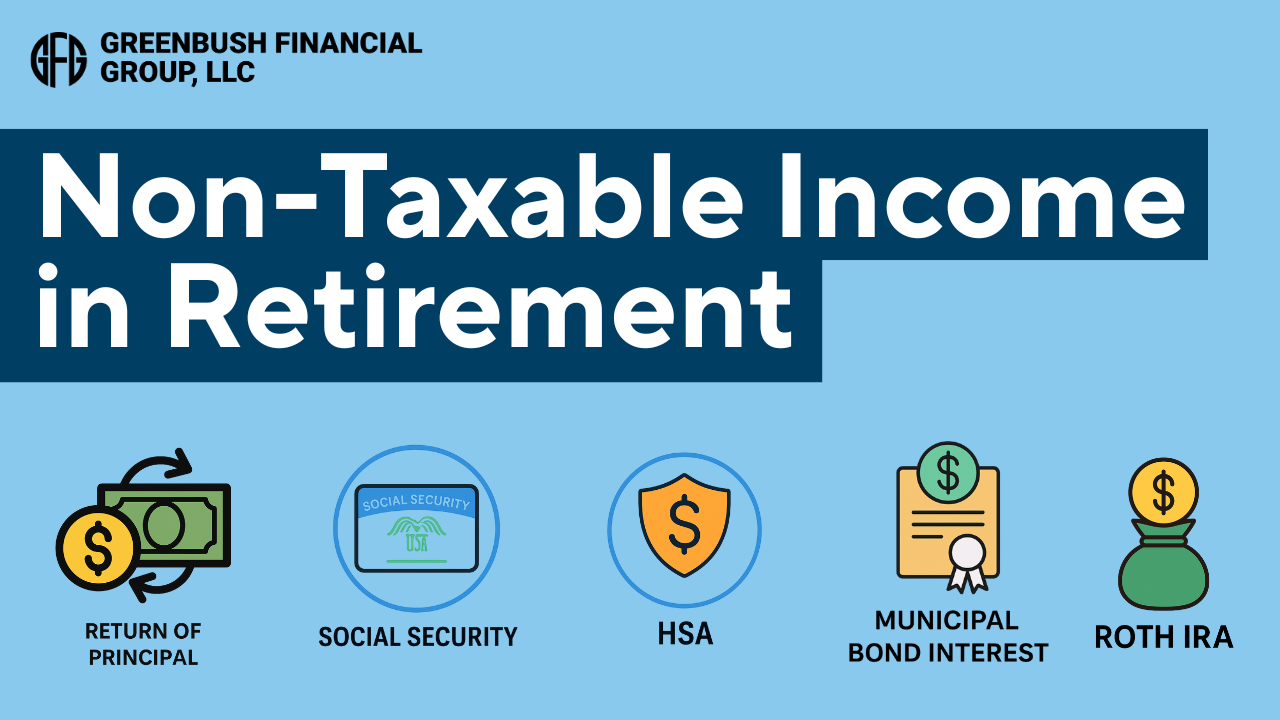
Non-Taxable Income in Retirement: 5 Sources You Should Know About
When it comes to retirement income, not all dollars are created equal. Some income sources are fully taxable, others partially — but a select few can be completely tax-free. And understanding the difference could mean thousands of dollars in savings each year.
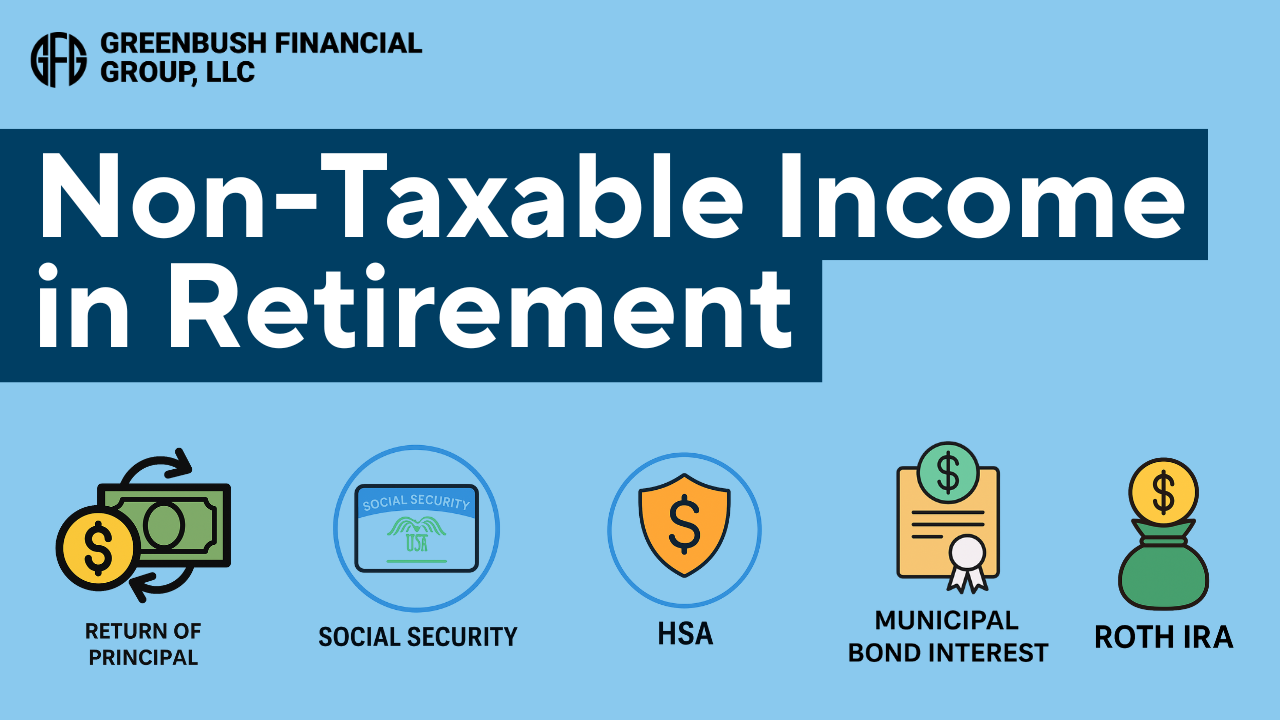
When it comes to retirement income, not all dollars are treated equally. Some are fully taxable, others partially taxable, and a select few are entirely tax-free. Understanding the difference is critical to building a retirement income plan that protects your nest egg from unnecessary taxation, especially in a high-inflation, high-cost-of-living environment.
In this article, we break down five sources of non-taxable income in retirement, how they work, and how to strategically use them to lower your tax bill and preserve long-term wealth.
1. Roth IRA Withdrawals
A Roth IRA offers one of the most powerful tax benefits available to retirees — tax-free growth and qualified tax-free withdrawals.
To qualify, withdrawals must occur after age 59½ and at least five years after your first contribution or Roth conversion. If both conditions are met, all distributions (contributions and growth) are 100% tax-free.
Why it matters:
Withdrawals from pre-tax retirement accounts like Traditional IRAs and 401(k)s are taxed as ordinary income, which can push you into a higher tax bracket, increase Medicare premiums, and reduce the portion of your Social Security benefits that are tax-free. With Roth IRAs, none of those problems exist.
Planning strategy:
Many retirees choose to complete Roth conversions during low-income years (such as early retirement) to move pre-tax funds into a Roth IRA while controlling their tax rate. This allows them to create a future pool of tax-free income while reducing Required Minimum Distributions (RMDs) down the line.
2. Health Savings Account (HSA) Distributions for Medical Expenses
HSAs are the only account type that offers triple tax advantages:
Contributions are tax-deductible
Growth is tax-deferred
Withdrawals are tax-free if used for qualified medical expenses
Qualified expenses include Medicare premiums, prescriptions, dental and vision care, long-term care insurance premiums (subject to limits), and more.
Why it matters:
Healthcare is often one of the largest expenses in retirement, and using HSA funds tax-free for these costs allows retirees to preserve their other taxable accounts.
Planning strategy:
For clients who are still working and enrolled in a high-deductible health plan, the strategy may be to contribute the maximum amount to an HSA and pay current medical expenses out-of-pocket. This allows the HSA to grow and be used as a supplemental retirement account for tax-free medical reimbursements later in life.
3. Social Security (Partially Non-Taxable)
Up to 85% of Social Security benefits can be taxable at the federal level, depending on your provisional income (which includes half of your Social Security benefits, taxable income, and tax-exempt interest).
However, if a retiree has very little income other than their social security, it’s possible that they may not pay any tax on their social security benefits.
Why it matters:
Retirees who rely heavily on Roth IRA withdrawals or return of principal from brokerage accounts may be able to keep their provisional income low enough to shield some or all of their Social Security benefits from taxation.
Planning strategy:
By building a tax-efficient distribution plan in retirement, retirees can often reduce the amount of tax paid on their Social Security benefits and improve net income in retirement.
4. Municipal Bond Interest
Interest from municipal bonds is generally exempt from federal income tax. If you reside in the state where the bond was issued, that interest may also be exempt from state and local taxes.
Why it matters:
For retirees in high tax brackets, municipal bonds can provide steady, tax-advantaged income without adding to provisional income or triggering taxes on Social Security.
Planning strategy:
Retirees in high-income tax brackets may hold municipal bonds in taxable brokerage accounts, while keeping higher-yield taxable bonds inside IRAs or 401(k)s where the interest won’t be taxed annually.
5. Return of Principal from Non-Retirement Accounts
Withdrawals from taxable brokerage accounts can be structured to return your cost basis first, which is not subject to tax. Only the gains portion of a sale is subject to capital gains tax — and long-term capital gains may be taxed at 0% if your taxable income is below certain thresholds.
Why it matters:
This allows retirees to tap into their investments in a low-tax or no-tax manner — especially when drawing from principal rather than interest, dividends, or gains.
Planning strategy:
Coordinate asset sales to manage taxable gains, and consider drawing from principal early in retirement to reduce future RMDs or pay the tax liability generated by Roth conversions in lower-income years.
Final Thoughts: Build a Tax-Efficient Retirement Income Plan
Most retirees understand the importance of investment performance, but few give the same attention to tax efficiency, even though taxes can quietly erode thousands of dollars in retirement income each year.
By blending these non-taxable income sources into your withdrawal strategy, you can:
Reduce your tax liability
Lower Medicare surcharges
Improve portfolio longevity
Increase the amount of inheritance passed to the next generation
About Michael……...
Hi, I’m Michael Ruger. I’m the managing partner of Greenbush Financial Group and the creator of the nationally recognized Money Smart Board blog . I created the blog because there are a lot of events in life that require important financial decisions. The goal is to help our readers avoid big financial missteps, discover financial solutions that they were not aware of, and to optimize their financial future.
Frequently Asked Questions (FAQs):
What types of retirement income are tax-free?
Common sources of tax-free retirement income include qualified Roth IRA withdrawals, Health Savings Account (HSA) distributions for medical expenses, a portion of Social Security benefits, municipal bond interest, and the return of principal from non-retirement investments. These sources can help retirees reduce overall taxable income and extend portfolio longevity.
Why are Roth IRA withdrawals tax-free in retirement?
Roth IRA withdrawals are tax-free if you’re over age 59½ and the account has been open for at least five years. Because Roth withdrawals don’t count toward taxable income, they won’t increase your tax bracket, affect Medicare premiums, or reduce the tax-free portion of your Social Security benefits.
How can a Health Savings Account (HSA) provide tax-free income in retirement?
HSAs offer triple tax advantages: contributions are tax-deductible, growth is tax-deferred, and withdrawals are tax-free for qualified medical expenses. Retirees can use HSA funds to pay for Medicare premiums, prescriptions, and other healthcare costs without generating taxable income.
Are Social Security benefits always taxable?
No. Depending on your provisional income, up to 85% of Social Security benefits may be taxable, but some retirees owe no tax on their benefits. Keeping taxable income low through Roth withdrawals or return of principal from brokerage accounts can help reduce or eliminate Social Security taxation.
How are municipal bond earnings taxed?
Interest earned from municipal bonds is typically exempt from federal income tax and, if the bonds are issued by your home state, may also be exempt from state and local taxes. This makes municipal bonds a valuable source of tax-advantaged income for retirees in higher tax brackets.
What does “return of principal” mean for taxable accounts?
When you sell investments in a taxable brokerage account, the portion representing your original cost basis is considered a return of principal and isn’t taxed. Only the gains portion is subject to capital gains tax, which may be as low as 0% for retirees in lower income brackets.
How can retirees use non-taxable income to improve their financial plan?
Strategically blending tax-free and taxable income sources can lower your overall tax burden, reduce Medicare surcharges, and improve long-term portfolio sustainability. This approach helps preserve wealth and increase the amount that can ultimately be passed to heirs.
