

Backdoor Roth IRA Contribution Strategy
This strategy is for high income earners that make too much to contribute directly to a Roth IRA. In recent years, some of these high income earners have been implementing a “backdoor Roth IRA conversion strategy” to get around the Roth IRA contribution limitations and make contributions to Roth IRA’s via “conversions”. For the 2020 tax year, your
backdoor roth ira strategy
This strategy is for high income earners that make too much to contribute directly to a Roth IRA. In recent years, some of these high income earners have been implementing a “backdoor Roth IRA conversion strategy” to get around the Roth IRA contribution limitations and make contributions to Roth IRA’s via “conversions”. For the 2026 tax year, your ability to make contributions to a Roth IRA begins to phase out at the following AGI thresholds based on your filing status:
Single: $153,000
Married Filing Jointly: $242,000
Married Filing Separately: $0
However, in 2010 the IRS removed the income limits on “IRA Conversions” which open up an opportunity……if executed correctly…….for high income earners to make “backdoor” contributions to a Roth IRA.
Why would a high income earning want to contribute to a Roth IRA? Once high income earners have maxed out their contributions to their employer sponsored retirement plans, they usually begin to fund plain vanilla investment management accounts or whole life insurance policies. When assets accumulate in an investment management account, once liquidated, the account owner typically has to pay either short-term or long term capital gains on the appreciation. For whole life insurance, even though the accumulation is tax deferred, if the policy is surrendered, the policy owner pays ordinary income tax on the gain in the policy.
With a Roth IRA, after tax contributions are made to the account and the gains in the account are withdrawn TAX FREE if the account owner at the time of withdrawal is over the age of 59½ and the Roth IRA has been in existence for 5 years. A huge tax benefit for high income earners who are typically in a medium to higher tax bracket even in retirement.
Here is how the strategy works
Rollover all existing pre-tax IRA’s into your employer sponsored retirement plan
Make a non-deductible contribution to a Traditional IRA
Convert the Traditional IRA to a Roth IRA
Here are the pitfalls in the execution process
Over the years, more and more individuals have become aware of this wealth accumulation strategy. However, there are risks associated with executing this strategy and if not executed correctly could result in adverse tax consequences.
Here are the top pitfalls:
Forget to aggregate Pre-Tax IRA’s
Do not understand that SEP IRA’s and Simple IRA’s are included in the Aggregation Rule
They create a “step transaction”
Pitfall #1: IRS Aggregation Rule
The IRA aggregate rule stipulates that when an individual has multiple IRAs, they will all be treated as one account when determining the tax consequences of any distributions (including a distribution out of the account for a Roth conversion).
This creates a significant challenge for those who wish to do the backdoor Roth strategy, but have other existing IRA accounts already in place (e.g., from prior years’ deductible IRA contributions, or rollovers from prior 401(k) and other employer retirement plans). Because the standard rule for IRA distributions (and Roth conversions) is that any after-tax contributions come out along with any pre-tax assets (whether from contributions or growth) on a pro-rata basis, when all the accounts are aggregated together, it becomes impossible to just convert the non-deductible IRA.

picture
If an individual has pre-tax IRA’s we typically recommend that they rollover those IRA’s into their employer sponsored retirement plans which eliminates all of their pre-tax IRA balance and then open the opportunity to execute this backdoor Roth IRA contribution strategy.
Pitfall #2: SEP IRA & Simple IRA's count
Many smaller companies and self-employed individuals sponsor SEP IRA’s or Simple IRA Plans. Many individuals just assume that these are “employer sponsored retirement plans” not subject to the aggregation rules. Wrong. In the eyes of the IRS these are “pre-tax IRA’s” and are subject to the aggregation rules. If you have a Simple IRA or SEP IRA, make sure you take this common pitfall into account.
Pitfall #3: Beware IRS Step Transaction Rule
This is probably the most common pitfall that we see when executing this strategy. Individuals and investment advisors alike will make deposits to the non-deductible traditional IRA and then the next day process the conversion to the Roth IRA. In doing this, you run the risk of creating a “step transaction”.
There is a very long explanation tied to “step transactions” and how to avoid a “step transactions” but I will provide you with a brief summary of the concept.
Here it is, if you use legal loop holes in the tax system in an obvious effort to side step other IRS limitations (like the Roth IRA income limit) it could be considered a “step transaction” by the IRS and the IRS may disallow the conversion and assess tax penalties.
Disclosure: Backdoor Roth IRA Conversion Strategy
It is highly recommend that you work closely with your financial advisor and tax advisor to determine whether or not this is a viable wealth accumulation strategy based on your personal financial situation.

Michael Ruger
About Michael……...
Hi, I’m Michael Ruger. I’m the managing partner of Greenbush Financial Group and the creator of the nationally recognized Money Smart Board blog . I created the blog because there are a lot of events in life that require important financial decisions. The goal is to help our readers avoid big financial missteps, discover financial solutions that they were not aware of, and to optimize their financial future.






























What is the 60 Day Rule and How Should it be Used?
The 60 day rule refers to the length of time an individual has to deposit money back into a retirement account that was previously withdrawn without incurring a taxable event. There are a number of reasons someone would withdraw money from an account whether it be to pay a large tax bill, obtain cash for an unexpected expense, or to rollover the

60 day rollover
The 60 day rule refers to the length of time an individual has to deposit money back into a retirement account that was previously withdrawn without incurring a taxable event. There are a number of reasons someone would withdraw money from an account whether it be to pay a large tax bill, obtain cash for an unexpected expense, or to rollover the balance into another retirement account.
There are multiple ways to rollover a balance from one retirement account to another so we will begin by explaining the more common ways to rollover a balance where the 60 day rule won't come into play.
Direct Rollover
A direct rollover is a transfer from a retirement plan to another retirement plan or IRA where the custodian of your current plan makes payment directly to your new account. This can be in the form of a check made payable to the new account custodian or a direct wire transfer. This method will avoid taxes and penalties because the account owner never had access to the cash during the transfer.
Trustee to Trustee Transfer
Similar to the direct rollover, a trustee to trustee transfer moves money from one IRA to another IRA without the account owner ever having access to the cash and therefore avoiding taxes and penalties.
The direct rollover and trustee to trustee transfer methods both avoid taxes and penalties as cash is never available to the owner and therefore the 60 day rule does not come into effect. In any case where the account owner has access to the cash, the money will have to be redeposited into another retirement account within 60 days or the owner will be taxed on any pre-tax dollars and possibly penalized if the owner is under the age of 59 ½.
The 60 day rule is one of the only ways an owner has access to money in a retirement account without paying taxes or penalties on the distribution. An individual can take advantage of this if they are in need of immediate cash for something like an unexpected expense. The distribution is essentially an interest free loan from your retirement account for 60 days. If the money is not available within the 60 days to redeposit, taxes and possible penalties will be assessed on the distribution.
IRS: One 60 Day Rollover in 12 Month Rule
The IRS recognized that individuals were taking advantage of this rule by taking multiple distributions in a single year and therefore increasing the time period. Beginning after January 1, 2015, the IRS changed the law to state that only one rollover can be made from one IRA to another IRA within a 12 month period. This rule does not apply to the following:
rollovers from traditional IRAs to Roth IRAs (conversions)
trustee-to-trustee transfers to another IRA
IRA-to-plan rollovers
plan-to-IRA rollovers
plan-to-plan rollovers
It shows the one rollover in a 12 month period rule was meant to limit the abuse of the 60 day rule because direct rollovers and trustee to trustee transfers are excluded.
What can be Rolled Over?
Most of the time the entire balance in a retirement account can be rolled over to another account unless the balance includes an amount of money that is required to be withdrawn. Examples include required minimum distributions and contributions in excess of limits (plus earnings on the excess contributions). For retirement plans, in addition to RMD's and excess contributions, any loans outstanding at the time of rollover or hardship distributions taken during the year will be subject to taxes and possible penalties.
Are Taxes Assessed at the Time of Distribution?
Distribution from an IRA: Typically, a tax is not assessed on a distribution from an IRA unless the account owner elects to have taxes withheld. A distribution from a pre-tax IRA account is typically subject to a 10% early withdrawal penalty if taken before 59 ½.
Distribution from Retirement Plan: Any distribution taken from a retirement plan where cash is made available to the owner is subject to a minimum 20% federal withholding. For example, if you request a $10,000 distribution, you will receive $8,000 and $2,000 will go to the government. There is no option to opt out of this withholding even if you intend to rollover the balance within 60 days. For this reason, a direct rollover would be a way to avoid the 20% withholding.
It is important to understand if you intend to rollover a distribution from a retirement account that the entire amount of the distribution must be redeposited within 60 days to avoid taxes and penalties even if taxes were already withheld. Using the previous example, if you take a $10,000 distribution from a retirement account and have the 20% withheld for taxes you must redeposit $10,000 within 60 days even though you only received $8,000 in cash. This scenario may appear that you are losing $2,000 but when you complete your taxes the $10,000 distribution will not be taxable as long as the full amount was redeposited within 60 days. When you file your taxes, the $2,000 will be included in the federal taxes withheld which is how the money is recouped.
How is the Rollover Reported to the Government?
Any time you wish to utilize the 60 day rule, it is important you keep documentation. Any distribution from a retirement account will generate a 1099-R form that must be reported as income on your tax return. Also, the 1099-R will show any taxes withheld from the distribution. You will receive a 1099-R even if a direct rollover or trustee to trustee transfer was done. The way the distribution is coded determines how the IRS treats it for tax purposes. If the distribution is coded as a direct rollover or trustee to trustee transfer, the distribution will not be treated as taxable income. If the distribution gave you access to cash, the 1099-R will be coded in a way that treats the distribution as a taxable event. If you redeposited the amount into another retirement account within 60 days, it is important you notify your tax preparer and bring documentation showing the deposit was made timely. The tax preparer should then treat the distribution as a non-taxable event.
About Rob.........
Hi, I'm Rob Mangold. I'm the Chief Operating Officer at Greenbush Financial Group and a contributor to the Money Smart Board blog. We created the blog to provide strategies that will help our readers personally , professionally, and financially. Our blog is meant to be a resource. If there are questions that you need answered, pleas feel free to join in on the discussion or contact me directly.






















How Much Life Insurance Do I Need?
Do you even need life insurance? If you have dependants to protect and you do not have enough savings, you will most likely need life insurance. But the question is how much should I have? Well, your home will be one of your biggest assets, and in some cases the money that it makes from its sale when you have passed away is a significant inheritance

How Much Life Insurance Do I Need?
Do you even need life insurance? If you have dependants to protect and you do not have enough savings, you will most likely need life insurance. But the question is how much should I have? Well, your home will be one of your biggest assets, and in some cases the money that it makes from its sale when you have passed away is a significant inheritance for your children.
If you do not have dependents or you have enough savings to cover the current and future expenses for your dependents there really is no need for life insurance. Life insurance sales professional can be very aggressive with their sales tactics and sometime they mask their services as "financial planning" but all of their solutions lead to you buying an expensive whole life insurance policy.
Remember, life insurance is simply a transfer of risk. When you are younger, have a family, a mortgage, and are just starting to accumulate assets, the amount of life insurance coverage is usually at its greatest. But as your children grow up, they finish college, you pay your mortgage, you have no debt, and you have accumulated a good amount in retirement savings, your need to transfer that risk diminishes because you have essentially become self-insured. Just because you had a $1M dollar life insurance policy issued 10 years ago does not mean that is the amount you need now.
Which kind of insurance should you get?
It's our opinion that for most individuals term insurance makes the most sense. Insurance agents are always very eager to sell whole life, variable life, and universal life policies. Why? They pay big commissions!! When you compare a $1M 30 year term policy and a $1M Whole Life policy side by side, often times the annual premium for whole life insurance is 10 times that amount of the term insurance policy. Insurance agents will tout that the whole life policy has cash value, you can take loans, and that it's a tax deferred savings vehicle. But often time when you compare that to: "If I just bought the cheaper term insurance and did something else with the money I would have spent on the more expensive whole life policy such as additional pre-tax retirement savings, college savings for the kids, paying down the mortgage, or setting up an investment management account, at the end of the day I'm in a much better spot financially."
How much life insurance do you need?
The most common rule of thumb that I hear is "10 times my annual salary". Please throw that out the window. The amount of insurance you need varies greatly from individual to individual. The calculation to reach the answer is fairly straight forward. Below is the approach we take with our clients:
How much debt do you have? This includes mortgages, car loans, personal loans, credit cards, etc. Your total debt amount is your starting point.
What are your annual expenses? Just create a quick list of your monthly expenses, they do not have to be exact, and our recommendation is to estimate on the high side just to be safe. Then multiply your monthly expense by 12 months to reach your "annual after tax expenses".
How much monthly income do you have to replace? If you are married, we have to look at the income of each spouse. If your monthly expenses are $50,000 per year and the husband earns $30,000 and the wife earns $80,000, we are going to need more insurance on the wife because we have to replace $80,000 per year in income if she were to pass away unexpectedly. Married couples make the mistake of getting the same face value of insurance just because. Look at it from an income replacement standpoint. If you are a single parent or provider, you will just look at the amount of income that is needed to meet the anticipated monthly expenses for your dependents.
Factor in long term savings goals and expenses. Examples of this are the college cost for your children and the annual retirement savings for the surviving spouse.
Example:
Husband: Age 40: Annual Income $70,000
Wife: Age 41: Annual Income $70,000
Children: Age 13 & 10
Total Outstanding Debt with Mortgage: $250,000
Total Annual After Tax Expenses: $90,000
Savings & Investment Accounts: $100,000
Remember there is not a single correct way to calculate your insurance need. This example is meant to help you through the thought process. Let's look at an insurance policy for the husband. We first look at what the duration of the term insurance policy should be. Our top two questions are "when will the mortgage be paid off?" and "when will the kids be done with college?" These are the two most common large expenses that we are insuring against. In this example let's assume they have 20 years left on their mortgage so at a minimum we will be looking at a 20 year term policy since the youngest child will done with their 4 year degree within the next 12 years. So a 20 year term covers both.
Here is how we would calculate the amount. Start with the total amount of debt: $250,000. That is our base amount. Then we need to look at college expense for the kids. Assume $20K per year for each child for a 4 year degree: $160,000. Next we look at how much annual income we need to replace on the husband's life to meet their monthly expense. In this example it will be close to all of it but let's reduce it to $60K per year. It is determined that they will need their current level of income until the mortgage is paid in full so $60,000 x 20 Years = $1,200,000. When you add all of these up they will need a 20 year term policy with a death benefit of $1,610,000. But we also have to take into account that they already have $100,000 in savings and their levels of debt should decrease with each year as time progresses. In this scenario we would most likely recommend a 20 Year Term Policy with a $1.5M death benefit on the husband's life.
The calculation for his wife in this scenario would be similar since they have the same level of income.
Michael Ruger
About Michael.........
Hi, I'm Michael Ruger. I'm the managing partner of Greenbush Financial Group and the creator of the nationally recognized Money Smart Board blog . I created the blog because there are a lot of events in life that require important financial decisions. The goal is to help our readers avoid big financial missteps, discover financial solutions that they were not aware of, and to optimize their financial future.

















Paying Down Debt: What is the Best Strategy?
Living with debt is not easy. It can be a constant burden and easily disrupt day-to-day life. Having debt will also ruin your credit score too. The worse your credit score gets, the less likely you will be accepted for any type of loan. One of the fastest ways to get rid of your debt is to pay your debt off in the correct order.

strategies for paying off debt
Living with debt is not easy. It can be a constant burden and easily disrupt day-to-day life. Having debt will also ruin your credit score too. The worse your credit score gets, the less likely you will be accepted for any type of loan. One of the fastest ways to get rid of your debt is to pay your debt off in the correct order.
STEP 1: Create a list of all your current debts
The first step is understanding what you owe. To start, make a master list of all your monthly credit card and loan statements. For each bill, include:
The creditor's name
The total amount you owe on that bill
The minimum required monthly payment
The interest rate (also known as APR)
The payment due date
STEP 2: List all of your monthly expenses
Add up all your monthly expenses: rent, car, food, utilities, health insurance and the minimum payments on your debts; as well as regular spending on things such as entertainment and clothing. Subtract that figure from your monthly after-tax income. The remaining amount is what you could put toward debt repayment each month-though it may make sense for you to save some.
STEP 3: Call your lenders
Call your lenders and explain your situation. They may be willing to lower your interest rate temporarily or waive late fees. You may also be able to lower your interest rate by transferring some high-interest credit card debt onto a new credit card with a lower rate (though that's not a long-term solution).
STEP 4: Payoff high interest rate or small balances first
You can start with the bill carrying the highest interest, or the one with the smallest balance. Prioritizing the highest-rate debt can save you more money: You pay off your most expensive debt sooner. Paying off the smallest debt can eliminate a bill faster, providing a motivating boost. Whichever you choose, make sure to pay at least the minimum on all your debts.

credit card debt
Pay the monthly minimum on each debt. The exception: your target bill. Put more money toward this one to pay it down faster. Once you pay off that bill, choose another to pay down aggressively. Your monthly debt repayment total shouldn't change, even when you eliminate bills. This way you gain momentum as you go, putting more and more money toward each remaining bill.
STEP 5: Get creative
You can use your annual tax refund or holiday bonus to pay down debt. Look for small ways to save money every day, such as riding your bike to work, or eating in instead of dining out. Another way to make a dent quickly is to sell unused or unnecessary belongings-maybe downgrading your car to a more affordable model with lower monthly payments.
STEP 6: Break the cycle
As you start to escape debt, it can be tempting to reward yourself by splurging on a new smartphone or an expensive dinner but just a few purchases can erase all your hard work. Instead, buy things with cash or your debit card, and think long and hard before taking on any new debt.
Read this book
If you want to live a debt free life, I strongly recommend you read the book "Total Money Makeover" by Dave Ramsey. Ramsey's book really paves the way to get out of debt and stay out of debt.

dave ramsey book
Michael Ruger
About Michael.........
Hi, I'm Michael Ruger. I'm the managing partner of Greenbush Financial Group and the creator of the nationally recognized Money Smart Board blog . I created the blog because there are a lot of events in life that require important financial decisions. The goal is to help our readers avoid big financial missteps, discover financial solutions that they were not aware of, and to optimize their financial future.
What is the Process for Setting Up a Will?
Creating a will is often a task that everyone knows they should do but it gets put on the back burner. Creating a will is one of the most critical things you can do for your loved ones. Putting your wishes on paper helps your heirs avoid unnecessary hassles, and you gain the peace of mind knowing that a life's worth of possessions will end up in the right

What is the Process for Setting Up a Will?
Creating a will is often a task that everyone knows they should do but it gets put on the back burner. Creating a will is one of the most critical things you can do for your loved ones. Putting your wishes on paper helps your heirs avoid unnecessary hassles, and you gain the peace of mind knowing that a life's worth of possessions will end up in the right hands. But before for you do, it helps to know the overall process of setting up a will to save you time and money.
What is a will?
A will is simply a legal document in which you, the testator, declare who will manage your estate after you die. Your estate can consist of big, expensive things such as a vacation home but also small items that might hold sentimental value such as photographs. The person named in the will to manage your estate is called the executor because he or she executes your stated wishes. Sometimes though, people get confused by this and aren't too sure what the meaning of an executor.
A will can also serve to declare who you wish to become the guardian for any minor children or dependents, and who you want to receive specific items that you own - Aunt Sally gets the silver, Cousin Billy the bone china, and so on. Someone designated to receive any of your property is called a "beneficiary."
Some types of property, including certain insurance policies and retirement accounts, generally aren't covered by wills. You should've listed beneficiaries when you took out the policies or opened the accounts. Check if you can't remember, and make sure you keep beneficiaries up to date, since what you have on file when you die should dictate who receives those assets.
What happens if I die without a will?
If you die without a valid will, you'll become what's called intestate. That usually means your estate will be settled based on the laws of your state that outline who inherits what. Probate is the legal process of transferring the property of a deceased person to the rightful heirs.
Since no executor was named, a judge appoints an administrator to serve in that capacity. An administrator also will be named if a will is deemed to be invalid. All wills must meet certain standards such as being witnessed to be legally valid. Again, requirements vary from state to state.
An administrator will most likely be a stranger to you and your family, and he or she will be bound by the letter of the probate laws of your state. As such, an administrator may make decisions that wouldn't necessarily agree with your wishes or those of your heirs.
Do I need an attorney to prepare my will?
No, you aren't required to hire a lawyer to prepare your will, though an experienced attorney can provide useful advice on estate-planning strategies such as establishing testamentary, revocable, and irrevocable trusts. But as long as your will meets the legal requirements of your state, it's valid whether a lawyer drafted it or you wrote it yourself on the back of a napkin.
Do-it-yourself will kits are widely available online which are of course better than nothing but we usually recommend that our clients at least have an attorney review their will and make sure the specifications in their will match their wishes.
Should my spouse and I have a joint will or separate wills?
Estate planners almost universally advise against joint wills, and some states don't even recognize them. Odds are you and your spouse won't die at the same time, and there's probably property that's not jointly held. That's why separate wills make better sense, even though your will and your spouse's will might end up looking remarkably similar.
In particular, separate wills allow for each spouse to address issues such as ex-spouses and children from previous relationships. Ditto for property that was obtained during a previous marriage. Be very clear about who gets what. Probate laws generally favor the current spouse.
Who should I name as my executor?
You can name your spouse, an adult child, or another trusted friend or relative as your executor. If your affairs are complicated, it might make more sense to name an attorney or someone with legal and financial expertise. You can also name joint executors, such as your spouse or partner and your attorney.
One of the most important things your will can do is empower your executor to pay your bills and deal with debt collectors. Make sure the wording of your will allows for this, and also gives your executor leeway to take care of any related issues that aren't specifically outlined in your will.
How do I leave specific items to specific heirs?
If you wish to leave certain personal property to certain heirs, indicate as much in your will. In addition, you can create a separate document called a letter of instruction that you should keep with your will.
A letter of instruction, which isn't legally binding in some states, can be written more informally than a will and can go into detail about which items go to whom. You can also include specifics about any number of things that will help your executor settle your estate including account numbers, passwords and even burial instructions.
Another option is to leave everything to one trusted person who knows your wishes for distributing your personal items. This, of course, is risky because you're relying on this person to honor your intentions without fail. Consider carefully.
Who has the right to contest my will?
Contesting a will refers to challenging the legal validity of all or part of the document. A beneficiary who feels slighted by the terms of a will might choose to contest it. Depending on which state you live in, so too might a spouse, ex-spouse or child who believes your stated wishes go against local probate laws.
A will can be contested for any number of other reasons: it wasn't properly witnessed; you weren't competent when you signed it; or it's the result of coercion or fraud. It's usually up to a probate judge to settle the dispute. The key to successfully contesting a will is finding legitimate legal fault with it. A clearly drafted and validly executed will is the best defense.
Michael Ruger
About Michael.........
Hi, I'm Michael Ruger. I'm the managing partner of Greenbush Financial Group and the creator of the nationally recognized Money Smart Board blog . I created the blog because there are a lot of events in life that require important financial decisions. The goal is to help our readers avoid big financial missteps, discover financial solutions that they were not aware of, and to optimize their financial future.




















How Should I Incorporate My Business?
Starting your own business is an incredible achievement, and for most, your business will shape your life not only professionally but personally. That being said, setting up your business in the correct way and having the necessary pieces in place day one is extremely important.

Business owner
Starting your own business is an incredible achievement, and for most, your business will shape your life not only professionally but personally. That being said, setting up your business in the correct way and having the necessary pieces in place day one is extremely important.
Here we will discuss some of the different options for structuring your business which is just a piece of the business infrastructure. We will define the structure as well as give some details such as tax filing. It is recommended you speak with a professional (accountant/attorney) when making this decision as incorporating a business the wrong way may have ramifications like paying more in taxes. Constant communication with a professional about your business as you start to make money and grow is also recommended as the structure of your company may have to evolve.
Sole Proprietorship
This is the most basic type of business structure. There is one owner of the company that is responsible for the business assets and liabilities. No formal action is needed to set up a sole proprietorship. Once business activities commence and you are the only owner, you are a sole proprietor. That being said, there are still registration, licenses, and permits that are generally required which vary based on industry and location.
A sole proprietorship is not separate from the owner for tax purposes and therefore the business activity is included on Schedule C of Form 1040. It is important to know that the owner is responsible for paying all the taxes related to owning a sole proprietorship which includes estimated taxes, if necessary.
The biggest pitfall of a sole proprietorship is that there is unlimited liability. This means the owner is personally responsible for any liability of the company.
Partnership
A partnership includes multiple owners (partners) and can be set up a number of ways. The three types of partnerships include general partnerships, limited partnerships, and joint ventures. Choosing the type of partnership depends on matters such as the participation of each partner in the business and length of time the partnership will be in place.
Partnership agreements are not legally required but are highly recommended as they should document how decisions will be made, the responsibilities of each partner, how profits and losses will be divided, and ownership changes.
To form a partnership, you must register with your state and include the legal name of the partnership. This will allow you to obtain an Employer Identification Number (EIN) for the company. The licenses, permits, and other regulations associated with forming a partnership depend on your location and industry.
Unlike a sole proprietorship, a partnership files a separate tax form (Form 1065). This form is known as an information return as the income shown on Form 1065 passes through to the owners who claim the income on their personal return. There are local excise taxes and other fees that the partnership will be responsible for but the income of the company is passed through to the owners. Form 1065 generates what are known as K-1's for each partner. The K-1 will show what the partner should claim on their personal return.
Advantages of partnerships include multiple sources of additional capital, a shared financial commitment, and the individual skills and experiences of each partner. Pitfalls include unlimited liability, disagreements between owners, and shared profits.
Corporation
A corporation is typically more complex and meant for larger companies with multiple employees. Unlike sole proprietorships and partnerships, corporations are treated as its own legal entity separate from the owners. Forming a corporation requires more filings and registrations and they are typically more costly to administer due to the complexity.
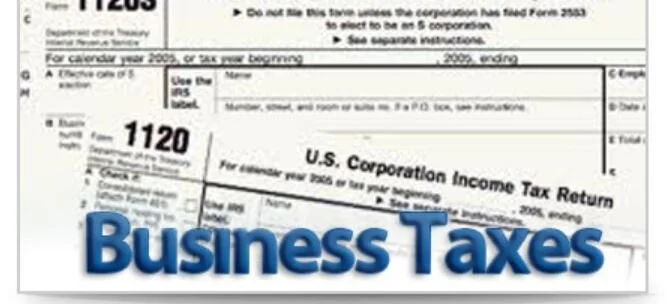
Since corporations are treated separate from individuals, they are required to pay federal, state, and local (if necessary) taxes. For federal purposes, Form 1120 is used to show the activities of the business and pay income tax.
Unlike sole proprietorships and partnerships, individuals are protected from corporate liabilities usually up to the amount they have invested in the company. This structure makes it easier to generate capital for the business and it is possible to become publically traded on a stock exchange. Pitfalls of a corporation include the amount of time and money it takes to set up and administer the corporation and potential double taxation. The corporation pays income tax and then distributes profits (in the form of dividends) to owners. Those dividends are now taxable to the individual after they were already taxed at the corporate level.
S Corporation
An S corporation is similar to a C corporation but is taxed at a personal level and avoids double taxation. The S Corp election passes through income to the owner's personal tax return rather than taxing the corporation and then the individual's dividends.
It is important to determine whether or not your corporation will be eligible to qualify as an S Corp under IRS regulations. A business must first register as a corporation and then file Form 2553 (signed by all owners) to apply for S Corp status.
Form 1120S is used to file taxes at a federal level. Again, S Corp income is passed through to the owners for federal tax purposes. Some states recognize this election but others (like New York) do not and will tax the company as a C Corp.
Limited Liability Company
An LLC provides limited liability features associated with a corporation with the same tax and operational efficiencies of a sole proprietorship or partnership. Owners of a corporation are not personally responsible for the liabilities of a company like sole proprietorships or partnerships.
Forming an LLC is similar to forming a partnership including choosing a business name, registering with the state (filing the "Articles of Organization"), obtaining necessary licenses and permits, and creating an operating agreement (similar to the partnership agreement). New York State also requires you to announce your LLC formation in a local newspaper.
An LLC can be structured similar to a sole proprietorship (single member LLC), a partnership, or an LLC filing as a C Corporation for tax purposes. The same filings will be completed as if the LLC was a sole proprietor, partnership, or corporation. A special election can also be made with the IRS allowing an LLC to be treated as an S Corp in some circumstances.
The main advantage of an LLC is that members are protected from personal liability for business decisions and actions. If provisions are not documented in the operating agreement, one of the pitfalls of an LLC is that when one member leaves, the LLC must dissolve completely. The remaining members can create a new LLC if they choose to continue operations.
About Rob.........
Hi, I'm Rob Mangold. I'm the Chief Operating Officer at Greenbush Financial Group and a contributor to the Money Smart Board blog. We created the blog to provide strategies that will help our readers personally , professionally, and financially. Our blog is meant to be a resource. If there are questions that you need answered, pleas feel free to join in on the discussion or contact me directly.




















Simple IRA vs. 401(k) - Which one is right for your company?
There are a lot of options available to small companies when establishing an employer sponsored retirement plan. For companies that have employees in addition to the owners of the company, the question is do they establish a 401(k) plan or a Simple IRA?The right fit for your company depends on:

compare simple ira and 401k
There are a lot of options available to small companies when establishing an employer sponsored retirement plan. For companies that have employees in addition to the owners of the company, the question is do they establish a 401(k) plan or a Simple IRA?The right fit for your company depends on:
What are the company's primary goals for establishing the plan?
How much the owner(s) plan to contribute to the plan?
How many employees does the company have?
Do you want to restrict the plan to only full time employees?
The cost of maintaining each plan?
Does the company intend to make an employer contribution to the plan?
Diversity of the investment menu
Below is a chart that contains a quick comparison of some of the main features of each type of plan:

simple ira vs 401K comparison chart
For many small companies it often makes sense to start with a Simple IRA plan and then transition to a 401K plan as the company grows or when the owner intends to start accessing the upper deferral limits offered by the 401(k) plan.
Simple IRA's are relatively easy to setup and the administrative fees to maintain these plans are typically lower in comparison to 401(k) plans. Most Simple IRA providers will only charge $10 - $30 to custody the accounts.
By comparison, 401(k) plans are ERISA covered plans which require a TPA Firm (third party administrator) to maintain the plan documents, conduct year end plan testing, and file the 5500 each year. The TPA fees vary based on the provider and the number of employees eligible to participate in the plan. A ballpark range is $1,500 - $2,500 for companies with under 50 employees.
However, the additional TPA fees associated with establishing a 401(k) plan may be justified if:
The owners intend to max out their employee deferrals
The owners are approaching retirement and need to make big contributions
The company wants to maintain flexibility with the employer contribution
The company would like to make Roth contributions, loans, or rollovers available
WARNING: Most investment providers are "one trick ponies". They will talk about 401(k) plans and not present other options because they either do not have a thorough understand of how Simple IRA plans work or they are only able to offer 401(k) plans. Before establishing a retirement plan it is important to work with a firm that presents both options, helps you to understand the difference between the two types of plans, and assist you in evaluating which plan would best meet your company's goals and objectives.
Michael Ruger
About Michael.........
Hi, I'm Michael Ruger. I'm the managing partner of Greenbush Financial Group and the creator of the nationally recognized Money Smart Board blog . I created the blog because there are a lot of events in life that require important financial decisions. The goal is to help our readers avoid big financial missteps, discover financial solutions that they were not aware of, and to optimize their financial future.


















Comparing Different Types of Employer Sponsored Retirement Plans
Employer sponsored retirement plans are typically the single most valuable tool for business owner when attempting to:
Reduce their current tax liability
Attract and retain employees
Accumulate wealth for retirement
But with all of the different types of plans to choose from which one is the right one for your business? Most business owners are familiar with how 401(k) plans work but that might not be the right fit given variables such as:

comparison of different types of retirement plans
Employer sponsored retirement plans are typically the single most valuable tool for business owner when attempting to:
Reduce their current tax liability
Attract and retain employees
Accumulate wealth for retirement
But with all of the different types of plans to choose from which one is the right one for your business? Most business owners are familiar with how 401(k) plans work but that might not be the right fit given variables such as:
# of Employees
Cash flows of the business
Goals of the business owner
There are four main stream employer sponsored retirement plans that business owners have to choose from:
SEP IRA
Single(k) Plan
Simple IRA
401(k) Plan
Since there are a lot of differences between these four types of plans we have included a comparison chart at the conclusion of this newsletter but we will touch on the highlights of each type of plan.
SEP IRA PLAN
This is the only employer sponsored retirement plan that can be setup after 12/31 for the previous tax year. So when you are sitting with your accountant in the spring and they deliver the bad news that you are going to have a big tax liability for the previous tax year, you can establish a SEP IRA up until your tax filing deadline plus extension, fund it, and take a deduction for that year.
However, if the company has employees that meet the plan’s eligibility requirement, these plans become very expensive very quickly if the owner(s) want to make contributions to their own accounts. The reason being, these plans are 100% employer funded which means there are no employee contributions allowed and the employer contribution is uniform for all plan participants. For example, if the owner contributes 15% of their income to the SEP IRA, they have to make an employer contribution equal to 15% of compensation for each employee that has met the plans eligibility requirement. If the 5305-SEP Form, which serves as the plan document, is setup correctly a company can keep new employees out of the plan for up to 3 years but often times it is either not setup correctly or the employer cannot find the document.
Single(k) Plan or “Solo(k)”
These plans are for owner only entities. As soon as you have an employee that works more than 1000 hours in a 12 month period, you cannot sponsor a Single(k) plan.
The plans are often times the most advantageous for self-employed individuals that have no employees and want to have access to higher pre-tax contribution levels. For all intensive purposes it is a 401(k) plan, same contributions limits, ERISA protected, they allow loans and Roth contributions, etc. However, they can be sponsored at a much lower cost than traditional 401(k) plans because there are no non-owner employees. So there is no year-end testing, it’s typically a boiler plate plan document, and the administration costs to establish and maintain these plans are typically under $400 per year compared to traditional 401(k) plans which may cost $1,500+ per year to administer.
The beauty of these plans is the “employee contribution” of the plan which gives it an advantage over SEP IRA plans. With SEP IRA plans you are limited to contributes up to 25% of your income. So if you make $24,000 in self-employment income you are limited to a $6,000 pre-tax contribution.
With a Single(k) plan, for 2016, I can contribute $18,000 per year (another $6,000 if I’m over 50) up to 100% of my self-employment income and in addition to that amount I can make an employer contribution up to 25% of my income. In the previous example, if you make $24,000 in self-employment income, you would be able to make a salary deferral contribution of $18,000 and an employer contribution of $6,000, effectively wiping out all of your taxable income for that tax year.
Simple IRA
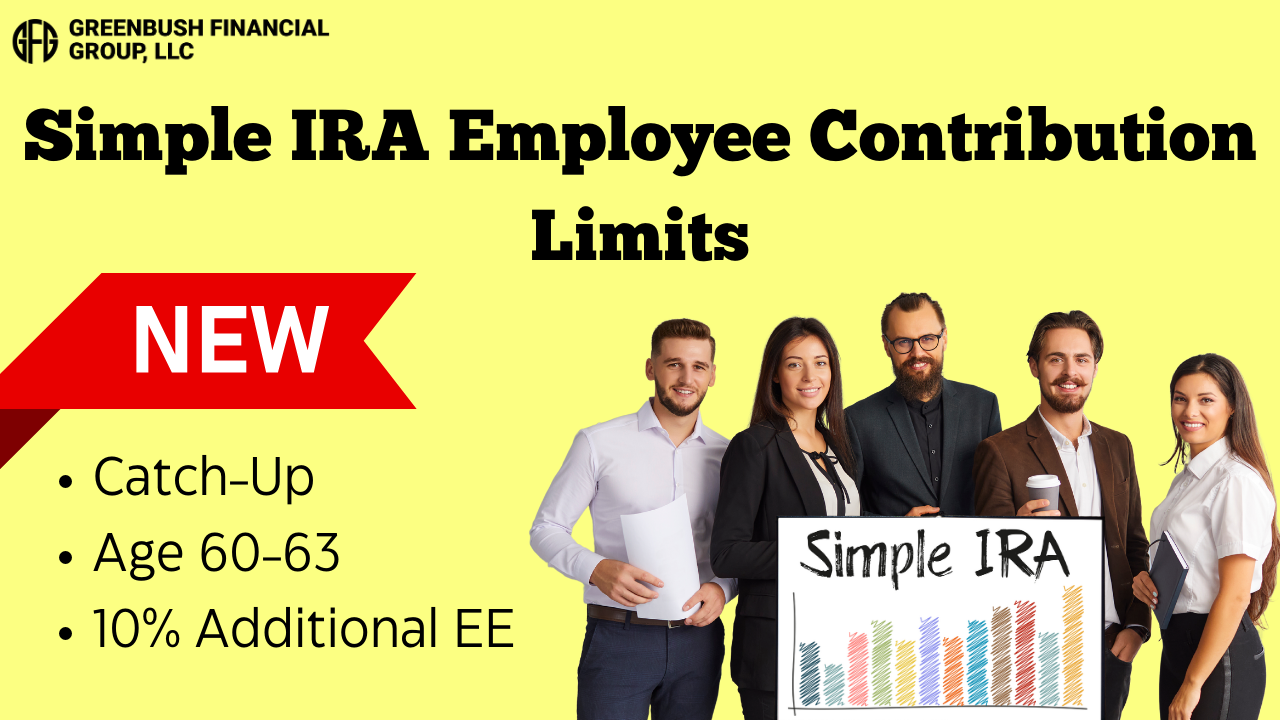
Simple IRA’s are the JV version of 401(k) plans. Smaller companies that have 1 – 30 employees that are looking to start a retirement plan will often times start with implementing a Simple IRA plan and eventually graduate to a 401(k) plan as the company grows. The primary advantage of Simple IRA Plans over 401(k) Plans is the cost. Simple IRA’s do not require a TPA firm since they are self-administered by the employer and they do not require annual 5500 filings so the cost to setup and maintain the plan is usually much less than a 401(k) plan.
What causes companies to choose a 401(k) plan over a Simple IRA plan?
Owners want access to higher pre-tax contribution limits
They want to limit to the plan to just full time employees
The company wants flexibility with regard to the employer contribution
The company wants a vesting schedule tied to the employer contributions
The company wants to expand the investment menu beyond just a single fund family
401(k) Plans
These are probably the most well recognized employer sponsored plans since at one time or another each of us has worked for a company that has sponsored this type of plan. So we will not spend a lot of time going over the ins and outs of these types of plan. These plans offer a lot of flexibility with regard to the plan features and the plan design.
We will issue a special note about the 401(k) market. For small business with 1 -50 employees, you have a lot of options regarding which type of plan you should sponsor but it’s our personal experience that most investment advisors only have a strong understanding of 401(k) plans so they push 401(k) plans as the answer for everyone because it’s what they know and it’s what they are comfortable talking about. When establishing a retirement plan for your company, make sure you consult with an advisor that has a working knowledge of all these different types of retirement plans and can clearly articulate the pros and cons of each type of plan. This will assist you in establishing the right type of plan for your company.
Michael Ruger
About Michael……...
Hi, I’m Michael Ruger. I’m the managing partner of Greenbush Financial Group and the creator of the nationally recognized Money Smart Board blog . I created the blog because there are a lot of events in life that require important financial decisions. The goal is to help our readers avoid big financial missteps, discover financial solutions that they were not aware of, and to optimize their financial future.
