Should You Prepay Your Property Taxes?
If you live in New York or any other state with "higher" property taxes you should determine whether or not it makes sense to pay your 2018 property taxes prior to December 31, 2017. Why? Tax reform will be capping your state and local tax deductions at $10,000 beginning in 2018. Don't forget though, that it's important to make sure you keep on top of your taxes, as you don't want to cause an issue further down the line.
To prevent taxpayers from navigating around the $10,000 deduction cap that will take effect in 2018, Congress wrote right into the tax bill that taxpayers will not be able to prepay their 2018 state income taxes and take the tax deduction in 2017. However, they left the door open for prepaying your 2018 property taxes in 2017 and taking the deduction in 2017 before the cap goes into effect.
Should you do this? The answer depends on your expected income for the 2017 tax year.
Alternative Minimum Tax
Before you rush down to your town office in the last week of December to prepay your 2018 taxes, if you think your income level in 2017 is going to make you subject to AMT, I will save you the trip. Alternative Minimum Tax (AMT) is a special tax calculation that was implemented back in 1969 to make sure the "wealthy" pay their fair share of taxes. The AMT calculation allows fewer deductions and exemptions than the standard tax system. Taxpayers have to calculate their taxes the "normal way" and then calculate their taxes under the AMT method. Whichever method generates the higher tax liability is the one that you pay.
The problem with AMT is over time they did not index the exemption level adequately for wage inflation since its inception in 1969. Again it was supposed to stop the wealthy from taking advantage of tax deductions. In 2017, the exemptions amounts for AMT are as follows:
Single Filer: $54,300
Married Filing Joint: $84,500
Not exactly what many of us would considered wealthy. It gets better, that exemption begins to phase out at the following levels in 2017 making more of your income subject to the special AMT calculation.
Single Filers: $120,700
Married Filing Joint: $160,900
Why am I going into so much detail amount AMT? Remember, AMT adds back deductions that were previously allowed under the standard calculation. One of those add backs is property taxes. So if your AMT tax liability exceeds your tax liability calculated with the standard formula, there is no point in prepaying your 2018 property taxes because you won't be able to deduct them anyways. Those deductions get added back in as part of the AMT calculation.
Contact Your Accountant
The AMT calculation is complex. If you are not able to accurately estimate whether or not your AMT tax liability will be greater than the standard calculation, you should contact your accountant for guidance.
Those Not Subject To AMT
If you are not subject to AMT and you plan to itemize in 2017, it probably does makes sense to prepay your property taxes for 2018 by December 29, 2017. Otherwise you are just going to lose the deduction in 2018 because it will most likely be more advantageous at that income level to just take the larger standard deduction that will be available in 2018. You end up with the best of both worlds. You get to deduct your 2018 property taxes in 2017 which reduces your income and then capture the large standard deduction in 2018,
How Do You Prepay Your Property Taxes?
So how do you pay your property taxes early? It's most likely going to require your checkbook and a trip to your town office, First, call your town office to make sure the 2018 property tax invoices are available. Once you know that they are available, you should drive down to your town office prior to December 29, 2017 and pay the tax bill.
If you escrow taxes, which many homeowners do, there is a good chance that your mortgage company will not receive your property tax bill in time to issue a check from your escrow account prior to December 29th. For this reason, you should call your mortgage services company and determine what they need to prove that you paid your 2018 property taxes with a personal check. This will hopefully prevent them from issuing a check out of your escrow account for the property taxes that you already paid with your personal check for 2018.

About Michael.........
Hi, I’m Michael Ruger. I’m the managing partner of Greenbush Financial Group and the creator of the nationally recognized Money Smart Board blog . I created the blog because there are a lot of events in life that require important financial decisions. The goal is to help our readers avoid big financial missteps, discover financial solutions that they were not aware of, and to optimize their financial future.

Roth IRA conversions allow retirees to move pre-tax assets into tax-free accounts by paying taxes now, but timing is critical. The most effective strategies involve spreading conversions over multiple years, managing tax brackets, and coordinating with Social Security and IRMAA thresholds. Poorly timed conversions can increase taxes and Medicare costs. Greenbush Financial Group helps retirees use Roth conversions to reduce lifetime taxes and improve income flexibility.
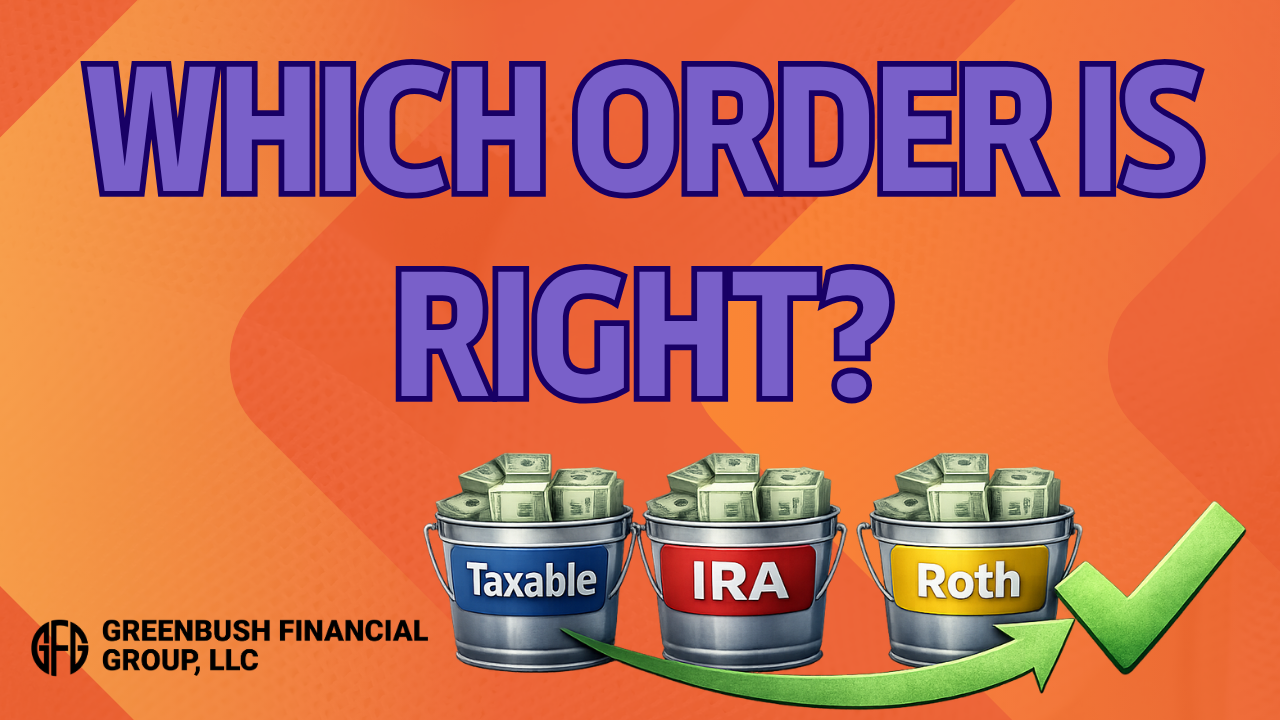
A tax-efficient retirement withdrawal strategy focuses on minimizing taxes while creating consistent income throughout retirement. The order in which you withdraw from taxable, tax-deferred, and Roth accounts can significantly impact how long your money lasts. At Greenbush Financial Group, our analysis shows that strategic withdrawals can reduce lifetime taxes and increase net retirement income.
A Solo 401(k) offers business owners and side hustlers a powerful way to reduce taxable income and accelerate retirement savings. This guide explains contribution limits, tax strategies, and how to choose between pre-tax and Roth contributions in 2026. Learn how to build a tax-efficient retirement plan and potentially eliminate income taxes on self-employment income. Discover why Solo 401(k) plans can outperform SEP IRAs in many cases.
Many FIRE investors overuse tax-deferred accounts without realizing the long-term consequences. Learn how to avoid this common tax trap and build a more flexible early retirement strategy.
Selling a home to a family member involves more than just agreeing on a price. This guide explains tax implications, gift rules, cost basis considerations, and seller financing strategies. Learn how fair market value, the primary residence exclusion, and the Applicable Federal Rate impact your decision. Understand how to structure the transaction to avoid unintended tax consequences. Ideal for parents helping children navigate today’s housing market.
Health Savings Accounts offer tax-free withdrawals for qualified medical expenses in retirement, but understanding eligibility rules is critical. This guide explains which expenses qualify, including Medicare premiums, dental, vision, and out-of-pocket costs. It also covers non-eligible expenses and key withdrawal rules before and after age 65. Use this resource to avoid costly HSA mistakes and maximize your retirement healthcare strategy.
Health Savings Account (HSA) withdrawals have different tax and penalty rules depending on age and how funds are used. This guide explains the four distribution scenarios, tax treatment before and after age 65, and advanced strategies to maximize tax-free benefits. Learn how HSAs can serve as a powerful retirement healthcare tool and how to avoid common withdrawal mistakes. Ideal for pre-retirees planning tax-efficient income strategies.
If you inherited an IRA or other retirement account from a non-spouse after December 31, 2019, the SECURE Act’s 10-year rule may create a major tax event in 2030. Many beneficiaries don’t realize how much the account can grow during the 10-year window—potentially forcing large taxable withdrawals if they wait until the final year. In this article, we explain how the 10-year rule works, why 2030 is a high-risk tax year, and planning strategies that can reduce the tax hit long before the deadline arrives.
Trump Accounts are a new retirement savings vehicle created under the 2025 tax reform that allow parents, grandparents, and even employers to contribute up to $5,000 per year for a minor child — even if the child has no earned income. In this article, we explain how Trump Accounts work, contribution limits, tax rules, planning opportunities, and the key considerations to understand before opening one.
The IRS allows grandparents to give up to $19,000 per grandchild in 2025 without filing a gift tax return, and up to $13.99 million over their lifetime before any tax applies. Gifts are rarely taxable for recipients — but understanding Form 709, 529 plan rules, and tuition exemptions can help families transfer wealth efficiently and avoid IRS issues.
Even the most disciplined retirees can be caught off guard by hidden tax traps and penalties. Our analysis highlights five of the biggest “retirement gotchas” — including Social Security taxes, Medicare IRMAA surcharges, RMD penalties, the widow’s penalty, and state-level tax surprises. Learn how to anticipate these costs and plan smarter to preserve more of your retirement income.
Many people fund their donor-advised funds with cash, but gifting appreciated securities can be a smarter move. By donating stocks, mutual funds, or ETFs instead of cash, you can avoid capital gains tax and still claim a charitable deduction for the asset’s full market value. Our analysis at Greenbush Financial Group explains how this strategy can create a double tax benefit and help you give more efficiently.
Healthcare often becomes one of the largest and most underestimated retirement expenses. From Medicare premiums to prescription drugs and long-term care, this article from Greenbush Financial Group explains why healthcare planning is critical—and how to prepare before and after age 65.
Retirement doesn’t always simplify your taxes. With multiple income sources—Social Security, pensions, IRAs, brokerage accounts—comes added complexity and opportunity. This guide from Greenbush Financial Group explains how to manage taxes strategically and preserve more of your retirement income.
Hiring your child in your business can reduce family taxes and create powerful retirement savings opportunities. Greenbush Financial Group explains how payroll wages allow Roth IRA contributions, open the door to retirement plan participation, and provide long-term wealth benefits—while highlighting the rules and compliance concerns you need to know.
Missing a Required Minimum Distribution can feel overwhelming, but the rules have changed under SECURE Act 2.0. In this article, we explain how to correct a missed RMD, reduce IRS penalties, and file the right tax forms to stay compliant.
Social Security benefits can be taxable at the federal level—and in some states. Should you withhold taxes directly from your benefit or make quarterly estimated payments? This guide explains your options, deadlines, and strategies to avoid IRS penalties.
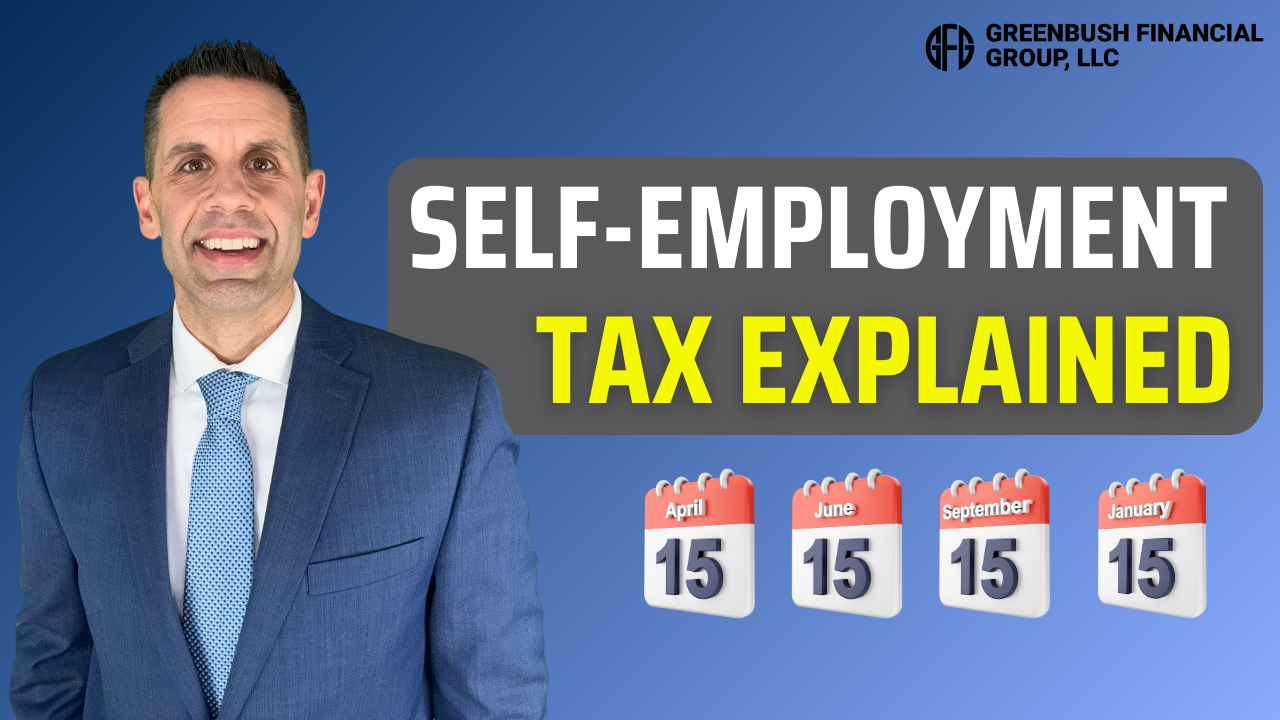
Self-employment taxes can catch new business owners off guard. Our step-by-step guide explains the 15.3% tax rate, quarterly deadlines, and strategies to avoid costly mistakes.
The recently passed Big Beautiful Tax Bill made headlines for raising the federal estate tax exemption and increasing the SALT deduction cap, but not all of the provisions were taxpayer-friendly. One particularly significant change that’s flying under the radar is the elimination of the 30% Residential Solar Tax Credit—a program that’s been central to the rise in home solar installations over the past decade.
The Big Beautiful Tax Bill that just passed is reshaping the tax landscape for many Americans, but one provision that stands out for retirees is the introduction of a new $6,000 senior tax deduction. This benefit, aimed at providing additional tax relief for older taxpayers, adds a generous layer of savings on top of the regular standard deduction and the existing age-based deduction.
Congress just passed the “Big Beautiful Tax Bill,” and one of the biggest changes is a major update to the SALT (State and Local Tax) deduction cap. Instead of being limited to $10,000, some taxpayers will now be eligible for a $40,000 SALT deduction — but only temporarily and only if certain income limits are met.
There was a lot of buzz surrounding the “Big Beautiful Tax Bill” recently signed into law, and while most headlines focused on the new $40,000 SALT deduction cap, a quieter but equally important victory came in the form of what didn’t make it into the final bill for the business owners of pass-through entities.
The Big Beautiful Tax Bill made waves with several high-profile tax changes, but surprisingly, very few changes were made to Health Savings Accounts (HSAs). Below we outline what made it into the final bill, what got removed, and what retirees—especially those on Medicare—need to know going forward.
The recently passed “Big Beautiful Tax Bill” includes sweeping changes to the tax code, but one provision that caught many by surprise is the elimination of the Electric Vehicle (EV) tax credit—a popular incentive for buyers of new, used, and commercial EVs.
The Big Beautiful Tax Bill that just passed includes several targeted tax updates that will impact households beginning in the 2025 tax year. One of the more widely applicable changes is a modest increase to the Child Tax Credit (CTC)—a benefit claimed by millions of families each year.
The recently passed Big Beautiful Tax Bill introduced a series of attention-grabbing tax changes but one provision could directly benefit millions of Americans is the creation of a new tax deduction for auto loan interest.
The newly enacted “Big Beautiful Tax Bill” includes a wide range of updates to the tax code, but one of the most impactful—and underreported—changes is the significant increase in the federal estate tax exemption. Under the new law, the federal estate tax exemption rises to $15 million per person, or $30 million for married couples with proper planning.
In this article, we break down when couples may face a marriage penalty—and when they might receive a marriage bonus. You'll see side-by-side income examples, learn how the 2026 sunset of the Tax Cuts and Jobs Act could impact your future tax bill, and understand how marriage affects things like IRA eligibility, Social Security taxes, and student loan repayment plans.
As individuals approach retirement, they often ask the tax question, “If I were to move to a state that has no state income tax in retirement, would it allow me to avoid having to pay capital gains tax on the sale of my investments or a rental property?” The answer depends on a few variables.