

How is my Social Security Benefit Calculated?
The top two questions that we receive from individuals approaching retirement are:
What amount will I received from social security?
When should I turn on my social security benefits?
how is social security calculated
The top two questions that we receive from individuals approaching retirement are:
What amount will I received from social security?
When should I turn on my social security benefits?
Are you eligible to receive benefits?
As you work and pay taxes, you earn Social Security “credits.” In 2015, you earn one credit for each $1,220 in earnings—up to a maximum of four credits a year. The amount of money needed to earn one credit usually goes up every year. Most people need 40 credits (10 years of work) to qualify for benefits.
When will I begin receiving my social security benefit?
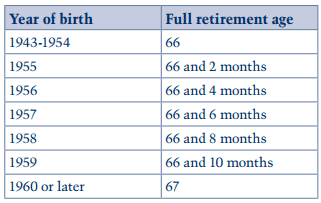
You are entitled to your full social security benefit at your “Normal Retirement Age” (NRA). Your NRA varies based on your date of birth. Below is the chart that social security uses to determine your “normal retirement age” or “full retirement age”:
social security retirement age
For example, if you were born in 1965, your NRA would be 67. At 67, you would be eligible for your full retirement benefit.
Delayed Retirement or Early Retirement
You can claim benefits as early as age 62, but your monthly check will be cut by 25% for the rest of your life. The way the math works out, for each year you take your social security benefit prior to your normal retirement age, you benefit is permanently reduce by 6% for each year you take it prior to your NRA.
On the opposite end of that scenario, if you delay claiming past your NRA, you will get a delayed credit of approximately 8% per year plus cost of living adjustments.
There are a number of variables that factor into this decision as to when to turn on your benefit. Some of the main factors are:
Your health
Do you plan to keep working?
What is your current tax bracket?
The amount of retirement savings that you have
Income difference between spouses

social security age chart
What amount will I receive from social security?
Social security uses a fairly complex formula for calculating social security retirement benefits but the short version is the formula uses your highest 35 years of income. If you have less than 35 years are income, zeros are entered into the average for the number of years you are short of 35 years of income. They also apply an inflation adjustment to your annual earnings in the calculation.
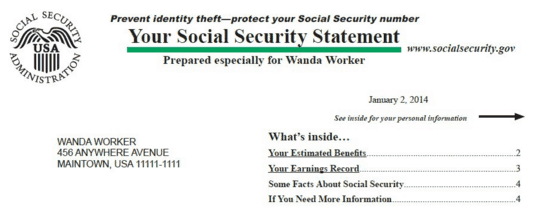
You can obtain your Social Security statement by creating an account at www.ssa.gov. Your statement contains lots of valuable information, such as:
Your estimated benefit amount at full retirement age
Eligibility for benefits
A detailed history of how much you've earned each year
Keep in mind that the figures in your statement are just estimates, and your eventual benefit amount could be quite different, especially if you're relatively young now.

Michael Ruger
About Michael……...
Hi, I’m Michael Ruger. I’m the managing partner of Greenbush Financial Group and the creator of the nationally recognized Money Smart Board blog . I created the blog because there are a lot of events in life that require important financial decisions. The goal is to help our readers avoid big financial missteps, discover financial solutions that they were not aware of, and to optimize their financial future.
























Do I Have to Pay Taxes on my Social Security Benefit?
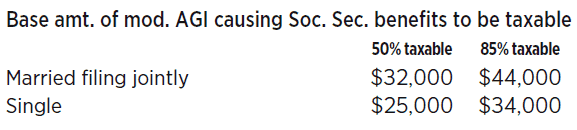
If your “combined income” exceeds specific annual limits, you may owe federal income taxes on up to 50% or 85% of your Social Security benefits. The limits for federal income tax purposes are listed in the chart below.

paying taxes on social security
If your “combined income” exceeds specific annual limits, you may owe federal income taxes on up to 50% or 85% of your Social Security benefits. The limits for federal income tax purposes are listed in the chart below.
percent of social security taxed
The federal income thresholds are not indexed for inflation, so they are the same every year. “Combined income” is defined as adjusted gross income plus any tax-exempt interest plus 50% of your Social Security Benefit. Some states tax Social Security Benefits, whereas others do not tax them. See the chart below:
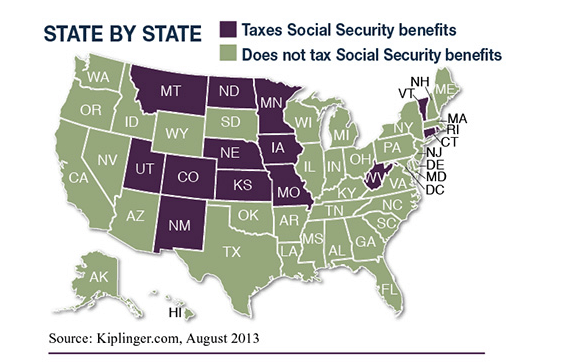
what states do not tax social security benefits
Michael Ruger
About Michael……...
Hi, I’m Michael Ruger. I’m the managing partner of Greenbush Financial Group and the creator of the nationally recognized Money Smart Board blog . I created the blog because there are a lot of events in life that require important financial decisions. The goal is to help our readers avoid big financial missteps, discover financial solutions that they were not aware of, and to optimize their financial future.


















Can I Receive Social Security Benefits While I'm Still Working?
The short answer is "Yes". But you may not want to depending on when you plan to turn on your social security benefits and how much you plan to earn each year from working.

can i receive social security while I'm still working
The short answer is "Yes". But you may not want to depending on when you plan to turn on your social security benefits and how much you plan to earn each year from working.
Electing social security benefits AFTER your Normal Retirement Age
For social security, your Normal Retirement Age (NRA), is the age you are eligible to receive full retirement benefits. Your NRA is based on your date of birth and the table is listed below:

delaying social security
Once you reach your NRA, you are allowed to begin receiving social security benefits without having to worry about the social security "earnings test". Meaning that you can earn as much as you want working and they will not reduce your social security benefit. You are free and clear.
Electing social security benefits BEFORE your Normal Retirement Age
If you turn on your social security benefits prior to reaching your Normal Retirement Age, you will be subject to the "earnings test" each year. For social security recipients who will not reach full retirement age in the 2016 calendar year, the first $15,720 in earnings is exempt. Beyond that amount, every $2 in earnings will reduce your social security benefits by $1. It's a fairly steep penalty. The general rule is if you plan to earn over the $15,720 threshold and you will not hit your normal retirement age for social security in 2016, do not elect to begin taking social security early because you will lose most of it from the "earned income penalty".
Electing social security benefits in the year your reach "Normal Retirement Age"
For social security recipients who will attain full retirement age during 2016, the first $41,880 is exempt, and the reduction is just $1 for every $3 in earnings beyond that point. Plus, only the months before your birthday count toward the total.
We advise our clients in this situation to keep their pay stub from the payroll period prior to reaching Normal Retirement Age because the IRS may contact them the following year to prove the amount of income that they earned prior to receiving their first social security payment.
Michael Ruger
About Michael.........
Hi, I'm Michael Ruger. I'm the managing partner of Greenbush Financial Group and the creator of the nationally recognized Money Smart Board blog . I created the blog because there are a lot of events in life that require important financial decisions. The goal is to help our readers avoid big financial missteps, discover financial solutions that they were not aware of, and to optimize their financial future.
